



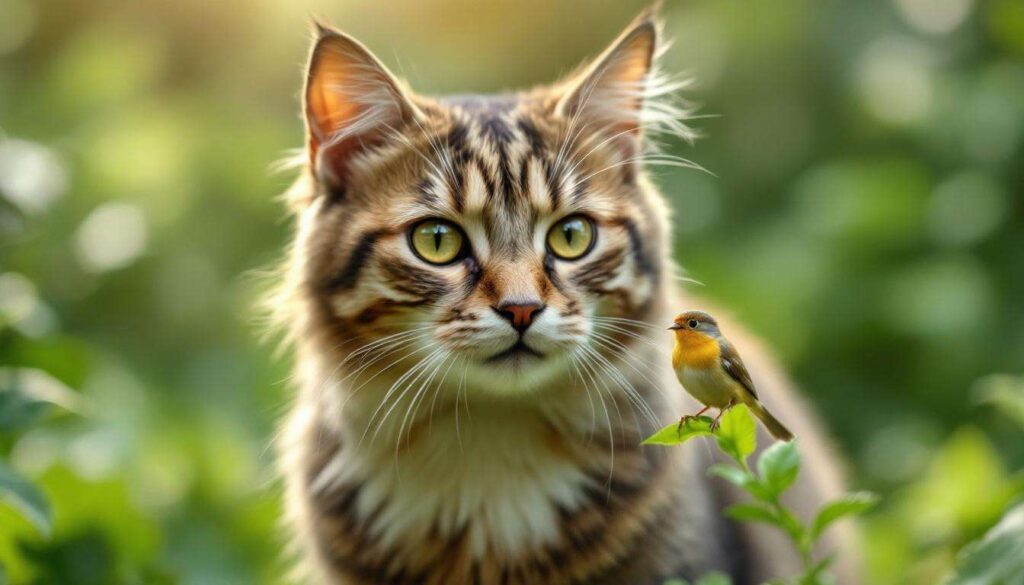
Many cat owners have experienced the peculiar moment when their beloved feline deposits a lifeless mouse, bird, or insect at their feet. This behaviour, whilst often unwelcome, is far from random. Scientific research reveals that when cats bring home prey, they are acting upon deeply ingrained biological programming that has been shaped over thousands of years. Understanding the mechanisms behind this behaviour requires examining the evolutionary history of felines, their neurological responses to hunting, and the complex social dynamics that influence their interactions with human companions.
Understanding a Cat’s Hunting Instinct
The biological foundation of predatory behaviour
Cats are obligate carnivores, meaning their bodies have evolved specifically to consume meat. This dietary requirement has shaped every aspect of their physiology, from their sharp retractable claws to their exceptional night vision. The hunting instinct is not merely a learned behaviour but rather a hardwired neurological response that exists independently of hunger. Research conducted by animal behaviourists has demonstrated that even well-fed domestic cats will pursue and capture prey when the opportunity presents itself.
The feline brain contains specialised neural pathways dedicated to hunting sequences. These pathways trigger a cascade of behaviours including:
- Stalking: slow, deliberate movements towards potential prey
- Pouncing: explosive bursts of speed and precision targeting
- Capturing: deployment of claws and teeth to secure the target
- Killing: delivery of the characteristic neck bite
The disconnect between hunger and hunting
One of the most fascinating aspects of feline hunting behaviour is its independence from nutritional need. Studies have shown that domestic cats hunt regardless of whether they are hungry. This phenomenon occurs because the predatory motor sequence is controlled by different brain regions than those governing appetite. The sight, sound, or movement of potential prey activates the hunting response automatically, much like a reflex action.
This biological reality explains why providing adequate food does not eliminate hunting behaviour. The instinct operates on a separate motivational system that responds to environmental stimuli rather than internal hunger signals. Understanding this distinction helps owners recognise that their cats are not bringing home prey due to inadequate feeding but rather because their evolutionary programming compels them to do so.
The Role of Evolution in Feline Behaviour
From wildcats to domestic companions
The domestic cat (Felis catus) descended from the African wildcat approximately 10,000 years ago. Unlike dogs, which have been selectively bred for thousands of years to perform specific tasks, cats have undergone relatively minimal genetic modification. This limited domestication means that modern house cats retain nearly identical hunting behaviours to their wild ancestors. The evolutionary pressure to hunt efficiently has remained largely unchanged, as cats have historically been valued precisely for their ability to control rodent populations.
| Characteristic | Wild Ancestors | Domestic Cats |
|---|---|---|
| Hunting success rate | 32% | 28-32% |
| Daily hunting attempts | 10-20 | 8-15 |
| Prey preference | Small mammals, birds | Small mammals, birds |
Survival advantages of hunting proficiency
Throughout evolutionary history, cats that excelled at hunting enjoyed significant survival advantages. These successful hunters were more likely to survive periods of scarcity, maintain optimal health, and reproduce successfully. Natural selection favoured individuals with enhanced sensory capabilities, superior coordination, and persistent hunting motivation. These traits have been passed down through countless generations, resulting in the highly efficient predators we observe today.
The genetic inheritance of hunting behaviour means that even cats raised entirely indoors, with no exposure to prey animals, will demonstrate hunting sequences when presented with appropriate stimuli. This innate capability emerges without instruction or observation, confirming its deep evolutionary roots. The persistence of these behaviours across diverse domestic environments demonstrates their fundamental importance to feline identity.
The Motivations Behind Offering Prey
Debunking the gift-giving myth
Popular culture often portrays cats bringing home prey as presenting “gifts” to their owners. Whilst this interpretation is endearing, scientific evidence does not support the gift-giving hypothesis. Cats do not possess the cognitive framework to understand human preferences or to engage in reciprocal gift exchange. Instead, researchers propose several alternative explanations rooted in feline social behaviour and territorial instincts.
The teaching hypothesis
One prominent theory suggests that cats bring prey home as part of an instructional behaviour typically observed in mother cats teaching their kittens to hunt. Female cats with young offspring will bring live or dead prey to their kittens, allowing them to practise hunting skills in a controlled environment. Some behaviourists propose that domestic cats may view their human companions as somewhat incompetent members of their social group who require hunting instruction.
This theory is supported by observations that:
- Cats often vocalise when presenting prey, similar to maternal teaching calls
- Some cats bring live prey indoors, potentially providing “practice” opportunities
- The behaviour is more common in cats with strong social bonds to their owners
Safe consumption territory
Another compelling explanation centres on the concept of territorial safety. Cats instinctively recognise their home environment as a secure location free from competitors and predators. Bringing prey to this safe zone allows them to consume or cache their catch without the risk of theft by larger predators or rival cats. This behaviour mirrors that of wild felines, which often drag prey to concealed locations before eating.
The Impact of Environment on Hunting Behaviour
Indoor versus outdoor cats
The hunting behaviour of cats varies significantly based on their access to outdoor environments. Indoor cats, whilst retaining full hunting instincts, have limited opportunities to express these behaviours naturally. These cats often redirect their predatory energy towards toys, household objects, or even their owners’ feet. Outdoor cats, conversely, regularly engage with natural prey and demonstrate the complete hunting sequence.
| Environment | Hunting Opportunities | Prey Brought Home |
|---|---|---|
| Fully indoor | Minimal (toys only) | None |
| Indoor-outdoor | Moderate to high | Frequent |
| Fully outdoor | Constant | Variable |
Ecological considerations
The hunting behaviour of domestic cats has become a subject of significant ecological concern. Research indicates that free-roaming cats kill billions of birds and small mammals annually, contributing to population declines in various species. This impact is particularly pronounced in island ecosystems and areas with vulnerable native wildlife. The efficiency of feline predators, combined with their artificially high population densities supported by human care, creates ecological pressures that wild predator populations would not naturally exert.
How to Respond to a Hunting Cat: practical Tips
Immediate response strategies
When confronted with prey brought indoors, owners should remain calm and avoid punishment. Scolding a cat for following its natural instincts is ineffective and may damage the human-animal bond. Instead, quietly remove the prey whilst the cat is distracted, disposing of it hygienically. If the prey is still alive, attempt to safely capture and release it outdoors, away from the cat’s immediate vicinity.
Preventative measures
Reducing the frequency of prey presentation requires addressing the underlying hunting behaviour through environmental modification and enrichment:
- Install bells or specialised collars that alert prey to the cat’s approach
- Keep cats indoors during dawn and dusk when prey animals are most active
- Provide regular interactive play sessions using wand toys that mimic prey movements
- Create vertical spaces and hiding spots that satisfy territorial instincts indoors
- Consider puzzle feeders that engage the cat’s problem-solving abilities
Channelling hunting energy constructively
Rather than attempting to eliminate hunting behaviour entirely, owners can redirect this energy towards appropriate outlets. Structured play sessions that simulate hunting sequences provide mental and physical stimulation whilst satisfying predatory urges. Toys should be moved in ways that mimic prey behaviour, including sudden stops, direction changes, and attempts to “escape”. Allowing the cat to “catch” the toy periodically reinforces the complete predatory sequence and provides psychological satisfaction.
For cats with particularly strong hunting drives, environmental enrichment becomes essential. Rotating toys regularly prevents habituation, whilst introducing new textures, sounds, and movements maintains interest. Some owners find success with automated toys that activate periodically, providing hunting opportunities even when humans are unavailable to play.
The behaviour of cats bringing home prey represents a complex interplay of evolutionary biology, neurological programming, and environmental factors. Rather than viewing this behaviour as problematic or interpreting it through anthropomorphic lenses, understanding its scientific basis allows owners to respond appropriately. By recognising that hunting is an intrinsic component of feline nature, independent of hunger or domestication, we can better appreciate our cats whilst implementing strategies that protect both wildlife and the human-feline relationship. The key lies not in eliminating these ancient instincts but in managing them thoughtfully within the context of modern domestic life.