



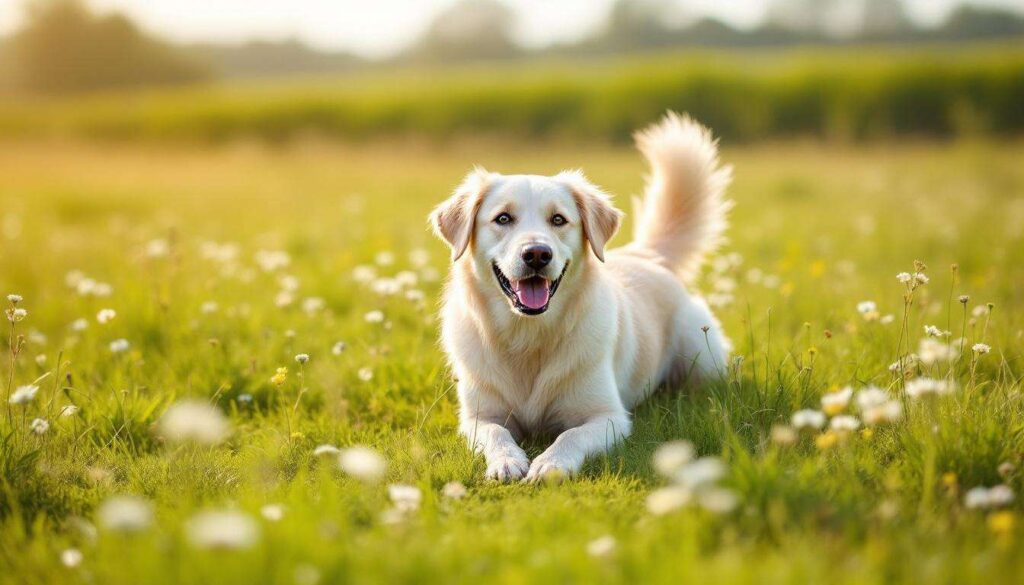
Every dog owner has witnessed this curious ritual: their beloved companion circling repeatedly before settling down for a nap. This seemingly odd behaviour, observed across breeds and sizes, has captivated researchers and animal behaviourists for decades. Far from being a meaningless quirk, this spinning motion represents a fascinating window into our dogs’ evolutionary past, revealing deep-rooted instincts that have persisted through thousands of years of domestication. By examining the scientific explanations behind this behaviour, we can better understand our canine companions and appreciate the remarkable continuity between modern pets and their wild ancestors.
Understanding canine behaviour: a historical approach
The evolutionary perspective on dog behaviour
Canine behaviour cannot be fully comprehended without acknowledging the evolutionary journey that shaped modern dogs. Descended from wolves, dogs retained numerous instinctive behaviours despite thousands of years of selective breeding and domestication. These inherited traits serve as a reminder that beneath the surface of even the most pampered house pet lies a creature whose ancestors survived in harsh wilderness environments.
Researchers have identified several key behaviours that persist across the canine family:
- Territory marking through scent
- Pack hierarchy establishment
- Prey drive and hunting instincts
- Den-seeking behaviours
- Pre-sleep rituals including circling
The role of instinct versus learned behaviour
Understanding the distinction between instinctive and learned behaviours proves essential when analysing why dogs spin before lying down. Instinctive behaviours emerge naturally without training or observation, passed down through genetic inheritance. Puppies separated from their mothers at birth still exhibit spinning behaviour, demonstrating its instinctive nature rather than learned through observation.
| Behaviour type | Origin | Example |
|---|---|---|
| Instinctive | Genetic inheritance | Spinning before lying down |
| Learned | Training or observation | Sitting on command |
| Adaptive | Environmental response | Seeking shade on hot days |
This historical framework provides the foundation for exploring the specific origins of the spinning ritual itself.
The prehistoric origins of the spinning ritual
Survival mechanisms in wild canids
The spinning behaviour originated as a crucial survival mechanism for wild canids navigating dangerous environments. In their natural habitats, wolves and wild dogs faced numerous threats whilst resting, making the preparation of sleeping areas a matter of life and death. The circular motion served multiple practical purposes that enhanced survival prospects.
Wild canids used spinning to accomplish several essential tasks:
- Flattening tall grass and vegetation to create a comfortable depression
- Detecting and removing sharp objects, stones, or thorns from the sleeping area
- Checking for dangerous creatures such as snakes, insects, or spiders
- Creating a nest-like structure that provided insulation from cold ground
- Establishing a clear perimeter to detect approaching predators
Temperature regulation and environmental adaptation
Beyond immediate safety concerns, the spinning ritual played a significant role in thermoregulation. Wild canids living in diverse climates needed to adapt their sleeping positions according to weather conditions. During hot weather, spinning helped create a shallow depression where cooler earth lay beneath the sun-warmed surface. Conversely, in cold conditions, the circular motion compacted vegetation to create an insulated nest that trapped body heat.
This multifaceted behaviour demonstrates the remarkable efficiency of evolutionary adaptations, addressing multiple survival needs through a single instinctive action. These ancient requirements continue to influence modern dog behaviour despite drastically changed living conditions.
The link between spinning and comfort
Physical comfort and optimal positioning
The connection between spinning and comfort extends beyond mere habit. Scientific observations reveal that dogs achieve specific physical benefits through this pre-sleep ritual. The circular motion allows dogs to test different positions, assess the surface texture, and identify the most comfortable orientation for their body.
Veterinary researchers have identified several comfort-related benefits:
- Alignment of spine and joints in optimal resting positions
- Distribution of body weight across the sleeping surface
- Identification of any uncomfortable lumps or irregularities
- Adjustment of bedding materials for maximum softness
- Finding the ideal temperature zone within the sleeping area
Psychological security and anxiety reduction
The spinning ritual also provides psychological benefits that contribute to overall canine well-being. This behaviour creates a sense of control over the immediate environment, reducing anxiety and promoting relaxation. Dogs experiencing stress or uncertainty often spin more frequently, suggesting the behaviour serves as a self-soothing mechanism.
The act of circling activates familiar neural pathways associated with safety and comfort, triggering the release of calming neurotransmitters. This neurological response helps dogs transition from an alert state to a restful one, facilitating deeper and more restorative sleep. Understanding this psychological dimension helps explain why the behaviour persists even when practical necessities no longer exist.
Modern adaptations of ancient behaviours
How domestication has influenced spinning patterns
Domestication has subtly altered the spinning ritual whilst preserving its fundamental structure. Contemporary dogs typically spin fewer times than their wild counterparts, reflecting the reduced need for extensive environmental preparation. Studies comparing domestic dogs with wolves reveal that pet dogs average one to three circles, whilst wolves may circle five to ten times before settling.
| Canid type | Average spins | Primary motivation |
|---|---|---|
| Wild wolves | 5-10 | Survival necessity |
| Domestic dogs | 1-3 | Instinctive comfort |
| Highly anxious dogs | 4-8 | Stress response |
Breed-specific variations in spinning behaviour
Different breeds exhibit varying degrees of spinning behaviour, influenced by their specific breeding purposes and ancestral backgrounds. Working breeds and those closer to their wolf heritage tend to spin more frequently and deliberately, whilst companion breeds developed primarily for indoor living may demonstrate abbreviated versions of the ritual.
Certain breeds show distinctive spinning patterns:
- Northern breeds like Huskies and Malamutes often spin more extensively
- Terriers may combine spinning with digging motions
- Toy breeds frequently perform quick, perfunctory circles
- Herding breeds sometimes incorporate checking behaviours into their spins
These variations highlight how selective breeding has modified but not eliminated this fundamental instinct, demonstrating the enduring power of prehistoric behaviours in shaping modern canine conduct.
Implications for the well-being of domestic dogs
Recognising normal versus excessive spinning
Whilst spinning represents normal canine behaviour, excessive circling may indicate underlying health or psychological issues. Dog owners should monitor the frequency, duration, and intensity of spinning to distinguish between healthy instinctive behaviour and problematic patterns requiring veterinary attention.
Warning signs that spinning may indicate problems include:
- Spinning more than ten times before lying down
- Appearing unable to settle even after extensive circling
- Showing signs of distress or frustration during spinning
- Spinning compulsively throughout the day, not just before rest
- Combining spinning with other anxious behaviours like pacing or whining
Health considerations related to spinning behaviour
Several medical conditions can manifest through altered spinning patterns. Arthritis or joint pain may cause dogs to spin more cautiously or avoid certain positions. Neurological disorders might result in compulsive circling that lacks the purposeful quality of normal pre-sleep spinning. Cognitive dysfunction in senior dogs sometimes presents as confusion during the spinning ritual, with dogs appearing disoriented or forgetting why they began circling.
Regular veterinary check-ups help identify whether changes in spinning behaviour reflect natural variations or require medical intervention, ensuring that this ancient instinct continues to serve its comforting purpose without causing distress.
Tips for fostering a reassuring environment
Creating optimal sleeping spaces
Dog owners can support their pets’ instinctive needs by providing appropriate sleeping areas that accommodate spinning behaviour. Circular or oval beds naturally complement the spinning ritual, whilst rectangular beds should offer sufficient space for dogs to turn comfortably without restriction.
Essential features of dog-friendly sleeping spaces:
- Adequate diameter allowing full rotation without obstruction
- Soft, adjustable bedding materials that dogs can manipulate
- Raised edges providing a sense of security and enclosure
- Placement in quiet, low-traffic areas of the home
- Temperature-appropriate materials for seasonal comfort
Respecting natural behaviours
Understanding the prehistoric origins of spinning should encourage owners to respect rather than discourage this behaviour. Interrupting the spinning ritual may increase anxiety and prevent dogs from achieving the psychological comfort the behaviour provides. Instead, owners should allow adequate time for dogs to complete their pre-sleep routine naturally.
Supporting this instinctive behaviour demonstrates respect for dogs’ evolutionary heritage whilst promoting their emotional well-being. Simple accommodations like providing appropriate bedding and allowing uninterrupted spinning time help modern dogs maintain connections to their ancestral past whilst enjoying the comforts of domestic life.
The spinning ritual observed in dogs before lying down represents a remarkable persistence of prehistoric instincts through millennia of domestication. This behaviour, rooted in survival mechanisms that once protected wild canids from environmental dangers and predators, continues to serve important comfort and security functions for modern pets. Understanding the evolutionary origins and psychological benefits of spinning enables dog owners to better support their companions’ natural behaviours whilst recognising when variations might indicate health concerns. By respecting these ancient instincts and creating environments that accommodate them, we honour the deep connection between contemporary dogs and their wild ancestors, ultimately enhancing the well-being of our beloved canine companions.