



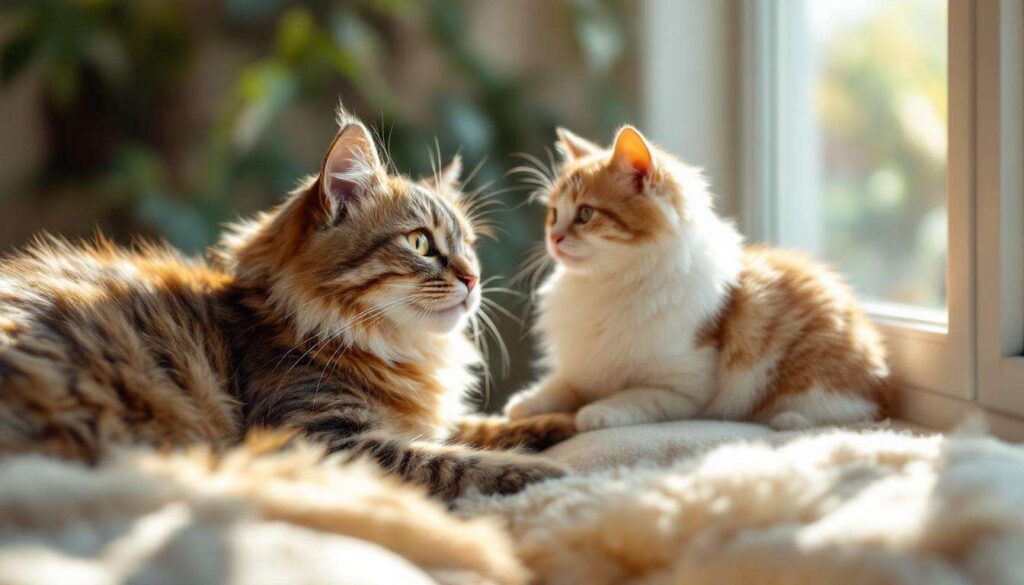
Cat owners have long debated whether male or female felines make more affectionate companions. This question touches upon fundamental aspects of feline behaviour, genetics and environmental factors that shape how cats interact with their human families. Whilst some people swear by the loving nature of male cats, others insist that females display superior devotion. The truth, however, proves far more nuanced than simple gender categorisation might suggest. Understanding the complex interplay of biological sex, hormonal influences, early socialisation and individual temperament provides a more accurate picture of feline affection.
Behavioural differences between male and female cats
Natural temperament variations
Male cats often exhibit more overtly affectionate behaviour than their female counterparts, particularly after neutering. They tend to seek physical contact more frequently, enjoying lap time and following their owners from room to room. This behaviour stems partly from hormonal influences that shape their social interactions. Male cats typically display a more relaxed attitude towards personal space, readily accepting cuddles and petting sessions without the reservations sometimes observed in females.
Female cats, conversely, demonstrate affection in more subtle and selective ways. They often choose specific moments for interaction, approaching their owners on their own terms rather than constantly seeking attention. This independence does not indicate a lack of affection but rather reflects a different expression of attachment. Female cats may show their love through:
- Gentle head bumps at specific times of day
- Sitting nearby rather than directly on laps
- Slow blinking and quiet vocalisations
- Bringing gifts or toys to their owners
Territorial and social patterns
Territory plays a significant role in how male and female cats express affection. Unneutered males focus heavily on marking territory and may become distant during mating seasons, whilst females in heat display erratic behaviour that temporarily overshadows their normal affectionate tendencies. These biological imperatives can significantly impact the consistency of affectionate behaviour in intact cats.
| Characteristic | Male Cats | Female Cats |
|---|---|---|
| Physical contact seeking | High frequency | Moderate frequency |
| Independence level | Lower | Higher |
| Affection consistency | Generally steady | More selective |
These baseline differences provide a foundation for understanding feline affection, yet they represent only part of the equation. The developmental journey of a cat profoundly shapes how these tendencies manifest.
How age and socialisation influence affection
Critical socialisation periods
The first two to seven weeks of a kitten’s life constitute the most crucial period for developing affectionate behaviour. Kittens exposed to gentle human handling during this window typically become more comfortable with physical contact regardless of sex. Those raised with limited human interaction often struggle to express affection openly, even if their genetic predisposition leans towards sociability. This early experience frequently overrides gender-based tendencies in determining adult affectionate behaviour.
Age-related changes in affection
As cats mature, their affectionate behaviour evolves through distinct life stages. Young adult cats between one and three years often display peak energy levels that may manifest as playful affection rather than calm cuddling. Middle-aged cats typically settle into more predictable patterns, whilst senior cats frequently become more affectionate as their activity levels decrease. These changes affect both sexes but may interact differently with gender-based tendencies:
- Kitten stage: high energy, exploratory affection
- Young adult: independent yet playful interactions
- Mature adult: established affection patterns
- Senior years: increased desire for warmth and companionship
Beyond these developmental factors, surgical intervention significantly alters the affectionate landscape of feline behaviour.
Impact of neutering on feline affection
Hormonal changes and behaviour
Neutering produces dramatic shifts in affectionate behaviour, particularly in male cats. The removal of reproductive hormones eliminates mating-driven behaviours such as roaming, spraying and aggressive territorial displays. Neutered males typically become significantly more affectionate, seeking human companionship more consistently than their intact counterparts. This transformation often surprises owners who adopted intact males and witnessed the personality change following surgery.
Female cats experience less dramatic but still notable changes after spaying. The elimination of heat cycles removes the stress and behavioural fluctuations associated with reproductive readiness. Spayed females often display more consistent affection levels throughout the year, though the baseline may remain more reserved than that of neutered males.
Timing of neutering effects
The age at which cats undergo neutering influences the extent of behavioural changes. Early neutering before sexual maturity prevents the establishment of hormone-driven behaviours, whilst later neutering must reverse already-formed patterns. Cats neutered before six months typically show:
- More kitten-like playfulness into adulthood
- Stronger attachment to human family members
- Reduced territorial aggression
- Increased tolerance for handling and grooming
However, the physical and social environment in which cats live exerts equally powerful influences on their capacity for affection.
The role of environment in affectionate behaviour
Household dynamics and stress factors
The home environment shapes how comfortably cats express affection. Multi-cat households create complex social hierarchies that may inhibit affectionate displays, particularly in more submissive individuals. Cats competing for resources or territory often reserve their energy for social navigation rather than human bonding. Conversely, cats in calm, predictable environments feel secure enough to seek affection freely.
Environmental stressors that impact affectionate behaviour include:
- Loud noises or frequent disruptions
- Inadequate hiding spaces or vertical territory
- Inconsistent feeding schedules
- Lack of environmental enrichment
- Conflicts with other pets
Resource availability and security
Cats require adequate resources to feel secure enough for affectionate interactions. Insufficient litter boxes, feeding stations or resting areas create stress that manifests as withdrawal or aggression rather than affection. The general guideline of providing one resource per cat plus one extra helps ensure all felines feel secure. When basic needs are consistently met, cats of both sexes demonstrate increased willingness to engage affectionately with their owners.
Understanding these environmental factors allows owners to create conditions conducive to affection, which can then be further enhanced through deliberate bonding strategies.
Techniques to strengthen the bond with your cat
Interactive play and positive associations
Regular interactive play sessions build trust and affection between cats and their owners. Using wand toys, laser pointers or feather teasers allows cats to express natural hunting behaviours whilst associating their human with positive experiences. These sessions should occur at consistent times daily, creating predictable opportunities for bonding. Both male and female cats respond positively to this structured interaction, though males may initiate play more frequently between scheduled sessions.
Respect for individual boundaries
Forcing physical affection undermines trust and damages the human-feline relationship. Successful bonding requires respecting each cat’s comfort level with touch and proximity. Techniques that honour feline boundaries include:
- Allowing cats to approach rather than pursuing them
- Recognising signs of overstimulation during petting
- Providing escape routes during interactions
- Using slow blinks to communicate non-threatening intentions
- Offering treats without demanding physical contact
These approaches work universally but prove particularly important with more independent female cats who may require additional time to initiate affectionate contact. The effectiveness of these techniques ultimately depends on recognising that each cat possesses a unique personality.
Concepts of individual personality in cats
Personality traits beyond gender
Recent feline behaviour research identifies five core personality dimensions that influence affection more significantly than biological sex. These traits include skittishness, outgoingness, dominance, spontaneity and friendliness. A highly friendly female cat will demonstrate far more affection than a skittish or aloof male, regardless of neutering status or early socialisation. This individual variation explains why categorical statements about male versus female affection often fail to match owners’ lived experiences.
Breed influences on temperament
Certain breeds exhibit characteristic personality traits that transcend gender differences. Ragdolls, Siamese and Maine Coons typically display high affection levels in both sexes, whilst breeds such as Russian Blues or Norwegian Forest Cats may present more reserved temperaments. Mixed-breed cats show the widest personality variation, making individual assessment essential rather than relying on gender-based predictions.
Ultimately, the question of whether male or female cats make more affectionate companions lacks a definitive answer. Neutered males statistically show more overt affection-seeking behaviour, yet countless female cats prove equally devoted in their own distinctive ways. Early socialisation, environmental security and individual personality traits exert profound influences that frequently overshadow gender-based tendencies. Prospective cat owners seeking affectionate companions should prioritise meeting individual cats, observing their behaviour and considering factors beyond biological sex when making adoption decisions.