


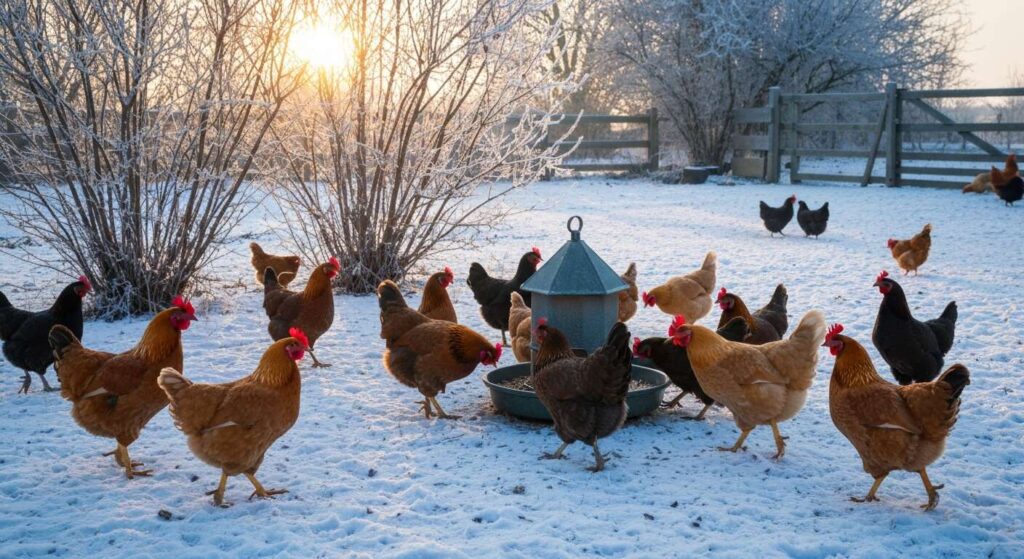
Poultry keepers often notice a remarkable change in their flock’s behaviour when temperatures drop. Hens that seemed content to peck quietly during warmer months suddenly become more animated, seeking stimulation and interaction. This shift isn’t merely coincidental; cold weather creates specific conditions that make enrichment activities particularly appealing to chickens. Understanding this seasonal transformation can help you provide the ideal environment for your birds during the challenging winter period.
Why the cold stimulates your hens’ activity
Winter conditions trigger physiological and behavioural changes in chickens that naturally increase their need for movement and mental engagement. The shorter daylight hours and confined living spaces create an environment where hens actively seek stimulation to maintain their wellbeing.
Metabolic changes in cold weather
When temperatures plummet, chickens experience a metabolic boost to maintain their body temperature. This increased energy expenditure means they’re naturally more alert and active, requiring outlets for their heightened state. Unlike their summer lethargy, winter hens possess surplus energy that demands channelling into productive activities.
| Temperature range | Metabolic increase | Activity level |
|---|---|---|
| Above 15°C | Baseline | Moderate |
| 5°C to 15°C | 10-15% increase | Elevated |
| Below 5°C | 20-30% increase | High |
Confined spaces and boredom
Cold weather typically means hens spend considerably more time indoors, away from their usual foraging grounds. This confinement can lead to stress and destructive behaviours if left unaddressed. The natural instinct to scratch, peck, and explore remains strong, but opportunities diminish significantly. Providing structured play becomes essential to prevent:
- Feather pecking amongst flock members
- Aggressive territorial behaviour
- Egg eating habits
- General restlessness and anxiety
These behavioural shifts make winter the perfect season to introduce engaging activities that satisfy their instinctual needs whilst keeping them mentally sharp.
The game: a cure for winter boredom
Interactive games serve as powerful tools for combating the monotony that winter brings to poultry keeping. The right activities transform a dull coop into an enriching environment where hens eagerly anticipate their daily entertainment.
Foraging games that mimic natural behaviour
Chickens are natural foragers, and games that replicate this instinct prove particularly successful during cold months. Scatter feeding in fresh straw, hanging vegetable treats, or creating simple puzzle feeders engage their problem-solving abilities whilst providing physical exercise. These activities can occupy hens for hours, replacing the outdoor foraging they’d normally enjoy.
Social interaction through play
Games also encourage positive flock dynamics by providing shared experiences. When hens work together to access treats or explore new enrichment items, they strengthen social bonds rather than competing destructively. A well-designed game becomes the focal point of their day, something they genuinely look forward to as temperatures remain low.
Selecting appropriate games requires understanding your specific flock’s preferences and physical capabilities.
How to choose the right game for your hens
Not all enrichment activities suit every flock. Successful game selection depends on multiple factors that influence how your hens will respond to different stimulation methods.
Consider your flock size and breed characteristics
Larger flocks require games that accommodate multiple participants simultaneously, preventing dominant birds from monopolising resources. Breed temperament also matters significantly; active breeds like Leghorns benefit from more challenging puzzles, whilst heavier breeds such as Orpingtons prefer gentler, ground-based activities.
Safety and durability factors
Winter games must withstand both weather conditions and enthusiastic pecking. Choose materials that are:
- Non-toxic and safe if ingested
- Free from sharp edges or small detachable parts
- Easy to clean and sanitise regularly
- Resistant to moisture and freezing temperatures
Rotating activities for sustained interest
Chickens quickly become habituated to unchanging stimuli. Maintaining a rotation of different games ensures continued engagement throughout the winter months. Introduce new activities every few days whilst periodically reintroducing favourites that have been absent for a while.
Beyond mere entertainment, these activities deliver substantial health advantages that extend well beyond the winter season.
The importance of playtime for the health of hens
Regular play sessions contribute to comprehensive wellbeing in ways that extend far beyond simple amusement. The physical and psychological benefits create healthier, more productive birds.
Physical health improvements
Active hens maintain better body condition throughout winter. Games that encourage movement help prevent obesity, a common problem when birds are confined. Physical activity also supports:
- Improved circulation and cardiovascular health
- Stronger bone density through weight-bearing activity
- Better digestive function from increased movement
- Enhanced immune system response
Mental stimulation and stress reduction
The cognitive challenge of solving puzzles or accessing treats keeps hens mentally engaged, reducing stress hormones that can suppress immune function and egg production. Enriched environments demonstrably lower anxiety levels, resulting in calmer, more content birds that integrate better within the flock hierarchy.
| Health indicator | With regular play | Without enrichment |
|---|---|---|
| Feather condition | Excellent | Poor to moderate |
| Stress behaviours | Minimal | Frequent |
| Egg production consistency | Stable | Variable |
Implementing these activities effectively requires thoughtful timing and methodology to maximise their impact.
When and how to introduce play into the daily routine
Strategic timing transforms games from occasional diversions into anticipated daily highlights that structure your hens’ winter days effectively.
Optimal timing for maximum engagement
Introduce games during naturally active periods when hens are most receptive to stimulation. Mid-morning, after the initial feeding rush, proves ideal as birds have energy but seek occupation. Late afternoon sessions provide a second engagement opportunity before roosting time, helping them settle contentedly for the evening.
Gradual introduction strategies
Chickens can be suspicious of novelty. Introduce new games gradually, allowing the flock to investigate at their own pace. Place new items near familiar objects initially, then move them to more prominent positions as acceptance grows. Patience during this acclimatisation period ensures long-term success.
Consistency builds anticipation
Establishing a regular schedule helps hens anticipate playtime, creating positive associations that enhance engagement. This predictability also allows you to observe which activities generate the most enthusiasm, informing future enrichment choices.
The advantages of winter play extend well beyond the immediate cold season, establishing patterns that benefit your flock year-round.
The long-term benefits of play for your hens
Winter enrichment establishes positive behavioural patterns that persist throughout the year, creating a more harmonious and productive flock.
Reduced aggression and improved flock dynamics
Hens accustomed to enrichment activities display significantly less aggressive behaviour even during stressful periods. The mental stimulation and physical outlets prevent the build-up of frustration that typically manifests as pecking order disputes or destructive habits.
Enhanced productivity and longevity
Birds maintained in enriched environments demonstrate:
- More consistent egg laying patterns throughout their productive years
- Better overall health requiring fewer veterinary interventions
- Longer productive lifespans with sustained quality of life
- Improved resilience to environmental stressors
Easier management for keepers
Well-entertained hens are considerably easier to manage. They’re calmer during handling, more receptive to routine care, and less likely to develop problematic behaviours that require correction. The initial investment in enrichment activities pays dividends through reduced management challenges.
Winter games represent far more than simple entertainment for confined hens. They address fundamental needs for stimulation, exercise, and mental engagement that cold weather intensifies. By understanding how temperature affects poultry behaviour and implementing appropriate enrichment strategies, you create an environment where your flock thrives despite challenging conditions. The physical health improvements, stress reduction, and enhanced flock dynamics demonstrate that play isn’t frivolous but essential to responsible poultry keeping. As winter approaches, prioritising these activities ensures your hens remain healthy, content, and productive throughout the coldest months whilst establishing beneficial patterns that serve them year-round.