



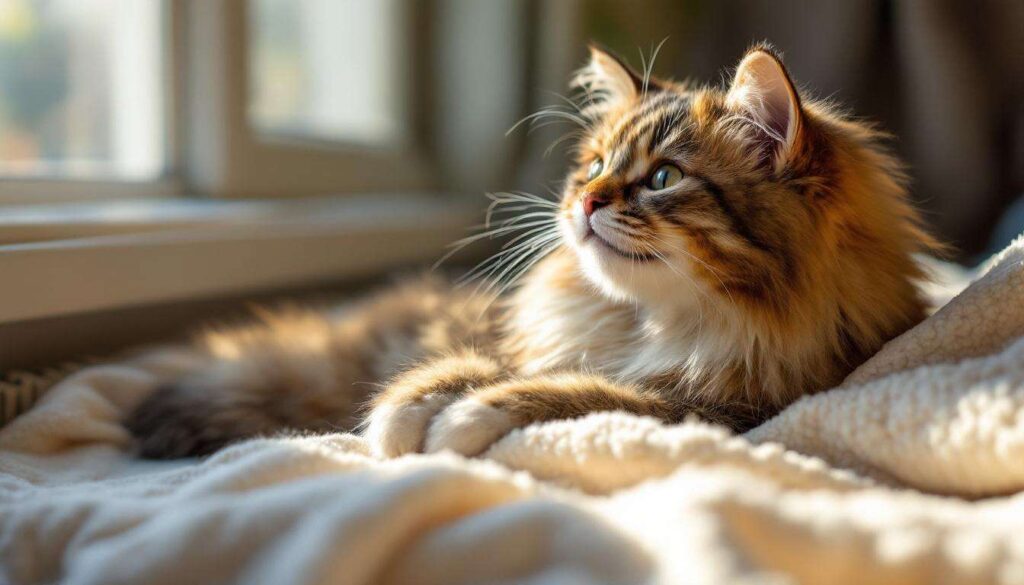
Cat owners worldwide have witnessed their feline companions rhythmically pushing their paws in and out against soft surfaces, creating a mesmerising motion that resembles a baker working dough. This behaviour, commonly referred to as kneading, represents one of the most endearing yet intriguing aspects of feline conduct. Whether performed on a cushion, blanket, or even your lap, this repetitive action serves multiple purposes rooted in both instinct and emotional expression. Understanding why cats engage in this behaviour offers valuable insights into their psychological needs and overall wellbeing.
What is cat kneading ?
The physical characteristics of kneading
Kneading describes the alternating motion cats make with their front paws, pressing down and releasing in a rhythmic pattern. During this activity, cats typically extend and retract their claws whilst pushing against a soft surface. The movement originates from the shoulder joints and travels through the entire foreleg, creating a wave-like motion that can continue for several minutes. Some cats knead with all four paws, though front paw kneading remains most common.
Common surfaces and scenarios
Cats demonstrate kneading behaviour across various contexts and locations. The following surfaces frequently attract kneading activity:
- Soft blankets and bedding materials
- Human laps and torsos
- Plush furniture including sofas and armchairs
- Cushions and pillows
- Thick carpets or rugs
The behaviour often accompanies purring and may occur when cats prepare to settle down for rest or when they experience contentment during interaction with their owners.
Accompanying behaviours
Kneading rarely occurs in isolation. Cats frequently combine this action with other expressions of comfort, including purring, drooling, and a relaxed body posture. Some cats enter a trance-like state, with half-closed eyes and a distant expression that suggests deep contentment. These accompanying behaviours reinforce the connection between kneading and positive emotional states.
Beyond the physical mechanics lies a complex web of instinctive drives and emotional triggers that prompt this behaviour.
The reasons behind this instinctive behaviour
Territorial marking through scent glands
Cats possess scent glands in the soft pads of their paws, and kneading serves as a method of territorial marking. When a cat kneads a surface, these glands release pheromones that communicate ownership and familiarity. This olfactory signature provides comfort to the cat whilst signalling to other animals that the area belongs to them. The behaviour represents a non-aggressive form of territory establishment that allows cats to feel secure in their environment.
Preparation for rest
Wild cat ancestors kneaded grass and foliage to create comfortable sleeping areas, flattening vegetation and checking for potential threats hidden beneath. Domestic cats retain this instinct despite the availability of purpose-built beds and cushions. The kneading motion helps cats assess the comfort level of a surface before settling down, ensuring optimal rest conditions. This practical function demonstrates how ancient survival behaviours persist in modern feline companions.
Expression of contentment and affection
Kneading frequently occurs during moments of happiness and relaxation. When cats knead their owners, the behaviour signals trust and affection, indicating that the cat feels safe and content. This emotional component transforms kneading from a purely instinctive action into a form of communication between cats and their human companions.
| Trigger | Kneading Response | Emotional State |
|---|---|---|
| Petting and stroking | Increased intensity | Pleasure and bonding |
| Soft surface contact | Immediate initiation | Comfort seeking |
| Feeding time approach | Anticipatory kneading | Excitement and expectation |
The roots of this behaviour extend back to the earliest stages of feline development, creating lasting associations with safety and nourishment.
Kneading: a reminder of kittenhood
The nursing connection
Kittens instinctively knead their mother’s mammary glands to stimulate milk flow during nursing. This essential survival behaviour creates a powerful association between the kneading motion and the comfort of maternal care. The rhythmic pressing action encourages milk production whilst the warmth and security of the mother’s presence establish deep emotional connections. These early experiences imprint on the kitten’s developing brain, creating lasting behavioural patterns.
Comfort associations that persist into adulthood
Adult cats retain the kneading behaviour because it remains linked to the safety and satisfaction of kittenhood. When cats knead soft surfaces or their owners, they mentally return to the secure environment of their early weeks, experiencing similar feelings of contentment. This regression to juvenile behaviour demonstrates the powerful influence of early life experiences on adult conduct. The persistence of kneading throughout a cat’s life highlights the enduring nature of these formative associations.
Individual variations in kneading patterns
Not all cats knead with the same intensity or frequency, and these variations often reflect differences in early life experiences. Cats separated from their mothers very early may knead more intensely or frequently, seeking to recreate the comfort they missed. Conversely, cats with extended nursing periods might display more moderate kneading behaviours. Understanding these individual differences helps owners interpret their cat’s specific needs and emotional state.
Whilst the behaviour stems from kittenhood memories, it continues to provide tangible advantages throughout a cat’s adult life.
The benefits of kneading for cats
Stress reduction and emotional regulation
Kneading functions as a self-soothing mechanism that helps cats manage stress and anxiety. The repetitive motion releases endorphins, creating feelings of calm and wellbeing. During stressful situations such as changes in household routine or the introduction of new pets, cats may increase kneading frequency as a coping strategy. This natural stress management technique allows cats to regulate their emotional states without external intervention.
Physical exercise and muscle maintenance
The kneading motion provides gentle exercise for the muscles and joints in a cat’s front legs, shoulders, and paws. Regular kneading helps maintain flexibility and strength in these areas, particularly important for older cats who may experience reduced mobility. The stretching and contracting of muscles during kneading promotes circulation and prevents stiffness. This physical benefit complements the emotional advantages, making kneading a holistic wellness activity.
Communication and bonding opportunities
When cats knead their owners, the behaviour strengthens the human-animal bond. This intimate gesture demonstrates trust and creates opportunities for positive interaction. Owners who respond positively to kneading reinforce the behaviour, encouraging their cats to seek comfort and connection. The mutual exchange of affection during kneading sessions enhances the relationship between cats and their human families.
Despite its prevalence, not every cat exhibits this characteristic behaviour, raising questions about individual differences in feline temperament and experience.
Why do some cats not knead ?
Early life experiences and separation
Kittens removed from their mothers before completing the natural weaning process may not develop typical kneading behaviours. The absence of extended nursing opportunities prevents the formation of strong associations between kneading and comfort. Orphaned kittens or those hand-reared by humans might display reduced kneading tendencies because they lacked the maternal interaction that normally reinforces this behaviour. These early experiences significantly influence whether kneading becomes part of a cat’s behavioural repertoire.
Personality and temperament factors
Individual personality traits affect kneading frequency and intensity. Some cats possess naturally reserved temperaments that make them less demonstrative in expressing contentment. These cats may experience the same positive emotions as their kneading counterparts but express them through different behaviours such as purring, slow blinking, or simply remaining close to their owners. Personality-based variations in behaviour represent normal diversity within feline populations.
Physical limitations and discomfort
Certain medical conditions can inhibit kneading behaviour. Arthritis, paw injuries, or declawing procedures may cause physical discomfort during the kneading motion, leading cats to avoid the activity. Cats experiencing pain in their front legs or shoulders naturally refrain from movements that exacerbate their condition. Observing sudden changes in kneading patterns may indicate underlying health issues requiring veterinary attention.
Environmental and situational factors
The home environment influences kneading behaviour. Cats in stressful or unpredictable households may suppress kneading because they rarely achieve the relaxed state necessary for this behaviour. Insufficient access to soft surfaces or lack of quiet, safe spaces can also reduce kneading opportunities. Creating an environment conducive to relaxation often encourages cats to express natural behaviours more freely.
For owners hoping to see their cats engage in this endearing behaviour, several gentle approaches can create conditions that encourage kneading.
Tips for gently encouraging kneading
Creating comfortable environments
Providing soft, inviting surfaces throughout the home increases kneading opportunities. Consider placing plush blankets on favourite resting spots and ensuring cats have access to comfortable bedding. The texture and warmth of materials influence whether cats choose to knead, so offering variety allows cats to find their preferred surfaces. Creating multiple comfortable zones gives cats options for expressing natural behaviours.
Positive reinforcement during relaxation
When cats display kneading behaviour, responding with gentle petting and verbal praise reinforces the action. Maintaining a calm, relaxed demeanour encourages cats to continue kneading without interruption. Avoid sudden movements or loud noises that might startle cats during these vulnerable moments. Consistent positive responses help cats associate kneading with pleasant experiences, increasing the likelihood of future occurrences.
Managing claw discomfort
Regular nail trimming prevents overly sharp claws from causing discomfort during kneading. Keeping claws at appropriate lengths protects both furniture and human skin whilst allowing cats to knead comfortably. Consider the following nail care practices:
- Trim claws every two to three weeks
- Use proper cat nail clippers designed for feline anatomy
- Reward cats after nail trimming sessions
- Place a thick blanket on your lap during kneading to protect against scratches
- Never punish cats for extending claws during kneading
Respecting individual preferences
Recognise that not all cats will knead regardless of environmental conditions. Forcing or excessively encouraging the behaviour can create stress rather than comfort. Allow cats to express affection and contentment in ways that feel natural to them. Some cats demonstrate love through proximity, vocalisations, or grooming behaviours rather than kneading, and these alternatives deserve equal appreciation.
Cat kneading represents a complex behaviour rooted in early development, instinctive drives, and emotional expression. This rhythmic paw motion serves multiple purposes including territorial marking, comfort seeking, and stress relief whilst providing physical benefits through gentle exercise. The behaviour’s connection to nursing experiences explains its association with contentment and security, though individual variations in frequency and intensity reflect differences in personality, early life experiences, and environmental factors. Not all cats knead, and this absence does not indicate reduced affection or wellbeing. By understanding the mechanisms and meanings behind kneading, owners can better appreciate this charming aspect of feline behaviour and create environments that support their cats’ natural instincts and emotional needs.