


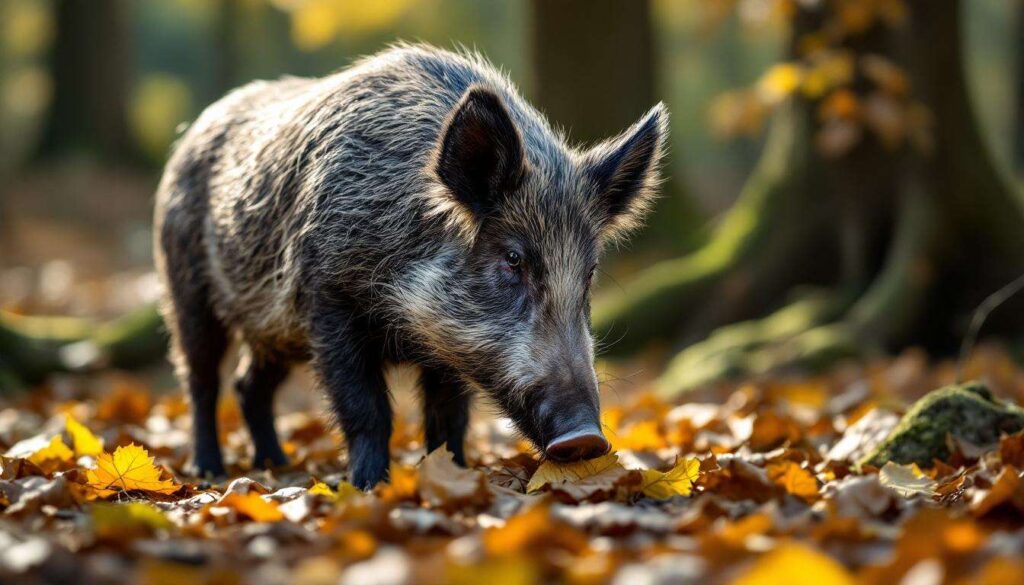
The wild boar, a robust and adaptable mammal found across Europe, Asia and parts of North Africa, has long fascinated naturalists, hunters and rural communities alike. Whilst most people recognise the distinctive tusked male or the general term for the species, fewer know the specific terminology used to describe the female of this formidable creature. Understanding the correct nomenclature not only enriches our knowledge of wildlife vocabulary but also sheds light on the important role these animals play within their social structures and ecosystems.
What is a sow ?
Definition and etymology
A female wild boar is called a sow, a term that shares its origins with the word used for domestic female pigs. The etymology traces back to Old English sugu and is related to similar words in other Germanic languages, reflecting the long history of human interaction with both wild and domesticated swine. The terminology distinguishes the female from the male wild boar, known as a boar, and from the young, which are called piglets or striped pigs due to their characteristic markings.
Physical characteristics
The sow exhibits several distinctive physical features that differentiate her from her male counterpart :
- Smaller overall body size, typically weighing between 35 and 90 kilograms compared to males who can exceed 150 kilograms
- Less prominent tusks, which are considerably shorter and less curved than those of the boar
- A more streamlined head and snout profile
- Slightly lighter colouration in some populations
- Visible teats when nursing, particularly noticeable during the breeding season
These physical distinctions serve important biological functions, particularly related to reproduction and the rearing of young. The sow’s smaller size allows for greater agility when protecting her litter, whilst her less aggressive appearance belies a fierce maternal instinct that makes her formidable when defending her offspring.
Distinguishing features in the field
For wildlife observers and hunters, identifying a sow requires attention to behavioural and physical cues. Beyond size differences, sows often travel in groups known as sounders, typically consisting of related females and their young. Solitary wild boar are almost invariably adult males, as sows rarely venture alone except briefly during mating season. The presence of piglets is an unmistakable indicator of a sow’s presence, though caution is essential as mothers are highly protective.
Understanding these fundamental aspects of the sow’s identity provides the foundation for appreciating her broader significance in both natural and cultural contexts.
The role of the sow in culture
Symbolism and mythology
Throughout history, the sow has occupied a complex position in human culture and mythology. In Celtic tradition, the sow was associated with fertility, abundance and the earth itself, often depicted as a sacred animal connected to goddesses of the land. The Greek goddess Demeter was sometimes represented with a sow, symbolising agricultural fertility and the cyclical nature of life and death.
In contrast, some cultures viewed the wild sow with ambivalence. Her fierce protection of young made her a symbol of maternal ferocity, whilst her association with untamed wilderness positioned her as both respected and feared. Medieval European folklore often portrayed wild sows as dangerous creatures inhabiting dark forests, embodying the unpredictable forces of nature.
Hunting traditions and terminology
In traditional hunting culture, particularly across Europe, specific vocabulary developed around wild boar hunting, with distinct terms for sows at different life stages and reproductive conditions :
| Term | Description |
|---|---|
| Gilt | A young female wild boar that has not yet bred |
| Dry sow | A mature female not currently nursing or pregnant |
| Nursing sow | A female actively raising piglets |
Hunting regulations in many countries afford special protection to nursing sows, recognising the ecological importance of allowing mothers to raise their young successfully. This practice reflects both ethical hunting principles and practical wildlife management strategies.
These cultural dimensions of the sow’s identity connect closely with observations of her actual behaviour in natural settings.
The behaviour of the sow in the wild
Social structure and group dynamics
Wild boar sows are highly social animals, forming matriarchal groups that constitute the basic unit of wild boar society. A typical sounder consists of :
- One or more adult sows, often sisters or a mother and her adult daughters
- Subadult females from previous litters
- Piglets and juveniles of both sexes
- Occasionally, younger males up to approximately two years of age
The eldest or most experienced sow typically leads the group, making decisions about foraging locations, resting sites and responses to threats. This matriarchal structure ensures the transmission of knowledge about territory, food sources and safe havens from one generation to the next.
Foraging and feeding patterns
Sows demonstrate remarkable adaptability in their feeding behaviour, which is essential for supporting the energetic demands of pregnancy and lactation. Their omnivorous diet includes roots, tubers, acorns, chestnuts, fruits, insects, small vertebrates and occasionally carrion. Using their powerful snouts, sows root through soil and leaf litter, creating distinctive disturbances in woodland and agricultural areas.
Feeding activity intensifies during pregnancy and whilst nursing, with sows requiring substantially increased caloric intake. This need drives them to exploit diverse food sources and sometimes brings them into conflict with agricultural interests, particularly when they raid crops such as maize, wheat and root vegetables.
Territorial behaviour and ranging patterns
Female wild boar maintain home ranges rather than strictly defended territories, with the size varying considerably based on habitat quality and food availability. In resource-rich environments, a sounder may occupy an area of just a few square kilometres, whilst in marginal habitats, ranges can extend to 20 square kilometres or more.
Sows mark their ranges through scent marking, wallowing in mud and rubbing against trees, behaviours that serve both thermoregulatory and communicative functions. These patterns of movement and space use directly influence their reproductive strategies.
Reproduction and motherhood of the sow
Breeding season and mating behaviour
In temperate regions, wild boar breeding typically occurs between November and January, though the timing varies with climate and food availability. Sows reach sexual maturity at approximately 8 to 10 months of age, though first breeding often occurs later, around 18 months, depending on body condition and population density.
During the rut, mature boars seek out receptive sows, sometimes engaging in fierce competition with rival males. The sow’s oestrus cycle lasts approximately 21 days, with receptivity lasting two to three days. Mating is often vigorous and may involve multiple males, though dominant boars typically secure most breeding opportunities.
Gestation and farrowing
The gestation period for wild boar sows lasts approximately 115 days, roughly three months, three weeks and three days, as the traditional farming saying goes. As parturition approaches, the pregnant sow separates from her sounder to construct a farrowing nest, a behaviour that demonstrates remarkable maternal preparation :
- Selection of a secluded, sheltered location, often in dense vegetation or under fallen trees
- Construction of a substantial nest from grasses, leaves, moss and small branches
- Creation of a warm, dry environment that protects vulnerable newborns from hypothermia and predation
Litter sizes typically range from four to eight piglets, though larger litters of up to 12 are not uncommon in well-nourished populations. The striped piglets, weighing approximately 750 grams to 1 kilogram at birth, are precocial and able to follow their mother within hours of birth.
Nursing and piglet development
For the first week following birth, the sow remains near the nest, nursing her piglets frequently. The young possess sharp needle teeth and compete vigorously for access to the most productive teats, with a stable teat order typically established within the first few days. Nursing continues for approximately three to four months, though piglets begin sampling solid food within their first two weeks of life.
The mother-offspring bond is extraordinarily strong during this period, with sows demonstrating exceptional vigilance and aggression towards potential threats. This protective behaviour is crucial for piglet survival and shapes interactions between sows and other animals, including humans.
Protection of the sow and her offspring
Defensive behaviour and threat responses
A nursing sow ranks among the most dangerous encounters in European wildlife. When she perceives a threat to her piglets, her response is swift and potentially lethal. Unlike the male boar, who may bluff charge or retreat, a protective sow typically attacks with little warning, using her speed, sharp tusks and considerable weight to devastating effect.
Warning signs of an agitated sow include :
- Raised hackles along the spine and shoulders
- Chomping or grinding of teeth, producing a distinctive sound
- Direct, fixed staring at the perceived threat
- Positioning herself between the threat and her piglets
- Low grunting or explosive snorting vocalisations
Wildlife experts advise giving any wild boar group with piglets an extremely wide berth, as maternal aggression can be triggered at distances of 50 metres or more.
Predation and natural threats
Despite their formidable defensive capabilities, wild boar piglets face numerous natural predators during their vulnerable early weeks. In areas where large carnivores persist, wolves, lynx and bears represent significant threats, particularly to young piglets that stray from their mother’s immediate protection. Foxes and large raptors may take very young or weak individuals, whilst domestic dogs pose an increasing threat in areas where human activity overlaps with wild boar habitat.
The sow’s protective strategies include maintaining constant vigilance, keeping piglets close during movement, and positioning herself between her litter and potential dangers. The striped camouflage pattern of young piglets provides additional protection by breaking up their outline in dappled forest light.
Conservation status and management
Unlike many large mammals, wild boar populations have expanded significantly across much of Europe in recent decades, driven by factors including reduced hunting pressure, agricultural changes providing abundant food, and climate warming extending breeding seasons. Consequently, the conservation status of wild boar, including sows and their offspring, is generally secure across most of their range.
However, management challenges have emerged as populations grow. Agricultural damage, disease transmission risks, and increasing human-wildlife conflicts require careful population management. Most jurisdictions implement hunting regulations that protect nursing sows whilst allowing controlled harvests of other population segments to maintain ecological balance.
In some regions, selective culling programmes target specific age and sex classes to manage population growth whilst minimising impacts on social structure and reproductive success. These programmes recognise the central role of sows in population dynamics and the importance of maintaining stable, healthy matriarchal groups.
The female wild boar, properly termed a sow, represents far more than simple terminology. Her role as the foundation of wild boar social structure, her remarkable maternal behaviours, and her cultural significance across human societies underscore the complexity of this often-misunderstood species. From the matriarchal sounders that traverse European forests to the fierce protection she affords her distinctively striped young, the sow embodies the resilience and adaptability that have allowed wild boar to thrive across diverse landscapes. Understanding her biology, behaviour and ecological importance provides essential context for the ongoing challenge of coexisting with these powerful and intelligent animals in increasingly shared landscapes.