



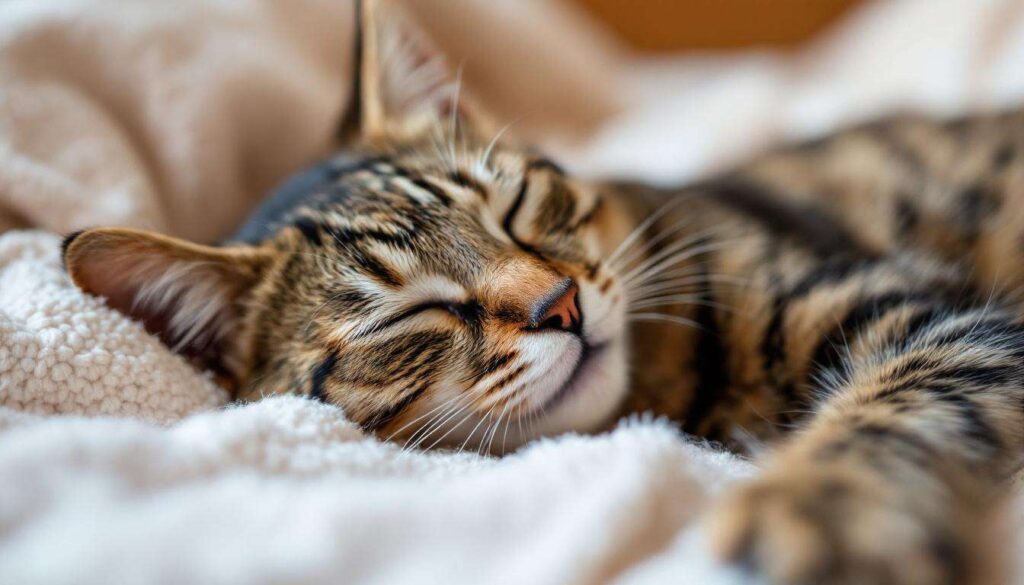
Cats have long fascinated researchers with their complex vocalisations and behaviours, but recent scientific findings suggest that the humble purr may hold more secrets than previously imagined. Whilst most cat owners can recognise their pet’s meow from a distance, new research indicates that each feline’s purr carries a distinct acoustic signature that sets it apart from every other cat. This discovery challenges our understanding of how cats communicate and reveals that purring is far more sophisticated than the simple sound of contentment many assume it to be.
The mysteries of feline purring
The mechanics behind the purr
The exact mechanism that produces a cat’s purr has puzzled scientists for decades. Unlike meowing, which involves the vocal cords in a straightforward manner, purring occurs through a unique physiological process that engages multiple anatomical structures simultaneously. Current research suggests that purring originates from rapid contractions of the laryngeal muscles, which cause the glottis to open and close at frequencies between twenty-five and one hundred and fifty Hertz.
What makes this process particularly remarkable is that cats can purr continuously whilst both inhaling and exhaling, a feat that requires extraordinary muscular coordination. The neural oscillator within the cat’s brain appears to control this rhythmic pattern, sending repetitive signals to the laryngeal muscles at precise intervals. This sophisticated control system allows cats to maintain their purr for extended periods without interruption.
Why cats purr in different situations
Contrary to popular belief, cats don’t purr exclusively when content. Observations have documented purring in various contexts:
- During moments of relaxation and contentment
- When injured or experiencing pain
- Whilst giving birth
- When approaching other cats or humans
- During stressful veterinary examinations
This diversity of situations suggests that purring serves multiple communicative and self-regulatory functions rather than simply expressing happiness. Some researchers propose that purring may act as a self-soothing mechanism during distress, similar to how humans might hum or rock themselves for comfort.
Understanding these varied contexts helps explain why researchers have turned their attention to the unique characteristics of individual purrs.
The differences between purring and meowing
Acoustic properties comparison
Purring and meowing differ fundamentally in their acoustic structure and production. Meowing involves discrete vocalisations with varying pitch, duration, and intensity, whilst purring consists of continuous, rhythmic vibrations at relatively stable frequencies. The following table illustrates key differences:
| Characteristic | Purring | Meowing |
|---|---|---|
| Frequency range | 25-150 Hz | 200-600 Hz |
| Duration | Continuous | Intermittent |
| Variation | Low | High |
| Breathing pattern | Both inhale/exhale | Primarily exhale |
Individual variation in vocalisations
Whilst meows can vary considerably in pitch and tone, they often sound similar across different cats of the same breed. Research now demonstrates that purrs contain unique acoustic fingerprints specific to each individual cat. These fingerprints arise from subtle variations in the laryngeal anatomy, muscle tension, and respiratory patterns that differ from one feline to another.
Scientists have identified that factors such as body size, age, and even emotional state can influence the specific characteristics of a cat’s purr, creating a distinctive sound profile. This individuality extends beyond what the human ear can easily detect, requiring sophisticated acoustic analysis equipment to fully appreciate the nuances.
These distinctive features of purring lead naturally to examining the potential benefits this unique vocalisation provides.
The health benefits of purring
Healing properties of low-frequency vibrations
One of the most intriguing aspects of feline purring involves its potential therapeutic effects. The frequency range of cat purrs, particularly between twenty-five and fifty Hertz, corresponds to frequencies known to promote healing in medical applications. Research in biomechanics has shown that vibrations within this range can stimulate bone growth and repair, potentially explaining why cats recover from injuries more quickly than many other mammals.
The vibrations produced during purring may offer several physiological benefits:
- Increased bone density and fracture healing
- Reduced pain and inflammation
- Improved muscle and tendon repair
- Enhanced breathing and reduced dyspnoea
- Lower blood pressure in both cats and humans
Benefits for human health
Cat owners have long reported feeling calmer and more relaxed when their pets purr nearby. Scientific studies now support these anecdotal claims, demonstrating that exposure to cat purring can reduce stress hormones in humans and promote a sense of wellbeing. The rhythmic nature of purring may trigger relaxation responses similar to those induced by meditation or deep breathing exercises.
Some researchers suggest that the unique frequency signature of each cat’s purr might even influence how effectively it promotes relaxation in different individuals, though this remains an area requiring further investigation.
Beyond these health implications, the acoustic properties of purring reveal even more fascinating details about this vocalisation.
The sound characteristics of purring
Frequency analysis and spectral patterns
Advanced acoustic analysis has revealed that cat purrs contain complex harmonic structures that extend well beyond the fundamental frequency. Using spectrographic equipment, researchers can visualise these harmonics as distinct bands of energy distributed across the frequency spectrum. Each cat’s purr displays a unique harmonic signature, much like a fingerprint, determined by the individual anatomy of their vocal apparatus.
The fundamental frequency typically falls between twenty-five and thirty Hertz, but overtones can extend to several hundred Hertz. These overtones create the rich, textured quality that makes purring so distinctive and pleasant to human ears. Interestingly, the ratio between these harmonic components varies from cat to cat, contributing to the individuality of each purr.
Amplitude and intensity variations
The volume and intensity of purring can vary considerably both between different cats and within a single cat’s repertoire. Some cats produce barely audible purrs that can only be detected through tactile vibrations, whilst others generate surprisingly loud purrs audible across a room. These variations in amplitude reflect differences in muscle strength, respiratory capacity, and perhaps even personality traits.
Research indicates that cats can modulate the intensity of their purr according to context, producing softer purrs during restful moments and louder purrs when seeking attention or food. This intentional modulation suggests a sophisticated level of control over the purring mechanism.
This control over purring characteristics plays a crucial role in how cats use this vocalisation to interact with their environment and companions.
The role of purring in communication
Mother-kitten bonding
Purring serves essential communicative functions from the earliest stages of feline life. Newborn kittens begin purring within days of birth, using this vocalisation to signal their location and wellbeing to their mother. Mother cats purr whilst nursing, creating a soothing acoustic environment that helps kittens feel secure. This mutual purring establishes early bonding patterns and may help regulate the kittens’ physiological states during their vulnerable early weeks.
Human-cat interaction
Domestic cats have adapted their purring behaviour to communicate effectively with human companions. Studies suggest that cats may develop slightly modified purrs when interacting with humans, sometimes incorporating higher-frequency components that humans find particularly appealing or attention-grabbing. This solicitation purr, as researchers term it, often contains elements that trigger nurturing responses in humans, similar to the effect of a baby’s cry.
The unique acoustic signature of each cat’s purr may help owners develop deeper bonds with their pets, as they learn to recognise subtle variations in their cat’s vocalisation that indicate different needs or emotional states.
These communicative aspects have naturally drawn the attention of the scientific community, leading to detailed investigations into purring mechanisms and meanings.
Scientific research on cat purring
Recent technological advances in acoustic analysis
Modern research into cat purring has benefited enormously from advances in digital acoustic analysis technology. High-resolution recording equipment and sophisticated software now allow researchers to capture and analyse the minute details of purring that were previously undetectable. Machine learning algorithms can identify patterns within purr recordings, distinguishing between individual cats with remarkable accuracy based solely on their acoustic signatures.
Scientists at various institutions have created extensive databases of cat purrs, documenting thousands of individual recordings across different breeds, ages, and contexts. These databases enable comparative studies that reveal how genetic factors, environmental influences, and health conditions affect purring characteristics.
Implications for feline welfare and veterinary care
Understanding the uniqueness of each cat’s purr opens new possibilities for veterinary diagnostics and welfare monitoring. Changes in a cat’s typical purr pattern might indicate health problems before other symptoms become apparent. Veterinarians could potentially use baseline purr recordings as reference points for detecting subtle changes that warrant further investigation.
Additionally, recognising that purring serves multiple functions beyond contentment helps caregivers interpret their cats’ needs more accurately, potentially improving the quality of care provided in both domestic and clinical settings.
The revelation that each cat’s purr carries a unique acoustic signature transforms our understanding of feline communication and individuality. Far from being a simple expression of contentment, purring emerges as a sophisticated vocalisation with healing properties, complex communicative functions, and distinctive characteristics as individual as the cats themselves. As research continues to uncover the intricacies of this remarkable sound, we gain not only scientific insights but also a deeper appreciation for the complexity of our feline companions. The purr, once taken for granted, now stands as testament to the evolutionary ingenuity and individual character of every cat.