



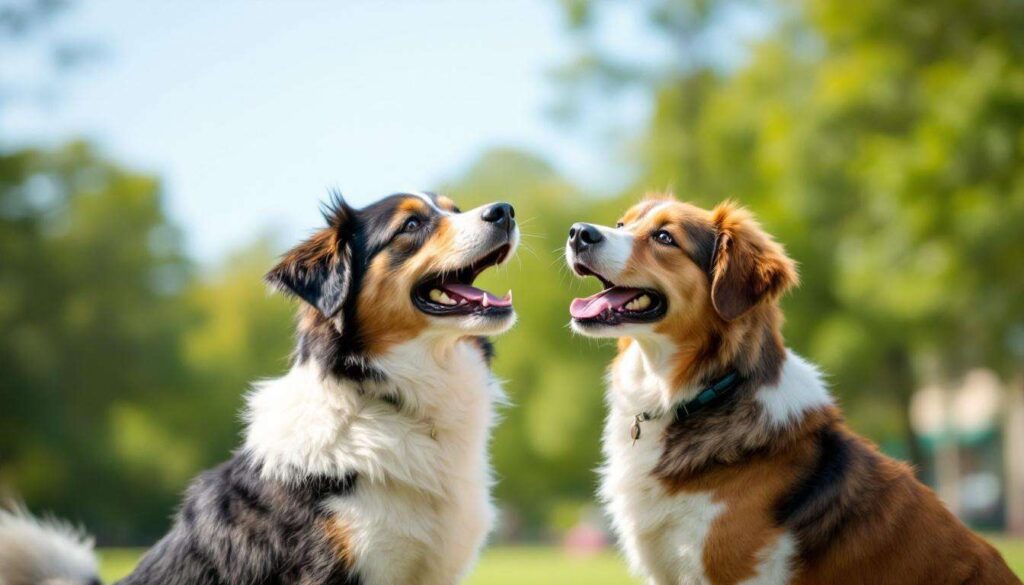
Dogs share a complex social history with their littermates, but whether they truly remember their siblings years after separation remains a fascinating question. Research suggests that canine memory, particularly when tied to scent, may preserve traces of early family bonds far longer than many owners realise. The ability to recognise siblings appears to depend on several factors, including the duration of time spent together during critical developmental periods, the power of olfactory cues, and the emotional significance of those early relationships.
Understanding a dog’s sense of smell
The extraordinary power of canine olfaction
Dogs possess a sense of smell that is up to 100,000 times more powerful than that of humans. This remarkable capability stems from the structure of their nasal anatomy, which contains approximately 300 million olfactory receptors compared to the mere 6 million found in human noses. The portion of a dog’s brain dedicated to analysing smells is also proportionally 40 times larger than ours, making scent processing a dominant aspect of how dogs perceive and navigate their world.
Scent as a memory trigger
For dogs, scent functions as a powerful memory tool. Each individual dog carries a unique olfactory signature, a complex chemical profile that remains relatively stable throughout their lifetime. When dogs encounter familiar scents, even after extended periods, these olfactory cues can trigger memories and emotional responses. This mechanism is particularly relevant when considering whether dogs can remember their siblings, as the scent of a littermate may serve as a direct link to their earliest experiences.
- Olfactory memory operates independently from other memory systems
- Scent-based recognition can persist even when visual memory fades
- Dogs rely primarily on smell when identifying other animals
- Chemical signatures remain consistent despite changes in appearance
This sophisticated olfactory system lays the foundation for understanding how dogs might retain memories of their siblings, particularly when those memories are encoded during the critical early weeks of life.
The science behind canine recognition
Key research findings on sibling recognition
A significant study published in the journal Animal Behaviour in 2001 provided compelling evidence that puppies can recognise the scent of their siblings even after a separation of up to two years. This research demonstrated that olfactory memory related to siblings persists well beyond the initial separation period, though this recognition appears limited to littermates with whom the puppy actually lived during their early weeks.
The critical socialisation window
The first 16 weeks of a dog’s life represent a crucial period for social bonding and memory formation. Dogs raised together during this formative stage are significantly more likely to recognise their siblings later in life. The quality and duration of early contact directly influence the strength of these memories.
| Time spent together | Likelihood of recognition | Primary recognition method |
|---|---|---|
| 0-8 weeks | Moderate | Scent-based |
| 0-16 weeks | High | Scent and visual |
| Less than 4 weeks | Low | Limited retention |
The role of separation timing
Puppies separated too early or those who do not meet for at least 6 to 7 years after their initial separation face considerable challenges in establishing familial recognition. The longer the separation and the earlier it occurs, the less likely dogs are to demonstrate recognition behaviours when reunited. This finding suggests that continuous or repeated contact during the early months strengthens the neural pathways associated with sibling memory.
Beyond the mechanics of scent recognition, researchers have explored whether dogs can identify family members they’ve never actually encountered, raising intriguing questions about genetic recognition.
Can dogs identify family members they have never met ?
The limits of genetic recognition
Unlike some species that demonstrate innate recognition of genetic relatives, dogs appear to lack the ability to identify siblings or other family members they have never met. Recognition relies heavily on learned associations rather than instinctive genetic detection. Without prior exposure during critical developmental periods, dogs treat unfamiliar relatives much like they would any other unknown dog.
Scent similarity among relatives
While dogs from the same family may share certain genetic traits that influence their individual scent profiles, these similarities are not distinctive enough to trigger recognition without prior learning. A dog encountering a biological sibling for the first time in adulthood will not automatically identify that dog as a relative, despite potential chemical similarities in their scent signatures.
- Genetic relatedness does not guarantee recognition
- Shared scent characteristics are too subtle for identification
- Learning and experience trump genetic factors
- Dogs require direct exposure to form recognition memories
This limitation highlights the importance of early socialisation experiences, particularly the bonds formed between mothers and their puppies during the first weeks of life.
Mother and puppy recognition
The maternal bond
Research published in May 2023 confirmed that dogs can recognise their mother after two years of separation, demonstrating that the maternal bond creates particularly strong and enduring memories. The mother-puppy relationship is characterised by intensive contact during the nursing period, which appears to create more robust memory traces than sibling relationships.
Factors strengthening maternal recognition
Several elements contribute to the durability of mother-puppy recognition. The mother’s scent is associated with comfort, nourishment, and security during the most vulnerable period of a puppy’s life, creating powerful emotional anchors for memory retention. Additionally, the mother’s role as primary caregiver means puppies have far more extensive exposure to her scent than to that of their siblings.
| Relationship type | Recognition after 2 years | Emotional intensity |
|---|---|---|
| Mother-puppy | High probability | Very strong |
| Sibling-sibling | Moderate probability | Moderate |
| Unrelated puppies raised together | Variable | Strong if bonded |
Whilst the mother-puppy connection demonstrates remarkable persistence, the recognition of more distant relatives presents additional complexities.
Recognition of more distant relatives
Sibling recognition over extended periods
Recognition of siblings among other puppies becomes much less likely after extended separation periods, particularly those exceeding two years. Unlike maternal recognition, which benefits from the intensity and exclusivity of the mother-puppy bond, sibling relationships are more diffuse and less emotionally charged during early development.
Variables affecting sibling memory retention
Multiple factors influence whether siblings will recognise each other after prolonged separation. The strength of the original bond, the age at separation, and the presence of other social relationships all play significant roles in memory retention.
- Puppies who played together extensively form stronger memories
- Dominant or submissive dynamics create more memorable interactions
- Unique characteristics of individual siblings aid recognition
- Environmental enrichment during early weeks enhances memory formation
Visual memory versus olfactory recognition
Dogs can remember their siblings through visual memory, though this reconnection is less powerful than scent-based recognition. Visual cues such as size, colouring, and movement patterns may contribute to recognition, but these factors are secondary to olfactory information. When both visual and olfactory cues align, recognition becomes more probable and the reunion more emotionally significant.
Interestingly, the bonds formed between unrelated dogs raised together can rival or even exceed those between biological siblings, demonstrating the primacy of shared experience over genetic connection.
Unrelated dogs and early socialisation
The power of social bonds
Dogs raised together, even when not biologically related, often develop profound emotional connections that mirror family bonds. These relationships demonstrate that canine social attachment is based primarily on shared experience and emotional significance rather than genetic relatedness. Dogs who spend their formative weeks together create memories and associations that can last throughout their lives.
Separation anxiety in bonded dogs
Anonymous reports and observational studies reveal that dogs separated from their social companions, whether siblings or unrelated housemates, frequently exhibit signs of separation anxiety. These behaviours include vocalisation, destructive activities, loss of appetite, and depression, testifying to the existence of deep affectionate bonds.
- Bonded dogs show distress when separated from companions
- Reunion behaviours mirror those seen in biological family reunions
- Long-term social companions are remembered even after extended separations
- Emotional bonds can strengthen with time regardless of genetic relationship
Implications for dog owners
Understanding the importance of early socialisation and the lasting impact of puppy relationships has practical implications for dog owners. Providing puppies with positive social experiences during their first 16 weeks creates a foundation for healthy social behaviour throughout their lives. Whether dogs are biological siblings or simply raised together, these early bonds shape their capacity for social connection and their emotional wellbeing.
Dogs inherit their social nature from their wolf ancestors, for whom family ties and pack cohesion were essential for survival. This evolutionary heritage means that dogs are predisposed to form strong attachments to their social group, whether defined by blood or by shared experience. The recognition of siblings, when it occurs, represents just one manifestation of this broader capacity for social memory and emotional bonding.
The evidence suggests that dogs can indeed remember their siblings, though this ability depends heavily on the time spent together during critical early weeks and the strength of the bonds formed during that period. Olfactory memory serves as the primary mechanism for recognition, with scent cues triggering memories that can persist for years. Maternal bonds prove more durable than sibling relationships, whilst recognition of relatives never met remains beyond canine capabilities. Ultimately, whether related by blood or by circumstance, dogs demonstrate a remarkable capacity for forming and maintaining social bonds that shape their emotional lives.