

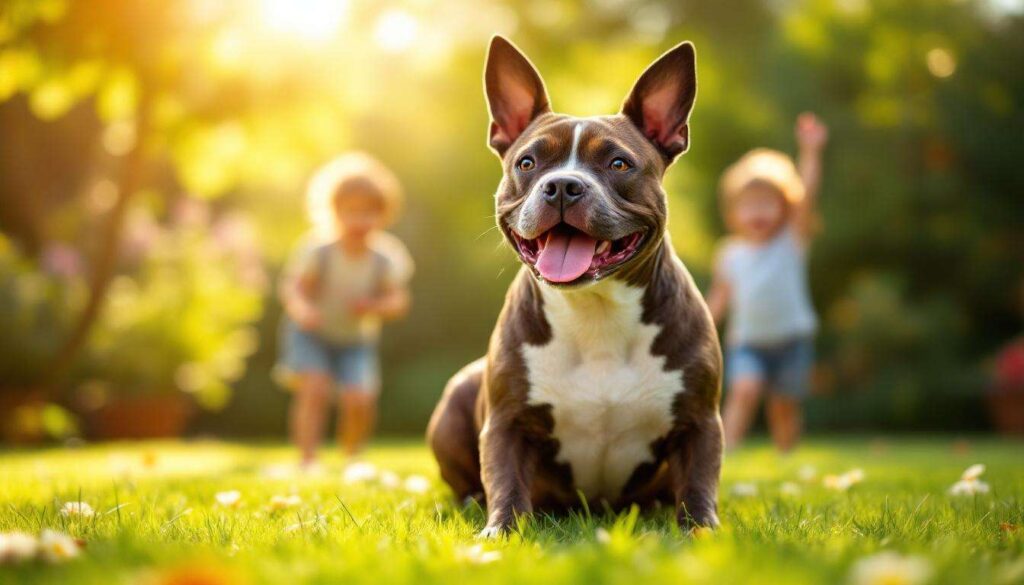
The Staffordshire Bull Terrier often finds itself at the centre of heated debates amongst prospective dog owners, particularly those with young families. This muscular, medium-sized breed carries a reputation that doesn’t always reflect its true nature, leading many parents to wonder whether it represents a safe and suitable choice for households with small children. Understanding the breed’s history, temperament, and specific needs becomes essential when making such an important decision that will affect the entire family dynamic for years to come.
Introduction to the Staffordshire Bull Terrier
Origins and breed development
The Staffordshire Bull Terrier emerged in the English Midlands during the 19th century, originally bred for blood sports such as bull-baiting and dog fighting. When these activities became illegal in 1835, the breed gradually transitioned into a companion animal, with breeders focusing on developing its loyal and affectionate qualities whilst maintaining its distinctive physical characteristics. The Kennel Club officially recognised the breed in 1935, cementing its status as a legitimate pedigree dog.
Physical characteristics
This compact yet powerful breed exhibits several distinctive features:
- Height ranging from 36 to 41 centimetres at the shoulder
- Weight typically between 11 and 17 kilograms
- Short, smooth coat requiring minimal grooming
- Broad head with pronounced cheek muscles
- Strong, muscular build despite modest size
These physical attributes contribute to the breed’s robust nature, making it capable of withstanding the sometimes rough play that young children might engage in, though supervision remains essential regardless of the dog’s build.
Recognition and popularity
The Staffordshire Bull Terrier enjoys considerable popularity throughout the United Kingdom, consistently ranking amongst the nation’s most registered breeds. Its adaptability to various living situations and relatively modest size make it appealing to urban and suburban families alike. However, this popularity has occasionally led to irresponsible breeding practices, making it crucial to select puppies from reputable breeders who prioritise temperament alongside physical conformation.
Understanding these foundational aspects of the breed provides context for examining the temperamental qualities that truly determine its suitability for family life.
The character of the Staffordshire Bull Terrier
Affectionate and loyal nature
The Staffordshire Bull Terrier has earned the nickname “nanny dog” amongst enthusiasts, reflecting its historically documented patience and gentleness with children. This breed forms exceptionally strong bonds with family members, often displaying an almost protective devotion towards younger household members. Their affectionate nature manifests through constant desire for physical contact, whether cuddling on the sofa or simply remaining close to their human companions throughout daily activities.
Intelligence and trainability
Staffordshires possess considerable intelligence, though their stubborn streak can occasionally challenge inexperienced handlers. They respond best to:
- Positive reinforcement training methods
- Consistent rules and boundaries
- Short, engaging training sessions
- Reward-based motivation systems
- Patient, firm guidance without harsh corrections
This combination of intelligence and determination means that early training becomes particularly important in households with children, establishing appropriate behaviours and responses before problematic patterns develop.
Temperament considerations
| Positive traits | Potential challenges |
|---|---|
| Extremely affectionate with family | Can be strong-willed |
| Patient with children | High prey drive |
| Playful and energetic | May show dog aggression |
| Loyal and protective | Requires firm boundaries |
| Courageous and confident | Can be overenthusiastic |
These temperamental characteristics highlight why proper management and training prove essential, particularly when integrating the breed into a family environment where unpredictable situations frequently arise.
The inherent qualities of the Staffordshire Bull Terrier provide a solid foundation, but these traits require careful development through appropriate socialisation practices.
The Staffordshire Bull Terrier and socialisation
Early socialisation importance
Comprehensive socialisation represents perhaps the single most critical factor in determining whether a Staffordshire Bull Terrier becomes a suitable family companion. This process should commence immediately upon bringing a puppy home, ideally between eight and sixteen weeks of age when dogs remain most receptive to new experiences. Exposing the young dog to various people, environments, sounds, and situations helps prevent fear-based reactions and builds confidence that translates into appropriate adult behaviour.
Socialisation with children
Specific attention must focus on positive interactions with children of various ages and energy levels. Effective strategies include:
- Supervised meetings with calm, dog-savvy children initially
- Teaching children appropriate interaction methods before introducing the dog
- Rewarding the dog for gentle behaviour around youngsters
- Gradually increasing exposure to more energetic child interactions
- Creating positive associations through treats and praise during child encounters
- Ensuring the dog always has an escape route if feeling overwhelmed
Ongoing socialisation requirements
Socialisation doesn’t end with puppyhood; continuous exposure throughout the dog’s life maintains and reinforces appropriate responses. Regular visits to dog-friendly locations, controlled interactions with other animals, and varied experiences prevent the development of reactivity or fear responses that might compromise safety around children. Many owners find puppy classes and ongoing training groups particularly valuable for maintaining socialisation whilst simultaneously working on obedience skills.
Whilst socialisation shapes behaviour, the breed’s physical needs also significantly impact its suitability for family life.
Energetic and exercise needs
Daily exercise requirements
The Staffordshire Bull Terrier possesses considerable energy that demands regular outlet through structured exercise. Adult dogs typically require a minimum of sixty to ninety minutes of physical activity daily, divided across multiple sessions. This exercise should include:
- Brisk walks on lead
- Secure off-lead running in enclosed areas
- Interactive play sessions
- Mental stimulation through training exercises
- Appropriate games such as fetch or tug
Families must honestly assess whether their lifestyle accommodates these substantial exercise demands, as insufficient physical activity often leads to destructive behaviours and hyperactivity that proves incompatible with young children’s safety.
Mental stimulation needs
Beyond physical exercise, Staffordshire Bull Terriers require significant mental engagement to prevent boredom-related problems. Puzzle toys, scent work, obedience training, and interactive games provide essential cognitive challenges. A mentally stimulated dog demonstrates calmer behaviour indoors, making it more suitable for family environments where children’s activities create inherent excitement and stimulation.
Exercise considerations for families
| Family activity | Suitability for Staffordshires |
|---|---|
| Garden play with children | Excellent with supervision |
| Jogging or running | Ideal for adult dogs |
| Swimming | Many enjoy water activities |
| Agility training | Excellent physical and mental outlet |
| Dog parks | Requires caution due to potential dog aggression |
Meeting these exercise requirements becomes easier when integrated into family routines, potentially providing opportunities for children to participate in age-appropriate dog care responsibilities whilst ensuring the dog’s needs remain fulfilled.
With energy properly channelled through exercise, attention turns to the practical safety considerations that every parent must evaluate.
The Staffordshire Bull Terrier and children’s safety
Supervision requirements
Regardless of breed temperament, constant supervision remains non-negotiable when any dog interacts with young children. Staffordshire Bull Terriers’ enthusiasm and strength mean they can accidentally knock over small children during exuberant greetings or play. Parents must maintain vigilance to intervene before situations escalate, teaching both children and dogs appropriate interaction boundaries that protect everyone involved.
Teaching children appropriate behaviour
Children must learn specific rules governing dog interactions:
- Never disturb the dog whilst eating or sleeping
- Avoid pulling ears, tail, or climbing on the dog
- Recognise warning signs of stress or discomfort
- Understand that the dog isn’t a toy
- Respect the dog’s personal space and retreat areas
- Always ask permission before approaching or touching
These guidelines apply universally but prove particularly important with powerful breeds whose physical capabilities could result in accidental injury despite entirely benign intentions.
Managing potential risks
Several practical measures significantly enhance safety:
- Providing the dog with a designated safe space away from children’s activities
- Using baby gates to separate dog and children when supervision isn’t possible
- Implementing consistent training protocols that all family members follow
- Recognising and respecting the dog’s stress signals
- Never leaving young children and dogs together unsupervised
- Maintaining regular veterinary care to prevent pain-related reactivity
Breed-specific considerations
The Staffordshire Bull Terrier’s high pain tolerance means it may not react immediately to accidental rough handling, but this doesn’t indicate unlimited patience. Their powerful jaws, whilst rarely used aggressively towards family members, demand respect and appropriate management. Additionally, their tendency towards dog aggression necessitates careful management during walks or visits to areas where other dogs might approach children simultaneously.
These safety considerations, whilst requiring commitment, don’t necessarily disqualify the breed but rather highlight the responsibilities inherent in dog ownership alongside young children.
Conclusion: is it a good choice for your family ?
The Staffordshire Bull Terrier can indeed prove an excellent family companion when circumstances align appropriately. This breed offers exceptional loyalty, affection, and patience with children, combined with a robust build that tolerates the inevitable bumps of family life. However, suitability depends entirely upon the family’s commitment to comprehensive socialisation, consistent training, adequate exercise provision, and unwavering supervision. Families must honestly evaluate whether they possess the time, energy, and dedication required to meet this breed’s substantial needs whilst maintaining the structure necessary for safe coexistence with young children. When these requirements are met, the Staffordshire Bull Terrier frequently becomes a beloved family member whose devotion and playful nature enrich household life immeasurably.