


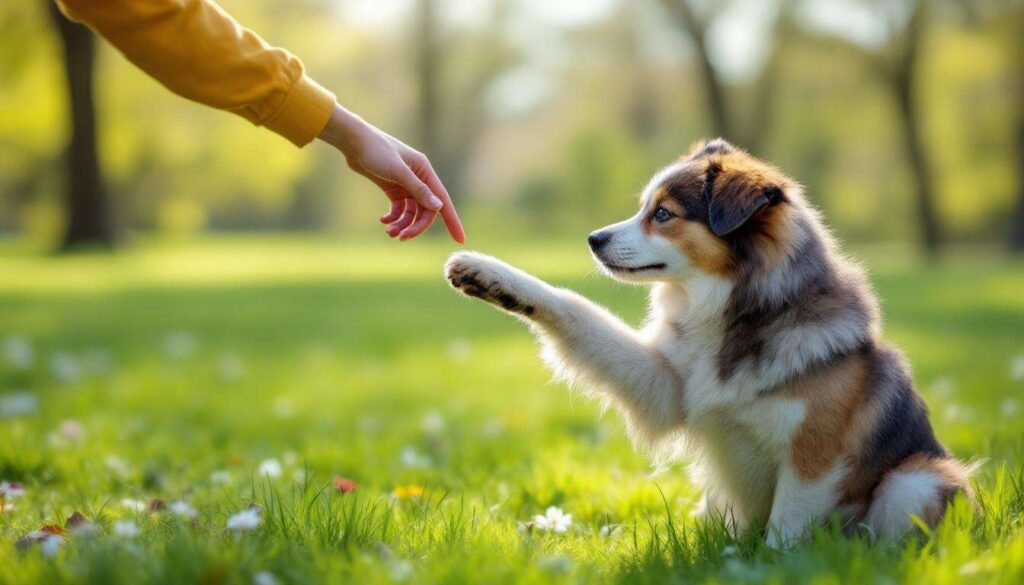
When your dog lifts its paw and places it gently on your hand or leg, the gesture might seem like a simple friendly greeting or an invitation to play. However, animal behaviour experts have revealed that this common canine action carries far more complex meanings than most owners realise. Understanding what your dog truly communicates through this behaviour can significantly improve the bond you share and help you respond appropriately to their needs. This seemingly innocent gesture is actually a sophisticated form of communication rooted in instinct, learned behaviour, and emotional expression.
Understanding the dog’s paw gesture
The origins of pawing behaviour
The act of pawing originates from puppyhood, when young dogs use their paws to stimulate milk flow from their mothers. This instinctive behaviour becomes deeply ingrained and evolves as dogs mature. Puppies learn quickly that using their paws generates responses from their environment, whether from their mother, littermates, or eventually their human companions. This early conditioning establishes pawing as a primary communication tool that persists throughout a dog’s life.
What the gesture represents
According to veterinary behaviourists, when a dog offers its paw, it typically signals one of several intentions. The gesture functions as a deliberate attempt to communicate rather than a random action. Dogs have observed that this behaviour consistently produces reactions from humans, reinforcing its use as an effective communication strategy. The context in which the pawing occurs provides crucial clues about its specific meaning in each situation.
Recognising that this behaviour stems from both instinct and learned experience helps owners better interpret their dog’s intentions, which naturally leads to exploring the specific motivations driving this action.
The motivations behind the behaviour
Attention-seeking and communication
The most common reason dogs place their paw on you is to request attention. Your dog has learned that this physical contact reliably captures your focus, especially if you’ve previously responded by petting, talking to, or looking at them. This represents a calculated communication strategy rather than spontaneous affection. Dogs are remarkably perceptive about which behaviours generate desired responses from their owners.
Expressing specific needs
Beyond general attention, the paw gesture often communicates particular requirements. Your dog might be signalling:
- Hunger or thirst, particularly if the gesture occurs near meal times
- The need to go outside for toileting purposes
- Discomfort or pain requiring your attention
- Anxiety or stress seeking reassurance
- A desire for play or exercise
Reinforcement through learned behaviour
Dogs quickly learn which actions yield positive outcomes. If pawing has consistently resulted in treats, affection, or play, your dog will repeat this behaviour whenever they want these rewards. This creates a reinforcement loop where the gesture becomes an established part of your communication dynamic. Understanding this learned component is essential for managing the behaviour appropriately.
Emotional expression and bonding
Sometimes, pawing genuinely expresses affection and connection. Dogs use physical touch to strengthen social bonds within their pack, and you are part of that pack. This tactile communication reinforces the relationship and provides comfort to both parties. However, distinguishing between genuine affection and manipulative attention-seeking requires careful observation of accompanying body language.
To accurately interpret what your dog means when offering their paw, you need to understand the broader context of canine communication methods.
Deciphering canine body language
Reading accompanying signals
The paw gesture never occurs in isolation. Observing your dog’s entire body provides essential context for interpretation. A dog seeking attention might display bright eyes, an alert posture, and a wagging tail. Conversely, a dog experiencing anxiety might paw whilst showing lowered ears, a tucked tail, or tense body posture. These accompanying signals reveal the true motivation behind the gesture.
Contextual interpretation
The circumstances surrounding the pawing behaviour offer vital clues. Consider these contextual factors:
- Time of day and proximity to routine activities like meals or walks
- Recent changes in the household or environment
- Your current activity and whether it excludes your dog
- The presence of other people or animals
- Any recent stressful events or disruptions
Distinguishing between different types of pawing
Not all pawing behaviours are identical. A gentle, tentative touch differs significantly from persistent, forceful pawing. The intensity and frequency provide information about urgency and emotional state. A dog in genuine distress will paw more insistently than one simply seeking casual attention. Recognising these subtle variations allows for more appropriate responses.
| Pawing Type | Accompanying Behaviour | Likely Meaning |
|---|---|---|
| Gentle, single touch | Relaxed body, soft eyes | Affection or mild attention request |
| Repeated, insistent | Alert posture, focused gaze | Specific need or urgent request |
| Accompanied by whining | Anxious body language | Stress, discomfort, or fear |
| With play bow | Wagging tail, bouncy movement | Invitation to play |
Once you understand what your dog is communicating through their paw gesture, knowing how to respond appropriately becomes the next important consideration.
How to respond to this gesture ?
Assessing the situation first
Before reacting to your dog’s paw, take a moment to evaluate the context. Determine whether your dog has a legitimate need or is simply seeking attention. Check if meal times are approaching, if they might need to go outside, or if anything in the environment could be causing distress. This thoughtful assessment prevents reinforcing manipulative behaviour whilst ensuring genuine needs are met.
Responding to legitimate needs
When your dog’s pawing indicates a genuine requirement, respond promptly and appropriately. If they need to go outside, take them immediately. If they appear distressed, investigate the cause and provide reassurance. Meeting legitimate needs strengthens trust and reinforces appropriate communication. This validates their attempt to communicate whilst addressing the underlying issue.
Managing attention-seeking behaviour
When pawing is purely for attention without a genuine need, your response should be carefully considered. Immediately rewarding the behaviour reinforces it, potentially creating a demanding pet. Instead, consider these strategies:
- Wait for your dog to stop pawing before giving attention
- Redirect to an appropriate behaviour, such as sitting calmly
- Reward quiet, patient waiting rather than demanding gestures
- Ensure your dog receives adequate attention at designated times
- Provide sufficient mental and physical stimulation throughout the day
Teaching alternative communication methods
You can train your dog to communicate needs through more appropriate behaviours. Teaching commands like “outside” or “play” gives your dog specific tools for expressing themselves. Training your dog to sit quietly when they need something creates a more manageable communication system than persistent pawing. This requires consistency but produces a calmer, more predictable interaction pattern.
Whilst learning to respond appropriately is important, understanding what not to do is equally crucial for maintaining a healthy relationship with your dog.
Mistakes to avoid with your dog
Inconsistent responses
One of the most detrimental mistakes owners make is responding inconsistently to pawing behaviour. Sometimes giving attention and other times ignoring the same gesture confuses your dog and often intensifies the behaviour. Dogs learn through consistency, and mixed messages prevent them from understanding what you expect. Establish clear guidelines for when and how you’ll respond to pawing and maintain these boundaries consistently.
Reinforcing demanding behaviour
Immediately rewarding every instance of pawing, particularly when done for attention, creates a demanding pet. Dogs quickly learn that pawing guarantees a response, leading to increased frequency and intensity. This can escalate to more problematic behaviours like jumping, barking, or even aggression when demands aren’t met. Breaking this cycle requires patience and commitment to new response patterns.
Ignoring genuine distress signals
Whilst avoiding reinforcement of attention-seeking is important, dismissing genuine distress is equally problematic. When pawing indicates pain, fear, or urgent needs, ignoring these signals damages trust and can allow serious issues to worsen. Learning to distinguish between manipulation and genuine need is essential for responsible pet ownership. Always investigate persistent or unusual pawing behaviour.
Punishing the behaviour
Responding to pawing with punishment or anger is counterproductive and harmful. Your dog is attempting to communicate, and punishment discourages all communication attempts, not just unwanted ones. This can lead to anxiety, fear, and a breakdown in the human-animal bond. Instead of punishment, focus on redirecting and rewarding appropriate behaviours.
Failing to address underlying causes
Treating pawing as an isolated behaviour without considering root causes addresses symptoms rather than problems. If your dog constantly seeks attention through pawing, they might not be receiving adequate mental stimulation, physical exercise, or social interaction. Addressing these fundamental needs often resolves the behaviour more effectively than managing the gesture itself.
Understanding these common mistakes highlights the broader importance of recognising and responding to non-verbal communication in animals.
The importance of non-verbal signals in animals
The complexity of animal communication
Dogs and other animals rely predominantly on non-verbal communication to express themselves and navigate their social environments. Unlike humans, who depend heavily on spoken language, animals use body posture, facial expressions, vocalisations, and physical gestures to convey information. The paw gesture represents just one element of this sophisticated communication system. Recognising the richness of animal communication enhances our ability to understand and respond to our pets appropriately.
Building stronger human-animal bonds
When owners learn to accurately interpret their dog’s non-verbal signals, the relationship deepens significantly. Understanding what your dog is truly communicating creates trust, reduces frustration on both sides, and allows for more effective interaction. This mutual understanding forms the foundation of a harmonious household where both human and animal needs are recognised and respected.
Improving animal welfare
Recognising and responding to non-verbal signals directly impacts animal welfare. Dogs that can successfully communicate their needs experience less stress and anxiety. When owners understand these signals, they can identify problems earlier, whether related to health, behaviour, or environmental factors. This awareness allows for prompt intervention and prevents minor issues from escalating into serious problems.
The simple act of your dog placing their paw on you carries far more significance than many owners realise. Rather than a playful gesture or casual greeting, this behaviour represents a deliberate communication attempt rooted in instinct and learned experience. Whether your dog seeks attention, expresses a specific need, or signals distress, understanding the true meaning behind the paw gesture allows you to respond appropriately. By observing accompanying body language, considering context, and avoiding common mistakes, you can strengthen your bond with your dog whilst ensuring their needs are met. Recognising the sophistication of canine non-verbal communication ultimately enhances both your relationship and your dog’s overall wellbeing.