


The humble earthworm, often overlooked beneath our feet, plays a vital role in maintaining soil health and supporting ecosystems worldwide. These segmented invertebrates have fascinated scientists and gardeners alike, yet many questions remain about their biology and longevity. Understanding how long earthworms live provides insight into their ecological importance and the delicate balance they maintain within their underground habitats. The lifespan of these creatures varies considerably depending on species, environmental conditions, and numerous external factors that shape their existence from birth to natural death.
Average lifespan of an earthworm
Typical longevity across common species
The lifespan of earthworms differs significantly between species, with most common garden earthworms living between one and two years under natural conditions. However, this figure represents only a general baseline, as certain species demonstrate remarkable longevity when conditions prove favourable. The Lumbricus terrestris, commonly known as the common earthworm or nightcrawler, typically survives for approximately four to eight years in optimal environments, whilst some documented cases have recorded individuals reaching a decade or more.
Variations in lifespan by species
Different earthworm species exhibit considerable variation in their life expectancy:
- Lumbricus terrestris: 4-8 years in favourable conditions
- Eisenia fetida (red wiggler): 1-2 years typically
- Aporrectodea caliginosa: 2-3 years on average
- Octolasion cyaneum: 3-5 years under optimal circumstances
Captivity versus wild populations
Research has demonstrated that earthworms maintained in controlled laboratory environments often exceed the lifespan of their wild counterparts. Protected from predators, extreme weather conditions, and soil disturbances, captive specimens can live substantially longer. Some studies have documented Lumbricus terrestris individuals surviving for up to ten years in carefully managed worm farms, highlighting the significant impact of environmental stressors on natural populations.
These lifespan variations are not merely statistical curiosities but reflect the complex interplay of biological and environmental elements that determine survival rates.
Factors influencing the longevity of earthworms
Soil quality and composition
The substrate in which earthworms reside directly affects their health and longevity. Nutrient-rich soil containing adequate organic matter provides essential sustenance, whilst poor-quality soil lacking decomposing plant material forces earthworms to expend excessive energy searching for food. Soil pH levels also play a critical role, with most species preferring slightly acidic to neutral conditions between 6.0 and 7.0. Compacted or contaminated soil reduces oxygen availability and introduces toxic substances that can dramatically shorten lifespan.
Moisture levels and hydration
Earthworms breathe through their skin, requiring consistent moisture to facilitate gas exchange. Soil that becomes too dry causes dehydration and suffocation, whilst waterlogged conditions drown these creatures by preventing oxygen absorption. The ideal moisture content ranges between 60-80% of the soil’s water-holding capacity, creating an environment where earthworms can thrive and potentially reach their maximum lifespan.
Temperature stability
| Temperature Range | Impact on Earthworms | Survival Duration |
|---|---|---|
| Below 0°C | Freezing and death | Hours to days |
| 0-10°C | Dormancy, reduced activity | Extended periods possible |
| 10-25°C | Optimal activity and reproduction | Maximum lifespan potential |
| Above 30°C | Heat stress, seeking cooler depths | Reduced longevity |
Understanding these influential factors sets the stage for examining how earthworms develop throughout their existence.
Life cycle of the earthworm: birth to maturity
Reproduction and cocoon formation
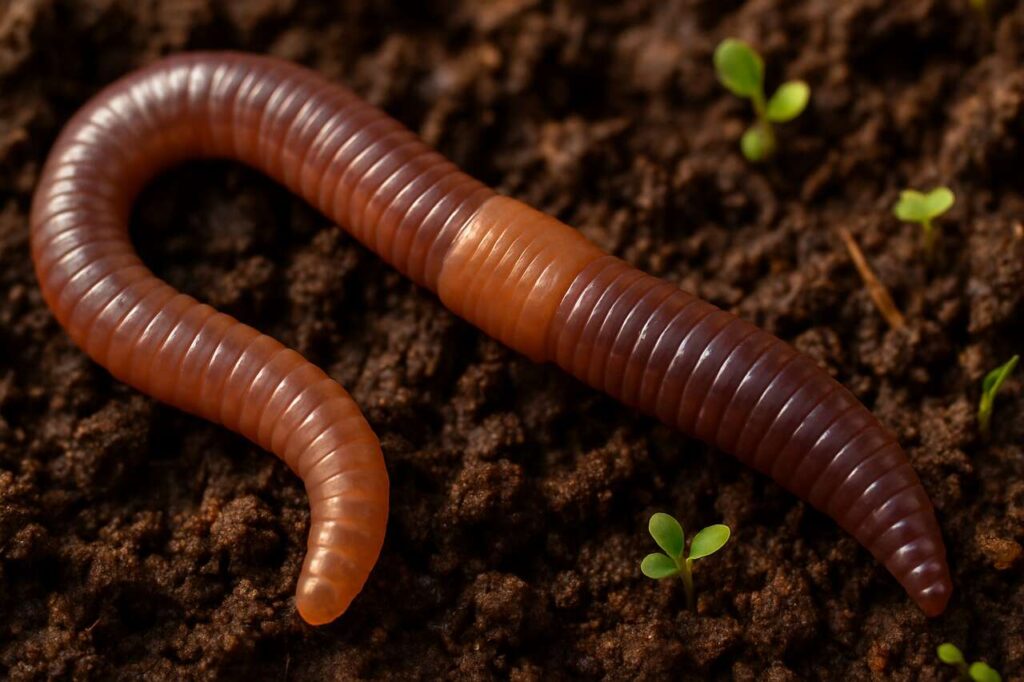
Earthworms are hermaphrodites, possessing both male and female reproductive organs, yet they require a partner for successful reproduction. During mating, two earthworms exchange sperm, and each subsequently produces a cocoon containing fertilised eggs. The distinctive band visible on mature earthworms, called the clitellum, secretes the cocoon material. Each cocoon typically contains between one and five eggs, though this varies by species.
Hatching and juvenile development
The incubation period for earthworm cocoons ranges from two weeks to three months, depending primarily on temperature and moisture conditions. Upon hatching, juvenile earthworms emerge as miniature versions of adults, measuring only a few millimetres in length. These young earthworms immediately begin feeding on organic matter and grow rapidly under favourable conditions.
Sexual maturity timeline
The journey to reproductive maturity varies considerably among species:
- Red wigglers reach maturity in approximately 60-90 days
- Common earthworms require 6-12 months to develop a clitellum
- Larger species may need up to 18 months before reproduction
- Growth rate depends heavily on food availability and temperature
Once mature, earthworms can reproduce multiple times throughout their remaining lifespan, contributing to population sustainability. This reproductive capacity, however, is constantly challenged by numerous threats to their survival.
Health status and natural predators
Common diseases and parasites
Whilst earthworms possess remarkable regenerative abilities, they remain susceptible to various pathogens and parasites. Bacterial infections, fungal diseases, and parasitic nematodes can significantly reduce lifespan. Contaminated soil introduces harmful microorganisms that compromise the earthworm’s immune system, leading to premature death. Poor nutrition weakens their natural defences, making them more vulnerable to disease.
Predation pressure
Earthworms face constant threats from a diverse array of predators that significantly impact their life expectancy. Birds, particularly robins and blackbirds, consume vast quantities of earthworms, especially during breeding season when feeding their young. Moles tunnel through soil specifically to hunt earthworms, which constitute a primary food source. Additional predators include:
- Hedgehogs and shrews
- Badgers and foxes
- Beetles and centipedes
- Snakes and amphibians
- Parasitic flies that target earthworm cocoons
Injury and regeneration
Earthworms possess the extraordinary ability to regenerate lost segments, though this capacity has limitations. Damage to the anterior segments containing vital organs often proves fatal, whilst posterior damage can be repaired. The regeneration process requires substantial energy, potentially reducing overall lifespan even when survival is achieved. Frequent injuries from gardening tools, predator attacks, or environmental hazards accumulate stress that shortens longevity.
Beyond these biological threats, the broader environment in which earthworms exist exerts profound influence on their survival prospects.
Impact of environment and climate
Seasonal variations and survival strategies
Earthworms have evolved sophisticated mechanisms to cope with seasonal changes that would otherwise prove lethal. During winter months, many species burrow deeper into the soil, below the frost line, entering a state of reduced metabolic activity. Summer droughts trigger similar responses, with earthworms coiling into tight balls within deeper soil chambers, secreting a protective mucus coating to prevent desiccation. These survival strategies enable earthworms to endure harsh conditions but come at the cost of reduced feeding and growth, potentially affecting overall lifespan.
Human activities and habitat disruption
Agricultural practices, urban development, and chemical applications dramatically alter earthworm habitats and life expectancy. Intensive tillage destroys burrow systems and directly kills significant populations. Pesticides, herbicides, and synthetic fertilisers introduce toxins that accumulate in earthworm tissues, causing chronic health problems and premature death. Soil compaction from heavy machinery reduces oxygen availability and restricts movement, creating inhospitable conditions.
Climate change considerations
Shifting weather patterns pose new challenges for earthworm populations. Increased frequency of extreme weather events, including prolonged droughts and intense flooding, pushes earthworms beyond their adaptive capacities. Rising temperatures alter soil moisture dynamics and may expand the range of certain predators whilst making traditional habitats unsuitable. These environmental pressures collectively reduce average lifespan across populations, though some species demonstrate greater resilience than others.
Despite facing these numerous challenges, earthworms continue to provide irreplaceable services to the natural world.
Contribution of earthworms to the ecosystem
Soil structure and nutrient cycling
Earthworms function as ecosystem engineers, fundamentally transforming the soil through which they move. Their burrowing activities create channels that improve water infiltration and root penetration, whilst their castings contain concentrated nutrients in plant-available forms. Research indicates that earthworm activity can increase soil porosity by up to 30%, dramatically enhancing agricultural productivity and natural ecosystem function. The organic matter they consume passes through their digestive system, emerging as nutrient-rich castings that contain significantly higher concentrations of nitrogen, phosphorus, and potassium compared to surrounding soil.
Carbon sequestration and decomposition
Through their feeding activities, earthworms accelerate the decomposition of organic matter, playing a crucial role in carbon cycling. They fragment leaf litter and plant debris, increasing surface area for microbial action and facilitating the incorporation of organic material into deeper soil layers. This process contributes to long-term carbon storage, helping mitigate atmospheric carbon dioxide levels. Studies suggest that earthworm populations can process several tonnes of soil per hectare annually, highlighting their substantial ecological impact.
Supporting biodiversity
The presence of healthy earthworm populations supports broader ecosystem biodiversity:
- Enhanced soil structure benefits plant root systems and microbial communities
- Burrows provide habitat for other soil organisms
- Nutrient cycling supports diverse plant communities
- Earthworms serve as a food source for numerous predator species
- Their activities influence soil pH and moisture distribution
The longevity of individual earthworms directly correlates with their cumulative ecological contribution, making factors that extend their lifespan beneficial for entire ecosystems.
Earthworm longevity varies considerably across species, with common garden varieties typically surviving one to two years whilst larger species may reach eight years or more under optimal conditions. Their lifespan depends on multiple interconnected factors, including soil quality, moisture levels, temperature stability, and predation pressure. Understanding the life cycle from cocoon to maturity reveals the remarkable resilience of these creatures, whilst acknowledging the health challenges and environmental threats they face. Human activities and climate change increasingly impact earthworm populations, yet their essential contributions to soil health, nutrient cycling, and ecosystem function remain irreplaceable. Protecting earthworm habitats and promoting practices that support their longevity ultimately benefits agricultural productivity and environmental sustainability.