


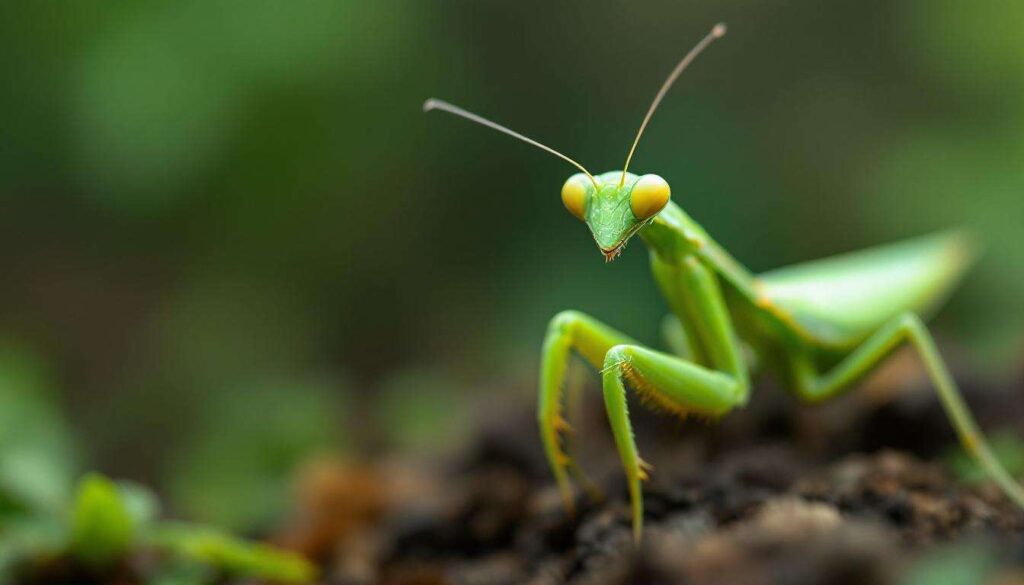
The praying mantis, with its distinctive triangular head and powerful forelegs, has captivated naturalists and insect enthusiasts for centuries. These remarkable predators, known for their patient hunting style and unique behaviours, lead lives that are both brief and intensely purposeful. Understanding the lifespan of these creatures reveals much about their ecological role and the delicate balance between survival and reproduction in the insect world.
Life expectancy of praying mantises: a fascinating introduction
The lifespan of a praying mantis is surprisingly variable, influenced by numerous biological and environmental factors. Most species in their natural habitat live between six months and one year, though this can fluctuate significantly based on size, species, and external conditions.
General lifespan parameters
Praying mantises experience different life expectancies depending on their physical characteristics. Smaller species typically survive for four to eight weeks, whilst their larger counterparts can endure for four to six months. This disparity reflects the metabolic demands and ecological pressures faced by different sized individuals within the mantis family.
| Mantis Size Category | Average Lifespan (Wild) | Maximum Lifespan (Captivity) |
|---|---|---|
| Small species | 4-8 weeks | 3-4 months |
| Medium species | 4-6 months | 12-15 months |
| Large species | 6-12 months | 18-24 months |
Sexual dimorphism in longevity
Female mantises generally outlive their male counterparts, particularly following the reproductive period. Males often face considerable mortality risks during mating, including the well-documented phenomenon of sexual cannibalism. Females, burdened with the energy-intensive task of egg production, nonetheless demonstrate greater resilience and extended survival rates when adequate nutrition is available.
These fundamental differences in lifespan set the stage for understanding how mantises progress through their remarkable developmental journey.
The phases of a praying mantis’s life cycle
The praying mantis undergoes incomplete metamorphosis, progressing through three distinct stages that collectively define its existence. Each phase presents unique challenges and characteristics that influence overall longevity.
The egg stage and ootheca protection
Following mating, female mantises produce a specialised egg case called an ootheca, which serves as a protective fortress for developing offspring. This foam-like structure hardens shortly after deposition, creating a resilient barrier against predators and environmental extremes. A single ootheca can contain between 10 and 400 eggs, depending on the species and the female’s nutritional status.
- Oothecae remain dormant throughout winter in temperate climates
- Egg development duration varies from three weeks to six months
- Temperature and humidity critically affect hatching success
- Multiple oothecae may be produced by a single female during her lifetime
The nymph stage: growth through moulting
Upon hatching, miniature mantises called nymphs emerge, resembling adults but lacking wings and reproductive capability. These juveniles must undergo multiple moults, typically between five and ten, before reaching maturity. Each moult represents a vulnerable period where the mantis is temporarily defenceless whilst its new exoskeleton hardens.
The nymph stage constitutes the longest portion of a mantis’s life, often spanning several months. During this time, survival depends heavily on successful hunting, predator avoidance, and favourable environmental conditions.
Adult stage and reproductive maturity
The final moult transforms the nymph into a sexually mature adult, complete with fully developed wings in most species. This stage, whilst the shortest in duration, represents the culmination of the mantis’s developmental journey. Adults focus primarily on reproduction, with females dedicating substantial energy to egg production and males seeking mating opportunities.
Understanding these life stages provides context for examining how environmental conditions dramatically affect mantis survival.
Longevity differences: nature vs captivity
The environment in which a praying mantis lives profoundly influences its potential lifespan, with captive specimens often significantly outliving their wild counterparts.
Challenges of survival in the wild
Natural habitats present numerous threats that curtail mantis longevity. Predation remains the primary cause of premature death, with birds, frogs, lizards, and even other mantises consuming these insects. Weather extremes, including drought, flooding, and unseasonable temperature fluctuations, also claim many lives.
- Inconsistent food availability during seasonal changes
- Parasitic wasps and flies targeting mantis oothecae
- Habitat destruction reducing suitable hunting grounds
- Competition with other predatory insects for resources
These cumulative pressures mean that relatively few wild mantises reach their theoretical maximum lifespan, with many perishing well before completing their full reproductive potential.
Extended life in controlled environments
Captive mantises benefit from consistent food supplies, protection from predators, and stable temperature and humidity levels. Under optimal conditions, mantises can live up to 18 months, with some larger species reaching two years. This extended longevity allows for more comprehensive observation of their behaviours and life cycles.
| Environmental Factor | Wild Conditions | Captive Conditions |
|---|---|---|
| Food availability | Variable and seasonal | Consistent and controlled |
| Predation risk | High and constant | Eliminated |
| Temperature stability | Fluctuating | Regulated |
| Disease exposure | Moderate to high | Low with proper hygiene |
Recognising these environmental differences leads naturally to exploring the specific factors that determine individual mantis longevity.
Factors influencing the lifespan of praying mantises
Multiple interconnected variables determine how long an individual mantis will live, ranging from genetic predispositions to immediate environmental conditions.
Temperature and metabolic rate
Temperature directly affects mantis metabolism and activity levels. Cooler temperatures slow metabolic processes, potentially extending lifespan by reducing the rate of cellular ageing. However, excessively low temperatures can prove fatal, whilst optimal warmth promotes healthy development and reproduction.
Maintaining temperatures between 20 and 28 degrees Celsius typically supports healthy mantis development, though specific requirements vary by species and their native climate adaptations.
Nutritional quality and feeding frequency
Diet plays a crucial role in mantis longevity. A protein-rich diet featuring live prey such as flies, crickets, and moths provides essential nutrients for growth, reproduction, and cellular repair. Inadequate nutrition shortens lifespan considerably, leading to weakened immune systems, reduced reproductive success, and premature death.
- Overfeeding can cause obesity and reduced mobility
- Underfeeding results in stunted growth and early mortality
- Prey variety ensures balanced nutritional intake
- Hydration through prey moisture content or misting is essential
Species-specific genetic factors
Genetic programming establishes baseline longevity parameters for each mantis species. Larger species generally possess longer lifespans, reflecting their slower developmental rates and extended reproductive periods. These inherent biological limitations cannot be overcome, even under perfect environmental conditions.
These various influences interact differently across the diverse array of mantis species found worldwide.
Varieties of praying mantises and their lifespan
With over 2,400 described species globally, praying mantises exhibit remarkable diversity in size, appearance, and longevity. Understanding species-specific lifespans helps enthusiasts and researchers set appropriate expectations.
Common species and their typical lifespans
Different mantis species demonstrate characteristic longevity patterns. The European mantis typically lives six to eight months in the wild, whilst the Chinese mantis can reach similar ages under favourable conditions. Smaller species such as certain flower mantises may complete their entire life cycle in just three to four months.
| Species Type | Wild Lifespan | Captive Lifespan |
|---|---|---|
| European mantis | 6-8 months | 10-12 months |
| Chinese mantis | 6-9 months | 12-15 months |
| Orchid mantis | 5-7 months | 8-10 months |
| Giant Asian mantis | 8-12 months | 15-18 months |
Parthenogenetic species and reproduction
Some mantis species can reproduce through parthenogenesis, where females produce viable eggs without male fertilisation. This remarkable adaptation affects population dynamics and potentially influences lifespan patterns, as females avoid the risks associated with mating encounters.
For those maintaining mantises in captivity, specific care strategies can maximise their pets’ longevity.
Strategies to extend the life of mantises in captivity
Dedicated keepers can implement several proven techniques to help captive mantises achieve their maximum potential lifespan whilst maintaining quality of life.
Optimal housing and environmental control
Providing appropriate enclosure size is fundamental, with containers at least three times the mantis’s length in height and twice its length in width. Adequate ventilation prevents fungal growth whilst maintaining necessary humidity levels between 40 and 70 percent, depending on species requirements.
- Use substrates that retain moisture without becoming waterlogged
- Install branches and plants for climbing and moulting support
- Maintain species-appropriate temperature ranges consistently
- Provide proper lighting cycles mimicking natural day-night patterns
Feeding protocols and nutritional management
Establishing regular feeding schedules appropriate to the mantis’s age and size promotes healthy development. Nymphs require daily feeding of appropriately sized prey, whilst adults may eat every two to three days. Prey items should be no larger than the mantis’s head width to prevent injury or feeding difficulties.
Health monitoring and stress reduction
Regular observation allows early detection of health issues such as mismoulting, parasitic infections, or nutritional deficiencies. Minimising handling reduces stress, which can compromise immune function and shorten lifespan. Creating a stable, predictable environment helps mantises thrive throughout their natural life cycle.
The praying mantis, despite its relatively brief existence, demonstrates remarkable adaptations that maximise reproductive success within strict temporal constraints. Whether surviving four months in the wild or reaching 18 months in captivity, these fascinating predators make the most of their time through efficient hunting, strategic reproduction, and remarkable resilience. Understanding the factors that influence their lifespan not only enhances captive care but also deepens appreciation for these extraordinary insects and their ecological significance. By recognising the interplay between species characteristics, environmental conditions, and individual care, enthusiasts can provide optimal conditions that honour the mantis’s biological needs whilst extending opportunities for observation and study.