



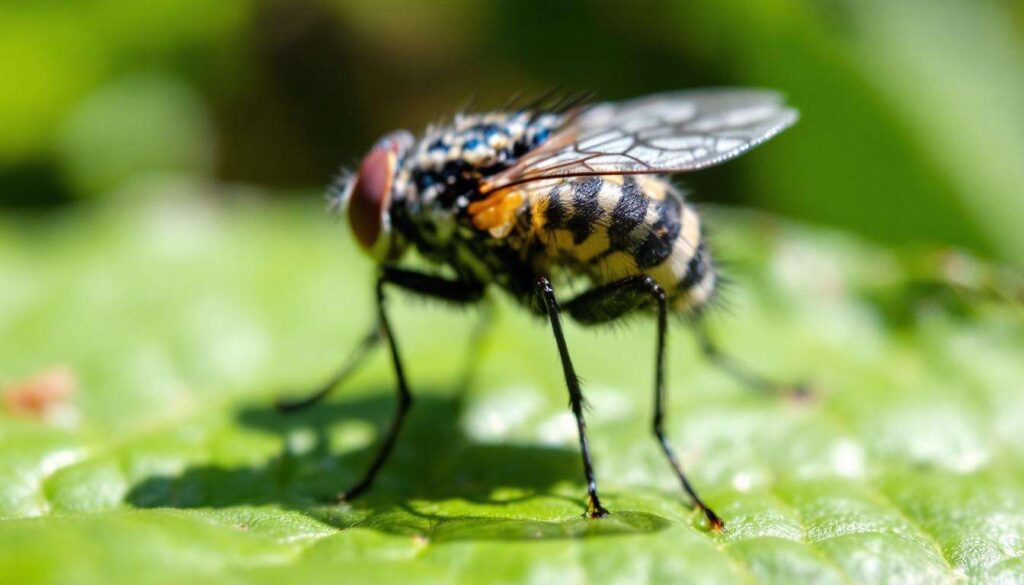
Flies are among the most ubiquitous insects on the planet, yet their actual lifespan remains widely misunderstood. The persistent myth that these creatures live for merely 24 hours has endured for generations, but scientific observation reveals a far more complex reality. Understanding the true life expectancy of flies, particularly the common housefly, requires examining multiple biological and environmental factors that influence their survival from egg to natural death.
Housefly’s lifespan
Average duration in optimal conditions
The common housefly (Musca domestica) typically survives between 15 and 30 days under favourable environmental circumstances. This lifespan significantly exceeds the popular misconception of a single day, though it remains relatively brief compared to many other insects. Female houseflies generally outlive their male counterparts by several days, with some specimens recorded living up to 60 days in laboratory settings where predators, disease, and environmental stressors are eliminated.
Variations across fly species
Different fly species exhibit considerable variation in longevity:
- Fruit flies (Drosophila melanogaster) typically live 40 to 50 days
- Horse flies can survive 30 to 60 days as adults
- Blow flies generally live between 2 and 3 weeks
- Cluster flies may overwinter and live several months
These differences stem from distinct evolutionary adaptations, reproductive strategies, and ecological niches occupied by each species. The housefly’s relatively short adult lifespan is compensated by its remarkable reproductive capacity, ensuring population continuity despite individual brevity.
Understanding these baseline lifespans provides essential context for examining the biological processes that govern fly development from conception to maturity.
Life cycle of the fly: stages and developments
The egg stage: rapid beginnings
The housefly life cycle commences when a female deposits her eggs in decomposing organic material. A single female possesses the capacity to lay up to 500 eggs throughout her lifetime, typically depositing them in batches of 75 to 150. These tiny white eggs, measuring approximately 1.2 millimetres in length, hatch within 12 to 24 hours under warm conditions, releasing larvae into their nutrient-rich environment.
Larval development: the feeding phase
Upon hatching, the larvae—commonly known as maggots—begin an intensive feeding period. This stage lasts between 3 and 10 days, during which the larvae undergo three distinct moults, increasing substantially in size. Maggots are legless, cream-coloured, and equipped with hook-like mouthparts designed for consuming liquefied organic matter. They thrive in environments rich in:
- Decaying food waste
- Animal faeces
- Compost materials
- Rotting vegetation
Pupal transformation: metamorphosis enclosed
Following the larval stage, the maggot enters the pupal phase, during which it transforms into an adult fly through complete metamorphosis. The larva develops a hardened outer casing called a puparium, within which dramatic physiological changes occur. This stage typically lasts 3 to 6 days at optimal temperatures, though cooler conditions can extend this period considerably. Inside the puparium, larval tissues break down and reorganise into adult structures, including wings, legs, and compound eyes.
Adult emergence and reproduction
The adult fly emerges from the puparium fully formed, though its wings require several hours to expand and harden before flight becomes possible. Within 36 hours of emergence, adult flies reach sexual maturity and begin mating. Females commence egg-laying approximately 2 to 3 days after mating, perpetuating the cycle with remarkable efficiency.
| Life Stage | Duration | Key Characteristics |
|---|---|---|
| Egg | 12-24 hours | Laid in batches on organic matter |
| Larva | 3-10 days | Intensive feeding and growth |
| Pupa | 3-6 days | Metamorphosis within puparium |
| Adult | 15-30 days | Reproduction and dispersal |
This complete life cycle, from egg to reproductive adult, can occur in as little as 7 to 10 days under ideal conditions, enabling rapid population expansion. The efficiency of this developmental process explains why fly infestations can escalate quickly when conditions favour their reproduction.
Whilst the biological stages remain consistent, numerous external factors dramatically influence how long each phase lasts and whether individuals survive to maturity.
Factors influencing fly lifespan
Temperature and thermal preferences
Temperature represents the most significant environmental determinant of fly lifespan and development. Houseflies demonstrate optimal activity and longevity at temperatures around 30 degrees Celsius. At this temperature, metabolic processes function efficiently, enabling rapid development and extended adult survival. Conversely, temperatures below 15 degrees Celsius significantly slow development, whilst prolonged exposure to temperatures below 7 degrees Celsius typically proves fatal to adult flies.
Nutritional availability
Access to adequate nutrition profoundly affects fly survival. Adult houseflies require:
- Carbohydrates for energy, obtained from sugars and fermenting materials
- Proteins for egg production in females
- Water for hydration and metabolic processes
Flies deprived of food typically survive only 2 to 3 days, whilst those with abundant nutritional resources may extend their lifespan to the upper limits of their species’ potential. The quality and availability of larval food sources also determine developmental speed and adult body size, with well-nourished larvae producing larger, more robust adults.
Humidity levels
Relative humidity influences both survival and reproductive success. Houseflies prefer environments with 50 to 80 per cent humidity. Excessively dry conditions accelerate dehydration, particularly affecting egg viability and larval survival. Conversely, extremely high humidity can promote fungal infections that reduce adult lifespan.
Predation and natural enemies
Numerous predators and parasites significantly reduce fly populations and individual survival prospects. Natural enemies include:
- Spiders that capture adult flies in webs
- Birds that consume flies as protein sources
- Parasitic wasps that lay eggs inside fly pupae
- Predatory beetles that attack larvae and pupae
In natural environments, predation often prevents flies from reaching their maximum potential lifespan, with many individuals succumbing before completing their reproductive cycle.
Beyond these immediate survival factors, broader ecological relationships shape fly populations and their interaction with surrounding environments.
The role of ecology in fly lifespan
Habitat selection and survival
Houseflies exhibit remarkable adaptability to human-modified environments, thriving particularly in areas where organic waste accumulates. Their ecological success stems from exploiting niches created by human activity, including refuse disposal sites, agricultural operations, and food preparation areas. This synanthropic relationship—where species benefit from association with humans—has enabled houseflies to achieve global distribution.
Seasonal population dynamics
In temperate climates, fly populations fluctuate dramatically with seasonal changes. Summer months witness exponential population growth as warm temperatures accelerate reproduction, whilst winter typically decimates adult populations. Some species, however, have evolved overwintering strategies:
- Entering diapause (dormancy) as pupae or larvae
- Seeking shelter in protected indoor environments
- Migrating to warmer microclimates
These adaptations enable certain populations to persist through unfavourable seasons, rapidly re-establishing numbers when conditions improve.
Disease transmission and ecological impact
Houseflies function as mechanical vectors for numerous pathogens, carrying microorganisms on their bodies and in their digestive systems. Their feeding behaviour—regurgitating digestive fluids onto food sources—facilitates disease transmission. Pathogens commonly associated with houseflies include:
- Salmonella species causing food poisoning
- Escherichia coli strains responsible for gastrointestinal illness
- Parasitic worm eggs
- Typhoid fever bacteria
This disease transmission capacity positions houseflies as significant public health concerns, particularly in areas with inadequate sanitation infrastructure. Their ecological role as decomposers, whilst beneficial for nutrient cycling, brings them into contact with pathogenic organisms that they subsequently spread to human food sources.
Temperature, as previously mentioned among general factors, deserves particular attention given its profound influence on every aspect of fly biology.
Impact of temperature on life cycle
Developmental acceleration in warmth
Elevated temperatures dramatically compress the fly life cycle. At 35 degrees Celsius, the complete development from egg to adult can occur in merely 7 days, compared to 3 to 4 weeks at 16 degrees Celsius. This temperature-dependent development enables flies to exploit brief windows of favourable conditions, producing multiple generations during warm periods.
Cold-induced dormancy and mortality
Temperatures below optimal ranges trigger physiological stress responses. Between 10 and 15 degrees Celsius, adult flies become sluggish, with reduced feeding and reproductive activity. Prolonged exposure to temperatures near freezing causes ice crystal formation within cells, typically proving fatal. However, some life stages demonstrate greater cold tolerance than others, with pupae generally surviving lower temperatures than adults or larvae.
Thermal stress and lifespan reduction
Whilst warmth accelerates development, excessively high temperatures impose metabolic costs that reduce overall lifespan. Adult flies maintained at temperatures above 35 degrees Celsius experience increased metabolic rates, accelerated ageing, and reduced longevity. This creates an optimal temperature range where development proceeds efficiently without imposing excessive physiological stress.
| Temperature | Development Time (Egg to Adult) | Adult Lifespan |
|---|---|---|
| 16°C | 21-28 days | 30-40 days |
| 25°C | 10-14 days | 20-30 days |
| 30°C | 7-10 days | 15-25 days |
| 35°C | 7 days | 10-15 days |
These temperature-dependent patterns explain why fly populations surge during summer months and why indoor environments maintained at comfortable human temperatures provide year-round breeding opportunities.
The intersection between fly biology and human activity creates complex relationships that extend beyond simple temperature considerations.
Relationships between flies and humans: predators and nuisances
Public health implications
The designation of houseflies as filth flies reflects their breeding preferences and disease transmission potential. Their attraction to decomposing organic matter, combined with subsequent contact with human food, creates significant health risks. In regions with inadequate waste management, flies contribute substantially to the spread of enteric diseases, particularly affecting vulnerable populations such as children and immunocompromised individuals.
Economic impact on agriculture and industry
Beyond health concerns, flies impose economic costs across multiple sectors. In agricultural settings, fly infestations stress livestock, reducing productivity and requiring costly control measures. The food processing industry invests substantially in exclusion systems, sanitation protocols, and monitoring programmes to prevent contamination. Regulatory frameworks in many jurisdictions mandate strict fly control standards for food handling establishments.
Control strategies and management
Effective fly management employs integrated approaches combining multiple tactics:
- Sanitation: eliminating breeding sites through proper waste management
- Exclusion: installing screens and maintaining sealed entry points
- Biological control: encouraging natural predators and parasitoids
- Chemical control: targeted insecticide application when necessary
Preventive measures prove more effective and economical than reactive treatments, emphasising the importance of understanding fly biology and ecology in developing control strategies.
The relatively brief lifespan of individual flies belies their remarkable capacity for rapid population growth and their significant impact on human health and economic activity. Understanding the true duration of fly life cycles—from the 15 to 30 days of adult houseflies to the complete developmental period of 7 to 30 days depending on temperature—enables more effective management strategies. Environmental factors, particularly temperature and nutrition, profoundly influence survival and reproduction, whilst ecological relationships position flies as both essential decomposers and problematic disease vectors. Recognising these biological realities empowers informed decision-making regarding fly control, moving beyond myths to evidence-based approaches that protect public health whilst acknowledging the ecological roles these ubiquitous insects fulfil.