



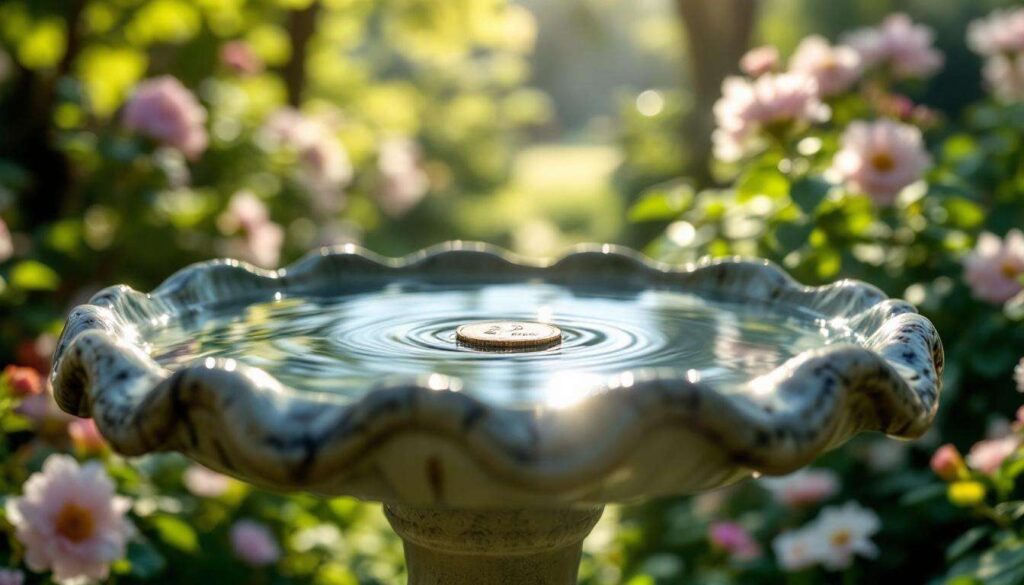
Bird enthusiasts and gardeners across the country are discovering an ingenious trick to maintain cleaner, healthier water in their garden bird baths. The solution requires nothing more than a simple copper coin, readily available in most households. This cost-effective method addresses one of the most persistent challenges faced by those who provide water sources for feathered visitors: the rapid development of algae and harmful microorganisms that can compromise both water quality and avian health.
Why use a copper coin in the bird bath
A traditional practice with modern applications
The practice of placing copper objects in water sources stems from centuries-old traditions recognising copper’s unique properties. Various cultures have long valued this metal for its ability to maintain water purity, and contemporary bird lovers are rediscovering its practical benefits. When submerged in water, copper releases ions that create an inhospitable environment for numerous microorganisms, particularly the algae species that rapidly colonise standing water during warmer months.
Simple implementation for maximum effect
The beauty of this method lies in its remarkable simplicity. Homeowners need only locate a copper coin and place it at the bottom of their bird bath. The process requires:
- One or two copper coins in good condition
- A clean bird bath free from existing debris
- Fresh water to maximise effectiveness
- Regular monitoring to ensure continued efficacy
This straightforward approach makes it accessible to anyone wishing to improve their garden’s appeal to local bird populations whilst reducing maintenance requirements. The method proves particularly valuable during summer when algae growth accelerates due to increased temperatures and sunlight exposure.
Understanding how copper interacts with water at a molecular level reveals why this simple addition proves so effective.
The benefits of copper on water
Natural antimicrobial properties
Copper possesses inherent antimicrobial characteristics that have been scientifically documented and utilised across various applications. When copper comes into contact with water, it undergoes a gradual process of ion release. These copper ions disperse throughout the water, creating conditions that actively discourage the proliferation of algae, bacteria, and other microorganisms that typically thrive in stagnant water environments.
Concentration and effectiveness
Research has demonstrated that copper can prove toxic to algae at specific concentrations, effectively controlling their growth without requiring harsh chemical interventions. The gradual release mechanism ensures a sustained effect over time, though the concentration remains sufficiently low to avoid harming birds that drink or bathe in the water.
| Water condition | Without copper | With copper coin |
|---|---|---|
| Algae growth rate | Rapid (2-3 days) | Significantly reduced (7-10 days) |
| Water clarity | Becomes cloudy quickly | Maintains clarity longer |
| Cleaning frequency | Every 2-3 days | Weekly possible |
These antimicrobial properties translate directly into tangible health benefits for the birds frequenting your garden.
How copper protects birds
Preventing harmful algae exposure
Certain algae species, particularly blue-green algae or cyanobacteria, pose serious health risks to birds. These organisms produce toxins that can cause severe medical conditions ranging from digestive problems to neurological damage. By inhibiting algae development, copper coins help create a safer drinking and bathing environment for avian visitors.
Reducing disease transmission
Stagnant water serves as a breeding ground for various pathogens that can spread diseases among bird populations. The antimicrobial action of copper helps reduce bacterial loads in the water, thereby decreasing the likelihood of disease transmission at communal water sources. This protection proves especially crucial during periods when birds congregate around limited water supplies.
Supporting overall bird health
Clean water contributes significantly to avian wellbeing by:
- Providing safe hydration, essential for metabolic functions
- Enabling proper feather maintenance through bathing
- Supporting thermoregulation in extreme weather conditions
- Reducing stress associated with contaminated water sources
The role of copper extends beyond general water quality to specifically address one of the most visible water quality issues.
Reducing algae proliferation
Understanding algae growth patterns
Algae thrive in conditions that combine sunlight, warmth, nutrients, and still water—precisely the environment found in most garden bird baths. During summer months, these conditions intensify, leading to rapid algae colonisation that can transform clear water into a green, slimy mess within days. This not only appears unsightly but also degrades water quality and potentially endangers birds.
Copper’s targeted action against algae
The copper ions released from submerged coins interfere with algae’s cellular processes, particularly affecting their photosynthetic capabilities. This disruption prevents algae from establishing robust colonies, significantly slowing their proliferation rate. Whilst copper does not eliminate algae entirely, it substantially extends the period between necessary cleanings.
Environmental considerations
This method offers an environmentally preferable alternative to chemical algaecides, which may contain substances harmful to birds, beneficial insects, and other garden wildlife. Copper provides a more natural approach to water management that aligns with ecological gardening principles.
However, maximising the benefits of copper requires complementary maintenance practices.
Tips for optimising your bird bath
Regular maintenance schedule
Despite copper’s beneficial properties, experts emphasise that daily water changes remain essential for optimal bird bath hygiene. Complete water replacement prevents the accumulation of droppings, feathers, debris, and contaminants that copper alone cannot address. Weekly deep cleaning with a brush removes biofilm and any residual algae.
Strategic placement considerations
Position your bird bath to balance accessibility with water quality:
- Partial shade reduces excessive algae growth from intense sunlight
- Proximity to shrubs provides escape routes from predators
- Elevation deters ground-based predators whilst remaining accessible
- Distance from feeding stations prevents food contamination
Water depth and features
Maintain water depths between 2.5 and 10 centimetres to accommodate various bird species safely. Adding a gentle water agitator or fountain feature further discourages algae whilst attracting more birds through movement and sound.
Whilst copper offers numerous advantages, responsible use requires awareness of potential limitations.
Precautions when using copper coins
Coin condition matters
Only use coins in excellent condition, free from rust, corrosion, or surface contamination. Damaged coins may release harmful substances beyond beneficial copper ions. Inspect coins regularly and replace any showing signs of deterioration.
Appropriate quantities
One or two coins typically suffice for standard-sized bird baths. Excessive copper can potentially reach concentrations harmful to birds, though this risk remains minimal with proper use. Avoid adding numerous coins unnecessarily.
Complementary rather than complete solution
Copper coins represent a supplementary measure rather than a standalone solution. They reduce but do not eliminate the need for regular cleaning and water changes. Relying solely on copper without proper maintenance will ultimately result in poor water quality regardless of the metal’s presence.
Monitoring effectiveness
Observe your bird bath regularly to assess whether the copper method suits your specific conditions. Factors such as sunlight exposure, temperature, and bird activity levels influence outcomes. Adjust your maintenance routine accordingly based on observed results.
Incorporating a simple copper coin into your bird bath maintenance routine offers a practical, economical approach to improving water quality for garden birds. This method harnesses copper’s natural antimicrobial properties to slow algae growth and reduce harmful microorganism proliferation, creating a healthier environment for feathered visitors. However, success depends on combining this technique with regular water changes and thorough weekly cleaning. By maintaining clean, fresh water sources, gardeners support local bird populations whilst enjoying the beauty and vitality these creatures bring to outdoor spaces throughout the seasons.