



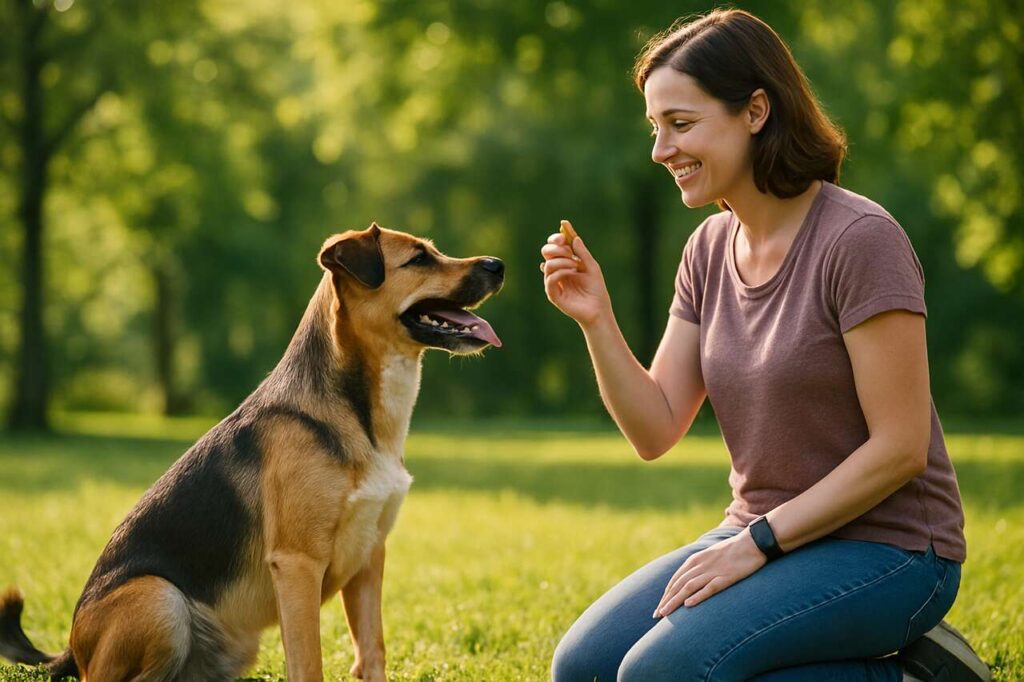
Every dog owner has experienced that frustrating moment when their beloved pet seems utterly oblivious to commands, distracted by every passing scent or sound. Gaining and maintaining your dog’s attention forms the cornerstone of successful training, yet many owners struggle with this fundamental aspect. Whether you’re teaching basic obedience or advanced tricks, your dog’s focus determines the effectiveness of every training session. Understanding how to capture and hold that attention transforms the relationship between owner and pet, creating a partnership built on mutual respect and clear communication.
Understanding canine behaviour
The psychology behind canine attention
Dogs perceive the world through a vastly different sensory lens than humans. Their extraordinary sense of smell processes information at approximately 40 times the capacity of human olfactory systems, meaning environmental stimuli constantly compete for their focus. Understanding this biological reality helps owners appreciate why maintaining attention proves challenging. Canine attention spans naturally fluctuate based on age, breed characteristics, and individual temperament, with puppies typically managing only brief focus periods of three to five minutes.
Natural instincts and distractions
Several innate behaviours influence how dogs respond to training environments:
- Prey drive triggers immediate responses to movement and small animals
- Social instincts draw attention towards other dogs and people
- Territorial awareness heightens focus on perceived threats
- Scent investigation satisfies fundamental exploratory needs
Recognising these instinctual patterns allows trainers to anticipate distractions and develop strategies that work with, rather than against, natural canine tendencies. Working breeds often exhibit heightened focus capabilities, whilst scent hounds may require additional patience due to their powerful olfactory drive.
The role of energy levels
A dog’s physical and mental energy state dramatically affects attention capacity. Over-excited dogs struggle to concentrate, whilst under-stimulated animals seek environmental engagement elsewhere. The ideal training state involves calm alertness, achieved through appropriate pre-training exercise matched to breed requirements. High-energy breeds may need 30 to 60 minutes of physical activity before optimal focus becomes possible.
With this foundational knowledge of canine psychology established, selecting appropriate tools becomes the next crucial consideration for effective training.
Choosing the right training tools
Essential equipment for attention training
The right tools facilitate communication without creating dependence. Quality training leads measuring between 1.5 and 2 metres provide control whilst allowing sufficient freedom for learning. Shorter leads suit urban environments and precise work, whilst longer lines benefit recall training in open spaces. Harnesses distribute pressure more evenly than collars, particularly beneficial for breeds prone to tracheal issues or dogs that pull enthusiastically.
| Tool | Primary Purpose | Best Suited For |
|---|---|---|
| Standard lead | Basic control and walking | All dogs, daily training |
| Long line | Distance work and recall | Open spaces, advanced training |
| Clicker | Precise behaviour marking | Timing-critical tasks |
| Treat pouch | Reward accessibility | Positive reinforcement training |
Sound and visual markers
Clickers provide consistent auditory markers that precisely identify desired behaviours, creating clear communication channels. The distinct sound cuts through environmental noise, offering unambiguous feedback that verbal praise sometimes lacks. Visual markers, including hand signals and target sticks, complement verbal commands and prove particularly valuable for deaf dogs or noisy environments where auditory cues become less effective.
Avoiding equipment pitfalls
Certain tools warrant caution or complete avoidance. Retractable leads teach dogs to pull and offer minimal control in critical situations. Prong collars and choke chains risk physical injury and damage the trust relationship central to attention-based training. Electronic collars may suppress unwanted behaviours but fail to teach desired alternatives, often creating anxiety that undermines focus capacity.
Armed with appropriate equipment, trainers can now explore specific techniques that transform distracted dogs into attentive partners.
Techniques to capture your dog’s attention
The name game foundation
Teaching your dog that their name means “look at me” establishes the fundamental attention cue. Begin in distraction-free environments, saying the name once in an upbeat tone. The instant your dog makes eye contact, mark the behaviour with a click or verbal marker and deliver a reward. Practise multiple short sessions daily, gradually introducing mild distractions as reliability improves. Never repeat the name multiple times, as this teaches dogs to ignore initial calls.
Eye contact exercises
Sustained eye contact builds focus duration and strengthens communication bonds. Hold a treat near your face, encouraging your dog to look upward towards your eyes rather than fixating on your hand. Gradually increase the duration required before marking and rewarding, starting with one second and building to five or more. This exercise proves particularly valuable before requesting complex behaviours or navigating challenging environments.
Engagement through play
Incorporating play into training sessions maintains enthusiasm and motivation:
- Brief tug games reward successful attention and commands
- Retrieve exercises combine physical activity with focus practice
- Hide-and-seek games develop seeking behaviours and name recognition
- Interactive toys provide mental stimulation between formal sessions
Progressive distraction training
Systematically increasing environmental challenges builds reliable attention under real-world conditions. Start indoors with minimal distractions, then progress to gardens, quiet streets, and eventually busier locations. Each new environment initially requires returning to easier exercises before advancing complexity. This methodical approach prevents overwhelming dogs and maintains confidence throughout the learning process.
These techniques prove most effective when paired with strategic reward systems that reinforce desired behaviours consistently.
Using rewards effectively
Understanding motivation hierarchy
Not all rewards hold equal value for individual dogs. High-value treats such as cheese, chicken, or commercial training treats reserve themselves for challenging situations or new behaviours. Medium-value rewards including standard kibble or biscuits suit routine practice, whilst low-value options like verbal praise maintain behaviours in easy contexts. Identifying your dog’s personal reward hierarchy through observation and experimentation optimises training efficiency.
Timing and delivery methods
Reward timing determines what behaviour actually receives reinforcement. The critical window lasts approximately one second, meaning markers like clickers help bridge the gap between behaviour and treat delivery. Placement matters equally: delivering treats at chest height encourages maintained eye contact, whilst ground delivery suits behaviours requiring downward focus. Variable reward schedules, where treats appear unpredictably, create stronger long-term behaviour patterns than constant reinforcement.
Beyond food rewards
Diversifying reward types prevents over-reliance on treats and accommodates dogs with dietary restrictions or low food motivation:
- Toy access provides powerful reinforcement for play-driven dogs
- Freedom to sniff rewards natural investigative behaviours
- Physical affection suits dogs with strong social bonds
- Environmental rewards like proceeding on walks reinforce loose-lead walking
Whilst rewards accelerate learning, understanding common training pitfalls helps maintain progress and prevents frustration for both owner and dog.
Avoiding common mistakes
Inconsistency in commands and expectations
Dogs thrive on predictable patterns and clear communication. Using multiple words for single commands creates confusion: “come,” “here,” and “come here” represent three different cues to your dog. Family members must employ identical verbal cues, hand signals, and reward criteria. Inconsistent enforcement of rules, such as sometimes allowing furniture access and sometimes prohibiting it, undermines training efforts and damages attention reliability.
Training in inappropriate states
Attempting training when dogs are overly excited, tired, or stressed guarantees poor results. Physical exhaustion impairs cognitive function, whilst excessive arousal prevents the calm focus necessary for learning. Similarly, training immediately after meals when dogs feel sluggish, or when owners feel frustrated, creates negative associations. Optimal training windows occur when both parties feel calm, alert, and positively engaged.
Punishment-based approaches
Harsh corrections for attention lapses create anxiety that further degrades focus capacity. Dogs learn most effectively through understanding what behaviours earn rewards, not through fear of consequences. Punishment damages the trust relationship, making dogs less likely to engage voluntarily. Redirecting attention rather than punishing distraction proves far more effective for building reliable focus.
Progressing too quickly
Rushing through training stages before dogs fully understand current concepts creates fragile skills that collapse under pressure. Each behaviour requires thorough proofing across multiple contexts before increasing difficulty. Signs of moving too fast include increased errors, stress signals like lip licking or yawning, and declining enthusiasm. Returning to easier steps rebuilds confidence and ensures solid foundations.
Addressing these common errors naturally leads to exploring how attention training deepens the overall relationship between dogs and their owners.
Strengthening the bond with your dog
Trust as the foundation
Reliable attention stems from mutual trust and respect rather than dominance or fear. Dogs who trust their owners willingly offer attention because past interactions proved rewarding and predictable. Building this trust requires consistency, patience, and understanding of individual needs. Respecting your dog’s communications, including stress signals and requests for space, demonstrates that attention works bidirectionally, not as a one-way demand.
Quality time beyond training
Formal training sessions represent only one aspect of relationship building. Unstructured activities strengthen bonds whilst providing mental enrichment:
- Leisurely walks prioritising exploration over destination
- Quiet companionship during relaxation periods
- Gentle grooming sessions promoting physical comfort
- Novel experiences introducing new environments together
Reading and responding to communication
Dogs constantly communicate through body language, vocalisations, and behaviour patterns. Owners who accurately interpret these signals respond appropriately to their dog’s emotional states, creating a feedback loop of understanding. Recognising early stress indicators allows intervention before situations escalate, whilst identifying signs of joy and contentment helps replicate positive experiences. This reciprocal communication transforms training from mechanical command-response patterns into genuine partnership.
Successful attention training creates dogs who choose to focus on their owners because the relationship offers security, enrichment, and mutual satisfaction. The techniques and principles outlined provide frameworks for developing this connection, but individual dogs require personalised approaches respecting their unique personalities and learning styles. Patience, consistency, and positive reinforcement form the cornerstones of effective attention training, whilst avoiding punishment-based methods protects the trust essential for voluntary engagement. By understanding canine behaviour, selecting appropriate tools, implementing proven techniques, and strengthening the underlying relationship, owners develop dogs who offer reliable attention across diverse situations, transforming daily interactions and training sessions alike.