
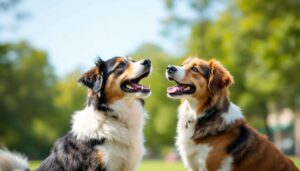



The bond between dogs and their littermates has long fascinated pet owners and researchers alike. When puppies are separated from their siblings at an early age, a natural question arises about whether these animals retain any memory of their brothers and sisters. Recent scientific investigations have begun to shed light on this complex aspect of canine behaviour, revealing surprising insights into how dogs form and maintain familial connections throughout their lives.
Recognition between dogs: a question of scent ?
The power of olfactory memory
Dogs possess an extraordinary sense of smell that fundamentally shapes how they perceive and remember the world around them. With over 300 million scent receptors compared to a mere 6 million in humans, canines rely predominantly on olfactory information to identify individuals, including family members. This remarkable sensory capability forms the foundation of their recognition abilities.
Research has demonstrated that scent-based memory plays a crucial role in how dogs identify their littermates. The unique chemical signature of each dog creates a distinctive olfactory profile that remains relatively stable throughout their lifetime. Key aspects of scent recognition include:
- individual pheromone signatures that distinguish one dog from another
- maternal scent markers that puppies learn during nursing
- environmental odours absorbed during early development
- shared nest scents that create familial olfactory bonds
Duration of scent memory retention
Studies published in animal behaviour journals have revealed that dogs can recognise the scent of their littermates for extended periods following separation. One significant investigation found that canines could identify sibling scents even after being apart for up to two years. However, this ability appears to diminish gradually over time, particularly when dogs have had no contact with their siblings during the separation period.
| Separation duration | Recognition likelihood | Primary recognition method |
|---|---|---|
| Under 6 months | Very high | Scent and visual cues |
| 6 months to 2 years | Moderate to high | Primarily scent |
| Over 2 years | Low to moderate | Scent only |
This olfactory foundation provides the biological mechanism through which dogs might maintain connections to their early family members, though the strength of these memories depends on various factors including age at separation and subsequent experiences.
The science behind canine recognition
Neurological basis of memory formation
The canine brain processes and stores memories through complex neurological pathways that differ somewhat from human memory systems. Dogs form memories through associative learning, where experiences become linked with specific sensory inputs. The hippocampus, a brain region critical for memory formation, works in conjunction with the olfactory bulb to create lasting impressions of familiar individuals.
Research into canine cognition has revealed several important findings:
- dogs possess both short-term and long-term memory capabilities
- emotional experiences strengthen memory retention
- repeated exposure reinforces neural pathways associated with recognition
- early developmental periods create particularly strong memory imprints
Maternal versus sibling recognition
Scientific evidence suggests that dogs demonstrate stronger recognition of their mothers compared to their siblings. This disparity likely stems from the intensity and duration of the maternal bond during the critical early weeks of life. Puppies spend considerable time nursing and receiving care from their mothers, creating robust olfactory and emotional associations that persist long after weaning.
The biological imperative to recognise maternal figures appears more deeply ingrained than sibling recognition, reflecting evolutionary priorities that favoured offspring who maintained connections with their primary caregivers. This pattern mirrors behaviours observed in wild canid populations, where maternal bonds serve essential survival functions.
Do dogs remember their siblings after separation ?
Critical factors affecting sibling memory
Whether a dog remembers its brothers and sisters depends on several crucial variables that influence memory formation and retention. The age at which puppies are separated represents perhaps the most significant factor, as dogs removed from their litters before eight weeks may have insufficient time to form lasting memories of their siblings.
Additional factors that impact sibling recognition include:
- length of time spent together before separation
- quality and intensity of early interactions
- presence of shared experiences beyond basic cohabitation
- genetic relatedness and phenotypic similarity
- environmental conditions during the critical socialisation period
Evidence from behavioural studies
Controlled experiments examining sibling recognition have produced intriguing results that suggest conditional memory retention. When littermates are reunited after extended separations, behavioural responses vary considerably. Some dogs display immediate recognition through excited greetings and play behaviours, whilst others show little indication of familiarity beyond general canine social protocols.
Researchers have observed that dogs who lived together beyond the typical eight-week separation point demonstrate higher recognition rates when reunited. This finding suggests that extended early contact creates more durable memory traces that withstand the passage of time and lack of reinforcement.
Identification of family members never met
Genetic recognition capabilities
The question of whether dogs can identify biological relatives they have never encountered presents a fascinating area of investigation. Some research suggests that canines may possess an innate ability to recognise genetic kin through scent markers, even without prior contact. This phenomenon, known as kin recognition, has been documented in various animal species and may serve important biological functions.
Limitations of unfamiliar family identification
Despite potential genetic recognition abilities, the evidence indicates that dogs show limited capacity to identify siblings or other relatives they have never met. Without the experiential component of shared early development, the recognition mechanisms that rely on learned associations cannot function effectively. Dogs may detect subtle similarities in scent profiles, but this alone appears insufficient to trigger the familial bonding behaviours observed between dogs with shared histories.
| Relationship type | Shared history | Recognition probability |
|---|---|---|
| Mother-offspring | Yes | High |
| Littermates | Yes | Moderate to high |
| Biological siblings | No | Very low |
The importance of early socialisation in dogs
Critical developmental windows
The period between three and fourteen weeks of age represents a crucial phase in canine development when puppies are most receptive to social learning and bond formation. During this window, experiences with littermates, mothers, and other dogs shape lifelong behavioural patterns and social competencies. Interactions during this time create foundational memories that influence how dogs relate to other canines throughout their lives.
Proper socialisation during this critical period provides numerous benefits:
- development of appropriate play behaviours and bite inhibition
- learning of canine communication signals and body language
- establishment of confidence in novel social situations
- formation of positive associations with other dogs
- reduced likelihood of fear-based or aggressive responses
Long-term impacts of early separation
Puppies removed from their litters prematurely often experience developmental deficits that persist into adulthood. Without adequate time to learn from siblings and mothers, these dogs may struggle with social interactions, display inappropriate play behaviours, or exhibit anxiety around other canines. The memories and lessons acquired during early socialisation create templates for future relationships, making this period essential for healthy psychological development.
Dogs: the ultimate social animals
Formation of non-biological bonds
Dogs possess a remarkable capacity to form deep social connections that transcend biological relationships. When unrelated dogs share a household, they frequently develop bonds that mirror sibling relationships, complete with companionship, play, and mutual comfort. These connections demonstrate that whilst genetic ties may provide an initial basis for recognition, shared experiences ultimately prove more significant in creating lasting canine relationships.
Signs of strong social bonds between dogs include:
- sleeping in close physical contact
- sharing toys and food resources
- displaying distress when separated
- engaging in coordinated play activities
- grooming and caring for one another
Ancestral pack dynamics
The social nature of dogs reflects their evolutionary heritage as descendants of wolves, animals that thrive in complex family-based pack structures. This ancestry has endowed domestic dogs with instincts favouring cooperation, communication, and social cohesion. Whilst modern dogs may not require pack dynamics for survival, these ingrained behaviours continue to shape how they form and maintain relationships with other canines, regardless of biological connection.
Understanding the depth of canine social abilities reveals that whilst dogs may or may not remember their biological siblings after extended separations, their capacity for forming meaningful bonds ensures that every dog can experience fulfilling relationships. The adaptable and relational nature of these animals allows them to create family structures based on companionship and shared experience rather than genetics alone.
The evidence surrounding canine sibling recognition reveals a nuanced picture where scent-based memory, early experiences, and social learning all contribute to whether dogs remember their littermates. Whilst recognition abilities diminish over time, particularly after two years of separation, the fundamental social nature of dogs ensures they can form deep bonds with any companion. The importance of early socialisation extends beyond sibling relationships, shaping lifelong social competencies that enable dogs to thrive in various social configurations throughout their lives.