


Conure parrots have captured the hearts of bird enthusiasts worldwide with their vibrant plumage, playful antics, and remarkably affectionate nature. These small to medium-sized parrots pack enormous personality into their compact frames, offering companionship that rivals much larger species. Their endearing habit of seeking constant interaction with their human families makes them exceptional pets for those prepared to meet their social and emotional needs. Understanding the characteristics, requirements, and delightful quirks of these feathered companions is essential before welcoming one into your home.
Introduction to conures: birds with a unique character
Origins and natural habitat
Conures belong to several genera within the parrot family, primarily native to Central and South America. These birds inhabit diverse environments ranging from tropical rainforests to arid savannahs, where they live in highly social flocks that can number in the dozens or even hundreds. This gregarious nature in the wild directly influences their behaviour in captivity, explaining their intense need for companionship and interaction.
Physical characteristics that set them apart
These parrots typically measure between 25 and 30 centimetres in length, making them considerably more manageable than their larger cousins such as macaws or cockatoos. Despite their modest size, conures display spectacular colouration that varies dramatically between species. Their compact build belies their energetic personality, and they possess strong beaks capable of cracking seeds and exploring their environment with remarkable dexterity.
| Feature | Typical range |
|---|---|
| Length | 25-30 cm |
| Weight | 60-120 g |
| Lifespan | 20-30 years |
Intelligence and vocal abilities
Conures demonstrate impressive cognitive abilities that enable them to learn tricks, solve puzzles, and even mimic human speech, though their talking ability is generally less developed than that of African greys or Amazon parrots. Their intelligence manifests through curiosity and problem-solving skills, requiring mental stimulation through toys and interactive play. Vocally, these birds can be quite loud, producing calls that serve to maintain flock cohesion in the wild but may challenge apartment dwellers.
Understanding these fundamental characteristics provides the foundation for appreciating the diverse species available to prospective owners.
Types of conures: which companion to choose ?
Green-cheeked conures: the gentle option
Among the most popular species, green-cheeked conures are celebrated for their relatively quieter disposition compared to other conures. These birds exhibit exuberant personalities whilst being somewhat less vocally demanding, making them suitable for families living in closer quarters. Their playful nature and willingness to interact with all family members make them excellent companions for households where multiple people will engage with the bird.
Sun conures: vibrant personalities in brilliant plumage
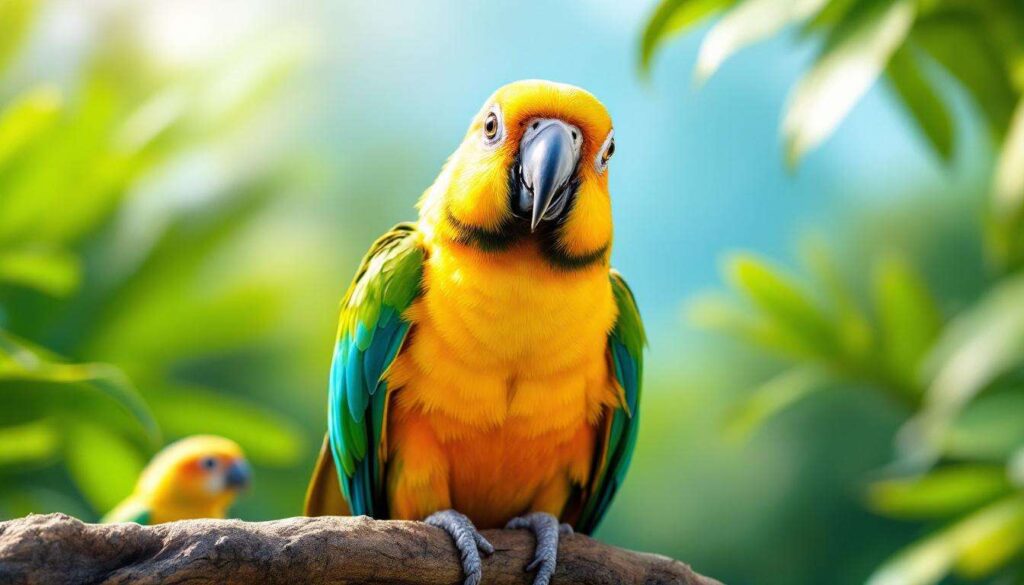
Sun conures captivate with their stunning yellow and orange feathers that seem to glow in sunlight. These birds possess boundless energy and affectionate dispositions, often forming intense bonds with their favourite person. However, potential owners must consider their considerable vocal abilities, as sun conures rank among the loudest of all conure species. Their calls can be heard throughout a home and potentially beyond, requiring consideration of living arrangements.
Other notable species
- Blue-crowned conures: known for their gentle temperament and moderate noise levels
- Jenday conures: similar in appearance to sun conures but with distinct orange and green colouring
- Nanday conures: recognisable by their black facial masks and hardy constitutions
- Maroon-bellied conures: smaller and quieter, ideal for those seeking a more subdued companion
Each species brings distinct characteristics to the relationship, making careful research essential for matching the right bird to your lifestyle and living situation.
Behaviour and personality of conures
Social nature and flock mentality
The intensely social behaviour of conures stems directly from their wild heritage, where survival depends upon flock cohesion. In captivity, this translates to birds that view their human family as their flock, seeking constant proximity and interaction. Conures left alone for extended periods may develop behavioural problems including excessive screaming, feather plucking, or aggression. This social dependency makes them poorly suited to individuals with demanding work schedules unless provisions are made for companionship.
Playfulness and curiosity
These parrots approach life with infectious enthusiasm, investigating everything within reach with their beaks and feet. Their playful antics include hanging upside down, wrestling with toys, and engaging in acrobatic displays that entertain their human observers. This curiosity drives their need for environmental enrichment through varied toys, foraging opportunities, and regular changes to their surroundings to prevent boredom.
The one-person bird phenomenon
Whilst conures generally enjoy interaction with multiple people, many develop a particularly strong attachment to one individual whom they consider their mate. This bonding can result in jealous behaviour towards others who approach their favoured person, including nipping or screaming. Early socialisation with various people helps mitigate this tendency, though some degree of preference often remains.
These behavioural traits directly influence the level of affection and attention these birds require from their owners.
Conures and their need for affection
Daily interaction requirements
Conures thrive on several hours of direct interaction with their human companions each day. This engagement may include out-of-cage time for flying and exploration, training sessions, cuddling, and simply being present in the same room during family activities. Birds deprived of adequate attention often develop psychological distress that manifests through destructive or self-harming behaviours.
Physical affection and bonding
Unlike some parrot species that prefer minimal handling, conures actively seek physical contact with their favourite people. They enjoy head scratches, snuggling against necks, and being gently stroked. This tactile affection strengthens the bond between bird and owner, creating a relationship that feels remarkably like that with a mammalian pet. Hand-raised birds typically display greater comfort with handling than parent-raised individuals, though patient socialisation can overcome initial wariness.
Signs of affection in conures
- Regurgitating food as a courtship gesture towards their favourite person
- Preening their owner’s hair or eyebrows
- Soft chattering and contented vocalisations when near their human
- Following their person from room to room
- Displaying relaxed body language with fluffed feathers when being petted
Meeting these substantial emotional needs requires commitment but rewards owners with unparalleled companionship that extends over decades of the bird’s life.
Caring for conures: habitat and feeding
Appropriate housing requirements
Despite their modest size, conures require spacious cages that allow for movement and wing stretching. Minimum dimensions should measure approximately 60 centimetres wide by 60 centimetres deep by 75 centimetres high, though larger enclosures are always preferable. Bar spacing must prevent head entrapment whilst allowing climbing, typically ranging between 1.5 and 2 centimetres. The cage should include multiple perches of varying diameters to promote foot health and prevent arthritis.
Nutritional needs for optimal health
A balanced diet forms the cornerstone of conure health and longevity. High-quality pellets should constitute approximately 60-70 per cent of daily intake, supplemented with fresh foods that provide variety and enrichment. Appropriate fresh foods include:
- Vegetables: carrots, broccoli, peppers, leafy greens
- Fruits: apples, berries, mango, papaya (in moderation due to sugar content)
- Occasional treats: nuts, whole grain bread, cooked beans
Foods to avoid include chocolate, avocado, caffeine, and high-salt or high-fat items that can prove toxic or harmful to these birds.
Environmental enrichment through toys
Conures possess destructive tendencies that serve important psychological and physical functions. Providing appropriate outlets through toys prevents boredom and redirects natural behaviours away from furniture or cage fixtures. Suitable toys include shredding materials like paper, wooden blocks for chewing, puzzle toys for mental stimulation, and swings or ladders for physical activity. Regular rotation of toys maintains novelty and interest.
Proper care establishes the foundation upon which meaningful training and socialisation can build.
Training and socialisation: building a strong relationship
Early socialisation strategies
Birds acquired at young ages, typically around three months, offer the greatest potential for developing into well-adjusted companions. During this critical period, exposing the bird to various people, environments, and experiences prevents fearfulness and aggression later in life. Gentle handling sessions, introduction to household sounds, and positive associations with new situations create confident, adaptable adults.
Basic training techniques
Conures respond excellently to positive reinforcement training that rewards desired behaviours with treats, praise, or affection. Essential skills include stepping onto a hand on command, returning to the cage willingly, and tolerating necessary handling for grooming or veterinary care. Training sessions should remain brief, approximately 10-15 minutes, to maintain the bird’s attention and prevent frustration. Consistency across all family members ensures the bird understands expectations regardless of who issues commands.
Addressing behavioural challenges
Common issues such as biting, screaming, or territorial aggression often stem from inadequate socialisation or unmet needs rather than inherent temperament problems. Addressing these challenges requires identifying triggers, modifying environmental factors, and reinforcing alternative behaviours. Professional consultation with an avian behaviourist may prove valuable for persistent problems that resist standard interventions.
Conures represent a significant commitment that extends across decades, demanding daily attention, proper nutrition, and ongoing mental stimulation. Their capacity for affection and their desire to participate fully in family life make them extraordinary companions for those prepared to meet their considerable needs. These vibrant parrots transform houses into homes filled with colour, sound, and the irreplaceable bond between human and bird.