


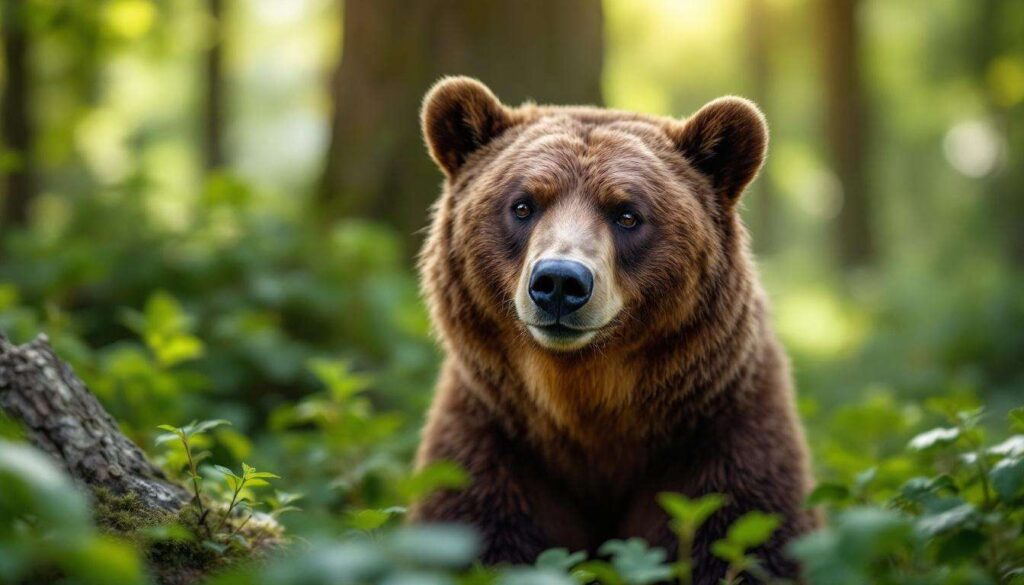
The brown bears inhabiting the mountainous regions of northern Italy represent a remarkable case of evolutionary adaptation shaped by centuries of proximity to human settlements. Unlike their counterparts in more remote wilderness areas across Europe and North America, these bears have developed distinctive behavioural traits that make them notably less aggressive towards humans. This phenomenon has captured the attention of wildlife biologists and conservationists, who recognise the Italian brown bear population as a unique example of how species can evolve in response to sustained human presence. Understanding these adaptations offers valuable insights into the complex relationship between wildlife conservation and human activity, particularly in densely populated regions where coexistence remains a constant challenge.
Introduction to Italy’s brown bear
The brown bear population in Italy comprises two distinct groups, each with its own genetic lineage and geographical distribution. The Marsican brown bear, also known as the Apennine brown bear, inhabits the central Apennine mountains, whilst a smaller population of Alpine brown bears lives in the Trentino region of northern Italy.
The Marsican brown bear population
The Marsican brown bear represents one of Europe’s most critically endangered subspecies, with an estimated population of fewer than sixty individuals confined to the Abruzzo, Lazio and Molise National Park and surrounding areas. These bears have been isolated from other European populations for thousands of years, resulting in distinctive genetic characteristics and behavioural patterns. Their historical coexistence with human communities in the Apennines has shaped their temperament significantly.
Alpine brown bears in Trentino
The Alpine brown bear population in northern Italy stems from a reintroduction programme initiated during the late 1990s. Slovenian bears were relocated to the Adamello-Brenta Natural Park, where they have successfully established a breeding population. These bears share genetic traits with broader Alpine and Dinaric populations, yet they too have begun exhibiting behavioural adaptations to their environment, which includes numerous human settlements and agricultural areas.
These two populations provide researchers with compelling comparative data on how brown bears adapt to human presence across different timescales and environmental contexts, setting the stage for deeper examination of the factors that shape their behaviour.
Factors influencing bear behaviour
Multiple interconnected factors contribute to the behavioural characteristics observed in brown bear populations, ranging from environmental conditions to social learning and genetic predisposition.
Environmental and ecological pressures
The Italian landscape presents unique challenges and opportunities for brown bears. The availability of natural food sources, habitat fragmentation, and the proximity of human settlements all influence how bears interact with their environment. In areas where natural prey and vegetation are abundant, bears typically maintain greater distance from human activity. However, in regions where food sources are scarce or seasonal, bears may venture closer to agricultural lands and populated areas.
| Environmental Factor | Impact on Behaviour |
|---|---|
| Food availability | Determines ranging patterns and human interaction frequency |
| Habitat quality | Influences stress levels and territorial behaviour |
| Human density | Shapes tolerance levels and flight response |
| Landscape connectivity | Affects genetic diversity and population dynamics |
Social learning and maternal influence
Bear behaviour is not solely determined by genetics; social learning plays a crucial role in shaping how individual bears respond to humans. Cubs learn behavioural patterns from their mothers during the extended period they spend together. Females that demonstrate calm, non-aggressive responses to human presence tend to pass these traits to their offspring, creating multi-generational behavioural patterns within local populations.
- Cubs observe and imitate maternal responses to human encounters
- Successful avoidance strategies are reinforced through repeated experience
- Negative conditioning from aggressive responses may be passed down
- Habituation to human presence can become normalised across generations
Understanding these behavioural influences provides essential context for examining the genetic mechanisms that underpin the distinctive temperament of Italian brown bears.
Genetic evolution and behavioural adaptation
The genetic basis of behavioural traits in brown bears has become a focal point for researchers seeking to understand why Italian populations display reduced aggression compared to their counterparts elsewhere.
Selective pressures in human-dominated landscapes
Over centuries of cohabitation with humans, Italian brown bears have experienced unique selective pressures that favour less aggressive individuals. Bears displaying overtly aggressive behaviour towards humans historically faced higher mortality rates through hunting, culling, or conflict-related deaths. Conversely, individuals with more tolerant and avoidant temperaments were more likely to survive and reproduce, gradually shifting the genetic profile of the population towards reduced aggression.
Genetic markers associated with temperament
Recent genetic analyses have identified specific markers that correlate with behavioural traits in brown bears. Researchers have discovered variations in genes related to stress response, fear conditioning, and social behaviour that differ between Italian populations and those in more remote wilderness areas. These genetic differences suggest that natural selection has indeed favoured particular temperamental characteristics in environments with sustained human presence.
The interplay between genetic predisposition and environmental conditioning reveals how evolution operates on relatively short timescales when selective pressures are strong, particularly when those pressures involve direct human interaction.
Cohabitation with humans: a key factor
The relationship between Italian brown bears and human communities represents a complex dynamic that has profoundly influenced bear behaviour over time.
Historical context of human-bear interaction
The Apennine region has been continuously inhabited by humans for millennia, with agricultural and pastoral activities shaping the landscape. Unlike wilderness areas where bears encounter humans infrequently, Italian bears have never experienced true isolation from human activity. This sustained proximity has necessitated behavioural adaptations that minimise conflict whilst allowing bears to exploit available resources.
Modern coexistence strategies
Contemporary conservation efforts in Italy emphasise conflict prevention rather than conflict resolution. These strategies include:
- Electric fencing around apiaries and livestock enclosures
- Bear-proof waste management systems in populated areas
- Compensation schemes for agricultural losses
- Public education programmes promoting appropriate responses to bear encounters
- Monitoring systems that track bear movements near settlements
These measures have contributed to a culture of mutual tolerance, where both humans and bears have learned to navigate shared spaces with minimal conflict. The success of these initiatives depends partly on the bears’ inherently less aggressive nature, which facilitates peaceful coexistence.
The practical experience of cohabitation provides the foundation for scientific investigation into the measurable differences between Italian bears and other populations.
Recent studies on brown bear aggressiveness
Scientific research conducted over the past decade has provided empirical evidence supporting observations of reduced aggression in Italian brown bear populations.
Comparative behavioural studies
Researchers have conducted systematic comparisons between Italian bears and populations in Scandinavia, North America, and eastern Europe. These studies measure various indicators of aggression, including response to human presence, defensive behaviour when surprised, and reactions to perceived threats. The data consistently show that Italian bears, particularly Marsican bears, display significantly lower levels of aggressive behaviour across multiple scenarios.
| Population | Aggressive Encounters (per 100 interactions) | Flight Distance (metres) |
|---|---|---|
| Marsican bears (Italy) | 0.8 | 45-60 |
| Alpine bears (Italy) | 1.2 | 50-70 |
| Scandinavian bears | 3.5 | 80-120 |
| North American bears | 4.2 | 100-150 |
Physiological and hormonal research
Advanced research techniques have enabled scientists to examine the physiological basis of behavioural differences. Studies measuring cortisol levels, heart rate variability, and other stress indicators reveal that Italian bears exhibit lower baseline stress responses and more modulated reactions to human stimuli. These physiological differences align with genetic variations in stress-response pathways, suggesting an integrated evolutionary adaptation encompassing both behaviour and underlying biology.
The accumulating scientific evidence has important ramifications for how conservation programmes are designed and implemented.
Implications for conservation and coexistence
The distinctive characteristics of Italian brown bears offer valuable lessons for wildlife management and conservation strategy in human-dominated landscapes worldwide.
Conservation policy recommendations
Understanding the evolutionary trajectory of Italian bears informs more effective conservation approaches. Policies should recognise that behavioural traits are not fixed but can evolve in response to management practices. Conservation programmes might benefit from:
- Prioritising habitat connectivity to maintain genetic diversity whilst preserving locally adapted traits
- Implementing conflict prevention measures that reinforce non-aggressive behaviour
- Avoiding management practices that inadvertently select for increased aggression
- Recognising the value of locally adapted populations in conservation planning
Broader applications for human-wildlife coexistence
The Italian brown bear example demonstrates that long-term coexistence between large carnivores and humans is achievable when conditions favour behavioural adaptation. This model has relevance for other species and regions facing similar challenges. By understanding the mechanisms that enable peaceful cohabitation, conservationists can develop strategies that protect wildlife whilst accommodating legitimate human interests.
The success of Italian brown bear conservation ultimately depends on maintaining the delicate balance that has evolved over centuries, requiring continued commitment from both wildlife managers and local communities.
The brown bears of Italy exemplify how evolutionary processes can shape wildlife behaviour in response to sustained human presence. Through a combination of genetic selection and social learning, these populations have developed notably reduced aggression compared to bears in more remote regions. The Marsican and Alpine bear populations provide compelling evidence that coexistence between large carnivores and humans is not only possible but can become encoded in the very biology of the species. Recent scientific studies have confirmed these behavioural differences whilst revealing the genetic and physiological mechanisms underlying them. As human populations continue expanding into wildlife habitats globally, the Italian experience offers hope and practical guidance for conservation efforts elsewhere. Protecting these unique populations requires recognising their distinctive characteristics and implementing management strategies that preserve the evolutionary adaptations enabling peaceful cohabitation.