



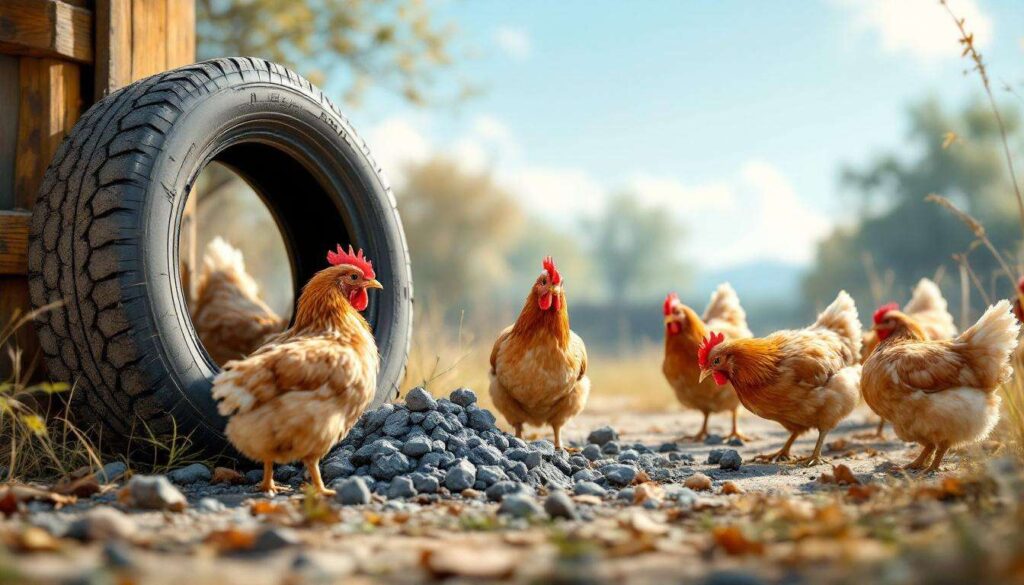
Raising chickens doesn’t have to be expensive. Many poultry keepers are discovering that some of the most effective solutions for chicken health and happiness come from repurposing everyday items that would otherwise end up in landfill. One such ingenious combination involves nothing more than a discarded tyre and wood ash, two simple materials that together create an essential feature for any chicken coop: a proper dust bath. This straightforward approach not only meets the natural behavioural needs of chickens but also provides significant health benefits without requiring any financial investment.
Understanding the needs of chickens: the importance of dust baths
Natural instincts and behaviour patterns
Chickens possess strong instinctive behaviours that have remained unchanged for thousands of years. Dust bathing ranks amongst the most important of these natural activities. In the wild, chickens spend considerable time scratching out shallow depressions in dry soil or dust, then vigorously flapping and rolling to coat their feathers with fine particles. This behaviour is so deeply ingrained that chickens will attempt to dust bathe even when no suitable substrate is available, performing the movements on bare ground or bedding.
The biological purpose behind dust bathing
The act of dust bathing serves multiple critical functions for chicken health and wellbeing:
- Removal of excess oil and moisture from feathers
- Elimination of dead skin cells and debris
- Control of external parasites such as mites and lice
- Maintenance of proper feather condition and insulation
- Stress reduction and psychological satisfaction
Research has demonstrated that chickens deprived of dust bathing opportunities exhibit increased stress levels and are more susceptible to parasite infestations. The fine particles work their way through the plumage to the skin, creating an inhospitable environment for parasites whilst simultaneously conditioning the feathers.
Consequences of inadequate dust bathing facilities
When chickens lack access to proper dust bathing areas, several problems can emerge. Feather quality deteriorates, parasite loads increase, and birds may develop abnormal behaviours. In commercial settings, welfare concerns arise when natural behaviours are suppressed. For backyard chicken keepers, providing adequate dust bathing facilities is both a welfare obligation and a practical health measure.
Recognising these fundamental needs leads naturally to the question of how to provide suitable facilities without significant expense, which is where resourceful solutions become invaluable.
An old tyre: a cost-effective dust bath space
Why tyres make ideal containers
Discarded vehicle tyres offer numerous advantages as dust bath containers. Their circular shape naturally creates a contained space that prevents the bathing material from spreading across the coop or run. The rubber walls are durable, weather-resistant, and require no maintenance. Unlike wooden structures that rot or metal containers that rust, tyres withstand constant exposure to moisture and scratching without degradation.
Size considerations and placement
The appropriate tyre size depends on your flock:
| Flock size | Recommended tyre type | Capacity |
|---|---|---|
| 2-4 chickens | Car tyre | Single bird bathing |
| 5-8 chickens | Light truck tyre | Two birds simultaneously |
| 9+ chickens | Tractor tyre | Multiple birds |
Position the tyre in a sheltered location within the run or coop, preferably under cover to keep the contents dry. Chickens prefer dust bathing in dry conditions, and a covered location ensures the bath remains usable even during wet weather.
Preparing the tyre for use
Before introducing a tyre to your chicken area, clean it thoroughly with water to remove any road grime or contaminants. Allow it to dry completely. Some keepers choose to cut the tyre in half horizontally to create two shallower containers, though this isn’t necessary. The intact tyre works perfectly well and requires no tools or modification.
Once the container is ready, the next consideration is what to fill it with to maximise its effectiveness for parasite control.
Ash: an essential ingredient to keep parasites at bay
The properties of wood ash
Wood ash from fires and wood-burning stoves possesses unique characteristics that make it exceptionally valuable for chicken dust baths. The fine, powdery texture allows it to penetrate deep into plumage, reaching the skin where parasites live and breed. The alkaline nature of ash creates an environment hostile to mites, lice, and other external parasites.
How ash combats common poultry parasites
Wood ash works through several mechanisms:
- The fine particles physically abrade the waxy coating on parasite exoskeletons, causing dehydration
- Alkalinity disrupts the parasites’ ability to attach to feathers and skin
- The desiccating properties absorb moisture that parasites require
- Regular application prevents eggs from hatching successfully
Studies have shown that chickens with regular access to ash-based dust baths maintain significantly lower parasite loads compared to those without such facilities. This natural method proves as effective as many commercial treatments without any chemical intervention.
Sourcing and safety considerations
Only use ash from untreated wood sources. Avoid ash from:
- Painted or varnished wood
- Pressure-treated timber
- Manufactured wood products containing adhesives
- Coal or charcoal briquettes
Ensure the ash has cooled completely before use. Fresh ash from a wood stove, fireplace, or bonfire of natural wood provides the safest and most effective material. Many chicken keepers find they generate sufficient ash from home heating to maintain their dust baths throughout the year.
With both container and active ingredient identified, the practical assembly becomes remarkably straightforward.
Assembling a dust bath with a tyre and ash
Step-by-step construction process
Creating this beneficial feature requires minimal effort:
- Place the clean, dry tyre in your chosen location
- Fill the tyre approximately half to two-thirds full with wood ash
- Add an equal quantity of dry soil or sand to create the ideal mixture
- Mix the materials together using a garden fork or similar tool
- Introduce your chickens to the new facility
The entire process takes less than ten minutes and requires no special skills or tools beyond what most households already possess.
Optimal mixture ratios and variations
Whilst a 50:50 ratio of ash to soil works well, you can adjust proportions based on availability and observed results. Some successful variations include:
| Mixture | Ratio | Best for |
|---|---|---|
| Standard | 50% ash, 50% soil | General use |
| Enhanced | 60% ash, 40% soil | Parasite problems |
| Economical | 30% ash, 70% soil | Limited ash supply |
Adding diatomaceous earth (food grade) at approximately 10% of the total volume can enhance parasite control further, though this optional addition does incur a modest cost.
Maintenance and refreshing the dust bath
Regular maintenance ensures continued effectiveness. Remove any droppings that accumulate in the bath, as chickens sometimes perch on the tyre rim. Refresh the mixture monthly by adding more ash and soil, stirring thoroughly to reincorporate settled material. During wet periods, check that the contents remain dry, relocating the tyre if necessary or covering it with a board or tarpaulin.
These simple maintenance tasks preserve the dust bath’s functionality and ensure your chickens continue to benefit from this natural health intervention.
The health benefits and wellbeing for chickens
Observable improvements in flock health
Chicken keepers who implement proper dust bathing facilities report noticeable improvements within weeks. Feather condition becomes glossier and more intact, with less breakage and damage. Chickens appear more content and spend considerable time using the facility, often queuing for their turn. The reduction in scratching and preening behaviours indicates decreased irritation from parasites.
Psychological and behavioural advantages
Beyond physical health, dust bathing provides significant psychological enrichment. Chickens are highly motivated to perform this natural behaviour, and providing the means to do so reduces frustration and stress. Observers note that chickens emerge from dust baths appearing relaxed and satisfied, often settling down for a rest immediately afterwards. This contentment contributes to overall flock harmony and reduced aggressive behaviours.
Prevention versus treatment
The preventative approach offered by ash dust baths proves far more effective than reactive treatments for parasite infestations. Once mites or lice establish themselves in a flock, eradication becomes challenging and often requires chemical interventions. Regular dust bathing prevents populations from reaching problematic levels, maintaining a natural balance that keeps chickens comfortable and healthy without intervention.
These health advantages come with the added benefit of reducing expenditure on poultry keeping, creating a truly sustainable approach.
Saving costs while promoting sustainable ecology
Financial comparison with commercial alternatives
Commercial dust bath products and parasite treatments represent ongoing expenses for chicken keepers:
| Product type | Typical annual cost | Tyre and ash equivalent |
|---|---|---|
| Purchased dust bath mix | £40-60 | £0 |
| Parasite powder treatments | £30-50 | £0 |
| Plastic dust bath container | £15-25 | £0 |
Over the lifespan of a backyard flock, these savings accumulate to hundreds of pounds, all whilst providing equal or superior effectiveness compared to purchased alternatives.
Environmental benefits of repurposing materials
This approach exemplifies practical sustainability. Tyres diverted from landfill find useful second lives, and wood ash that might otherwise be discarded serves a valuable purpose. The solution requires no manufacturing, packaging, or transportation of commercial products, reducing the environmental footprint of chicken keeping. This circular economy approach aligns with growing awareness of resource conservation and waste reduction.
Encouraging self-sufficiency in smallholding
The tyre and ash dust bath represents a broader philosophy of resourceful animal husbandry. By identifying no-cost solutions to common challenges, chicken keepers develop skills and confidence in managing their flocks independently. This self-sufficiency reduces reliance on commercial products and fosters a deeper understanding of chicken behaviour and needs. The knowledge that effective care doesn’t require significant expenditure makes poultry keeping accessible to more people, supporting local food production and connection with traditional practices.
Chicken keeping has always thrived on practical wisdom passed between generations. This simple combination of recycled tyre and wood ash demonstrates that the most effective solutions often come from observing natural behaviours and responding with readily available materials. The approach costs nothing, benefits chicken health significantly, and reduces waste simultaneously. For anyone keeping chickens, whether a small backyard flock or a larger homestead operation, this dust bath solution offers proven results without financial burden. The method’s simplicity belies its effectiveness, providing everything chickens need for their natural grooming behaviours whilst keeping parasites at bay through entirely natural means.