


The robin, with its distinctive red breast and bold personality, has long captured the imagination of British gardeners and nature enthusiasts. These charming birds are renowned for their curious nature and surprising willingness to interact with humans, making them ideal candidates for hand-feeding experiences. With patience, consistency and the right approach, it is entirely possible to develop a remarkable bond with these garden visitors, transforming a simple outdoor space into a stage for one of nature’s most delightful encounters.
How to tame a robin ?
Understanding the basics of robin taming
Taming a robin requires a combination of patience, consistency and respect for the bird’s natural instincts. Unlike domesticated animals, robins remain wild creatures that choose to interact with humans on their own terms. The process involves gradually building trust through predictable behaviour and positive associations with food rewards. Success depends largely on creating an environment where the robin feels safe and recognises you as a non-threatening presence in its territory.
Essential supplies for the process
Before beginning the taming process, gather the appropriate materials to ensure success:
- Live mealworms or dried mealworms, which robins find irresistible
- A shallow dish or feeding tray for initial offerings
- Comfortable outdoor clothing in muted colours
- Patience and a flexible schedule to maintain consistency
The choice of food is particularly crucial, as mealworms represent a high-value treat that robins rarely refuse. This preference makes them the perfect incentive for encouraging closer contact. Having established the practical requirements, it becomes essential to understand what drives these birds to behave as they do.
The natural behaviours of the robin
Territorial instincts and curiosity
Robins are famously territorial birds that defend their patches year-round, unlike many species that only exhibit such behaviour during breeding season. This territoriality extends to following gardeners and other animals that disturb the soil, as they search for exposed invertebrates. Their natural curiosity and opportunistic feeding habits explain why they often approach humans more readily than other garden birds. In the wild, robins would follow larger animals such as wild boar, exploiting the insects and worms revealed by their foraging.
Social structure and communication
Despite their aggressive territorial defence, robins demonstrate remarkable intelligence and memory capacity. They can recognise individual humans, remember feeding locations and learn routines with impressive accuracy. Their communication involves a range of calls and postures that signal alarm, aggression or contentment. Understanding these behaviours helps in recognising when a robin feels comfortable or threatened during the taming process. With this knowledge of robin psychology, one can approach the practical steps more effectively.
The steps to gain a robin’s trust
Stage one: establishing presence
Begin by spending regular time in your garden whilst placing mealworms in a consistent location. Choose a spot with good visibility where the robin can observe you from a safe distance. Remain still and quiet, allowing the bird to associate your presence with food availability. This initial phase may take several days or even weeks, depending on the individual bird’s temperament and previous experiences with humans.
Stage two: reducing distance
Once the robin feeds confidently whilst you are present, gradually decrease the distance between yourself and the feeding station. Move the food source closer to where you sit or stand, progressing in small increments over multiple sessions. The key is to avoid sudden movements or changes that might startle the bird and undo previous progress.
Stage three: hand-feeding
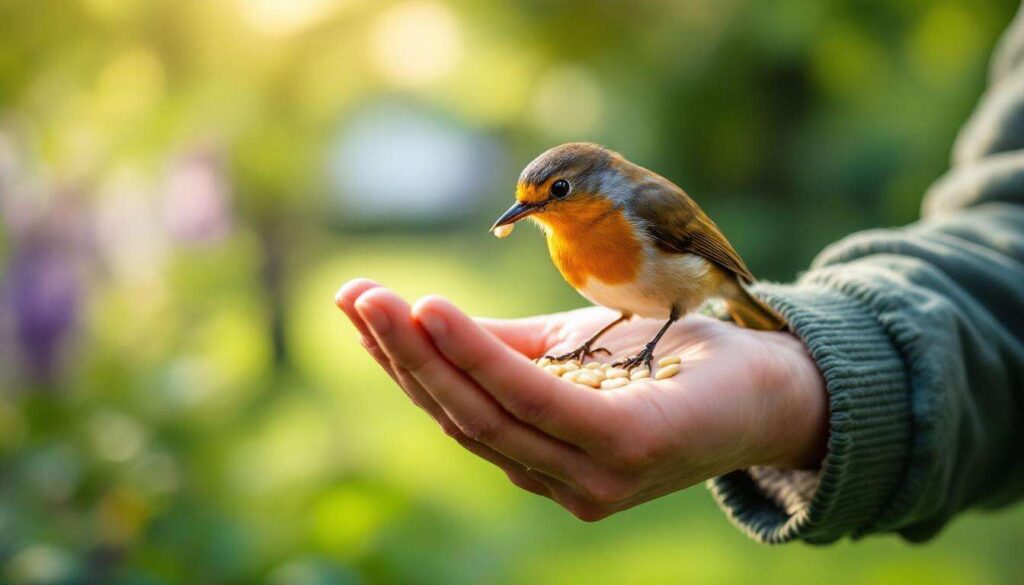
When the robin feeds within arm’s reach, begin offering mealworms in your outstretched palm. Keep your hand steady and low, avoiding direct eye contact which birds may interpret as predatory behaviour. The first successful hand-feeding represents a significant milestone, though it may require numerous attempts before the robin commits to landing on your hand.
| Stage | Typical Duration | Success Indicators |
|---|---|---|
| Establishing presence | 1-2 weeks | Robin feeds whilst you watch |
| Reducing distance | 1-3 weeks | Bird approaches within 1 metre |
| Hand-feeding | 3-7 days | Robin lands on your hand |
However, even with perfect execution of these steps, certain errors can derail the entire process.
Mistakes to avoid when approaching
Common errors that break trust
Several behaviours can instantly destroy the trust you have carefully built with a robin. Sudden movements represent the most frequent mistake, as they trigger the bird’s flight response. Similarly, attempting to progress too quickly through the stages often results in setbacks. Other critical errors include:
- Making loud noises or bringing pets into the feeding area
- Wearing bright colours or reflective accessories that may alarm the bird
- Inconsistent feeding times that confuse the robin’s expectations
- Attempting to touch or grab the bird once it lands on your hand
- Inviting too many observers, which creates an intimidating environment
Respecting boundaries and wild nature
It remains crucial to remember that taming does not equal domestication. Robins must maintain their wild instincts and natural wariness to survive. Over-taming can make birds vulnerable to predators or cause them to approach humans who may not have benign intentions. Always prioritise the bird’s welfare over the desire for closer interaction. Understanding when conditions favour success can significantly improve outcomes.
The best time to tame a robin
Seasonal considerations
Winter months offer the optimal window for taming robins, as natural food sources become scarce and birds are more motivated to accept human offerings. During this period, robins expend considerable energy maintaining body temperature and actively seek high-protein foods like mealworms. Autumn and early spring also present good opportunities, whilst summer proves more challenging due to abundant natural food availability.
Daily timing patterns
Robins are most active and receptive during early morning and late afternoon, coinciding with their natural feeding peaks. These periods offer the best chances for successful interactions. Midday sessions can work but may require more patience as birds are less urgently motivated to feed.
| Season | Success Rate | Advantages |
|---|---|---|
| Winter | High | Food scarcity increases motivation |
| Spring/Autumn | Moderate | Balanced conditions |
| Summer | Low | Abundant natural food reduces interest |
Beyond the personal satisfaction of this achievement, the practice offers broader advantages worth considering.
The benefits of interacting with local wildlife
Personal wellbeing advantages
Engaging with garden wildlife provides significant mental health benefits, including stress reduction and improved mood. The patience required for taming robins encourages mindfulness and present-moment awareness. Regular outdoor time whilst pursuing this goal increases physical activity and vitamin D exposure, contributing to overall health. Many people report that successful hand-feeding experiences create lasting memories and a deeper appreciation for nature.
Educational and conservation value
Close observation of robins offers insights into avian behaviour, ecology and the interconnectedness of garden ecosystems. This hands-on learning proves particularly valuable for children, fostering environmental awareness and empathy for wildlife. By developing relationships with garden birds, people often become more invested in conservation efforts and habitat protection. The experience can inspire broader interest in ornithology and citizen science projects that contribute to species monitoring.
Successfully taming a robin to feed from your hand represents a rewarding achievement that combines patience, observation and respect for wild creatures. The process requires understanding robin behaviour, following gradual trust-building steps and avoiding common mistakes that can undermine progress. Winter provides the ideal season for these efforts, when food scarcity makes birds more receptive to human interaction. Beyond the immediate thrill of hand-feeding, the practice offers mental health benefits, educational opportunities and a deeper connection to the natural world that surrounds us.