



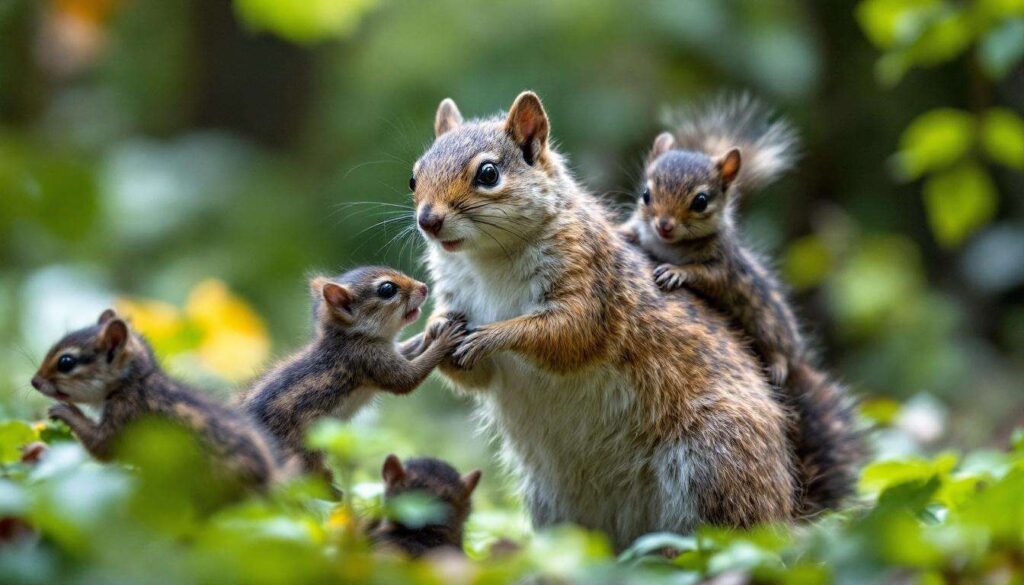
Mother squirrels demonstrate remarkable reproductive capabilities that vary significantly depending on species, geographical location, and environmental conditions. Understanding the breeding patterns of these agile rodents reveals fascinating insights into their population dynamics and survival strategies. Grey squirrels, red squirrels, and fox squirrels each exhibit distinct reproductive behaviours, but all share the common goal of ensuring their genetic legacy through multiple breeding opportunities throughout the year.
Squirrel reproductive cycle
Breeding seasons and mating behaviour
Most squirrel species experience two distinct breeding seasons annually, typically occurring in late winter and mid-summer. The first breeding period usually begins in December or January, whilst the second commences around May or June. During these periods, female squirrels enter oestrus for only one day, creating intense competition amongst males who pursue receptive females through elaborate chase sequences across trees and ground.
The mating chase serves multiple purposes beyond simple pursuit. Males must demonstrate their physical fitness, agility, and genetic superiority to earn mating rights. Dominant males typically succeed in breeding, though females may mate with multiple partners during their brief fertile window. This competitive system ensures that only the strongest genes pass to the next generation.
Gestation period and birth timing
Following successful mating, female squirrels undergo a gestation period lasting approximately 44 days, though this can vary slightly between species. Grey squirrels and red squirrels maintain similar gestation lengths, whilst larger species like fox squirrels may carry their young for up to 45 days. The mother prepares a natal den called a drey in the weeks leading up to birth, carefully lining it with soft materials such as moss, leaves, and shredded bark.
| Species | Gestation Period | Typical Litters Per Year |
|---|---|---|
| Grey Squirrel | 44 days | 1-2 |
| Red Squirrel | 38-39 days | 1-2 |
| Fox Squirrel | 44-45 days | 1-2 |
These carefully timed reproductive cycles allow squirrels to maximise their offspring’s survival chances by aligning births with periods of abundant food resources and favourable weather conditions.
Factors influencing the number of litters
Food availability and nutritional status
The availability of food resources stands as the primary determinant of whether a female squirrel will produce one or two litters annually. In years of abundant mast crops—acorns, beechnuts, and other tree seeds—females are far more likely to breed twice. Well-nourished mothers possess the energy reserves necessary to support pregnancy, lactation, and the demands of raising multiple litters.
- Abundant acorn crops increase the likelihood of second litters
- Protein-rich foods such as nuts and seeds enhance reproductive success
- Supplemental feeding in urban areas may extend breeding seasons
- Food scarcity often results in single annual litters or breeding failure
Geographical location and climate
Squirrels inhabiting southern regions with milder climates typically produce two litters per year with greater consistency than their northern counterparts. In warmer areas, extended growing seasons provide longer periods of food availability, supporting the energetic demands of multiple breeding cycles. Northern populations often produce only one litter annually, particularly in years following harsh winters or poor mast production.
Age and experience of the mother
Younger, first-time mothers frequently produce only one litter during their initial breeding year as they learn maternal behaviours and establish territories. Experienced females in their prime reproductive years—typically ages two to five—demonstrate the highest reproductive output, often successfully raising two litters. Older females may revert to single annual litters as their physical condition declines.
These interconnected factors create considerable variation in annual reproductive output, making it essential to consider individual circumstances when assessing squirrel breeding patterns.
Characteristics of litters and offspring
Average litter size
Female squirrels typically give birth to two to four babies per litter, though litter sizes can range from one to eight depending on species and maternal condition. Grey squirrels average three offspring per litter, whilst red squirrels commonly produce smaller litters of two to three young. First-time mothers generally have smaller litters than experienced breeders, and spring litters tend to be slightly larger than summer births.
Physical development of newborn squirrels
Baby squirrels, called kits or kittens, arrive completely helpless and dependent. At birth, they exhibit the following characteristics:
- Weighing approximately 13-18 grammes
- Measuring 8-10 centimetres in length
- Born hairless with closed eyes and ears
- Possessing pink, translucent skin
- Unable to regulate body temperature independently
The developmental timeline proceeds rapidly, with fur appearing within the first week and eyes opening around four to five weeks of age. By six weeks, young squirrels begin exploring outside the nest whilst still nursing.
Annual reproductive potential
Considering typical litter sizes and breeding frequency, a healthy mother squirrel can produce between two and eight offspring annually. In optimal conditions with two successful litters of three to four young each, a female might raise six to eight babies per year. However, this represents the upper limit, with most squirrels averaging four to six offspring annually across both litters combined.
Understanding these reproductive characteristics provides context for examining how young squirrels navigate the challenging journey towards independence.
Survival and independence of young squirrels
Mortality rates and survival challenges
Despite producing multiple offspring, mortality rates amongst juvenile squirrels remain exceptionally high. Studies indicate that only 25 to 50 per cent of young squirrels survive their first year. Predation accounts for the majority of deaths, with threats including hawks, owls, foxes, cats, and snakes. Additional dangers encompass starvation, disease, accidents, and adverse weather conditions.
Weaning and the path to independence
Young squirrels nurse exclusively for approximately seven to ten weeks before gradually transitioning to solid foods. The weaning process occurs progressively, with kits sampling nuts, seeds, and vegetation whilst continuing to nurse. Complete independence typically arrives at 10 to 12 weeks of age, when juveniles leave the maternal nest to establish their own territories.
| Age | Developmental Milestone |
|---|---|
| 0-3 weeks | Completely dependent, eyes closed |
| 4-5 weeks | Eyes open, fur fully developed |
| 6-8 weeks | Begin exploring, start weaning |
| 10-12 weeks | Independence achieved |
This accelerated development allows mother squirrels to potentially raise a second litter during the same year, though the demanding nature of maternal care significantly influences this decision.
Role of mother squirrels in nurturing the young
Nest construction and maintenance
Mother squirrels invest considerable effort in creating secure, comfortable nests for their offspring. They typically construct multiple dreys throughout their territory, allowing them to relocate vulnerable young if the primary nest becomes compromised by predators or parasites. These leaf nests, built in tree forks or cavities, feature waterproof outer layers and insulated interiors that maintain stable temperatures.
Nursing and nutritional provision
Female squirrels produce nutrient-rich milk that supports rapid growth during the critical early weeks. Mothers nurse their young approximately every three to four hours initially, gradually extending intervals as the kits mature. The energetic demands of lactation require mothers to consume significantly more food than usual, sometimes doubling their normal intake to maintain milk production for multiple offspring.
Protection and teaching survival skills
Beyond basic nutrition, mother squirrels provide essential education in survival skills:
- Teaching proper climbing techniques and safe navigation through trees
- Demonstrating food identification and foraging strategies
- Alerting young to predators through alarm calls
- Showing appropriate den sites and nest-building methods
- Establishing territorial boundaries and social behaviours
This intensive maternal investment continues until juveniles achieve independence, after which mothers may immediately begin preparing for a subsequent litter if conditions permit.
Environmental impact on squirrel reproduction
Habitat quality and territory availability
The quality of available habitat directly influences reproductive success. Mature forests with diverse tree species providing varied food sources support higher breeding rates than fragmented or degraded habitats. Urban environments present mixed outcomes—whilst supplemental feeding may enhance nutrition, increased predation from domestic cats and vehicle collisions elevate mortality rates.
Climate change and shifting breeding patterns
Recent research suggests that warming temperatures may be altering traditional breeding seasons. Some squirrel populations now initiate breeding earlier in spring, potentially allowing for extended reproductive windows. However, climate unpredictability also poses risks through unseasonal weather events that can destroy nests or reduce food availability during critical periods.
Human influence on reproduction rates
Human activities exert both positive and negative effects on squirrel reproduction. Garden bird feeders and deliberate feeding can improve maternal condition, potentially enabling second litters. Conversely, habitat destruction, pesticide use, and road networks fragment populations and reduce breeding success. Conservation efforts focusing on habitat connectivity and mature woodland preservation prove most effective in supporting healthy squirrel populations.
Mother squirrels possess remarkable reproductive capacity, typically producing between two and eight offspring annually through one or two litters depending on environmental conditions and individual health. Food availability, climate, geographical location, and maternal experience all influence breeding success, whilst high juvenile mortality rates balance reproductive output. The intensive maternal care required for raising helpless young to independence represents a significant energetic investment, explaining why many females produce only one litter per year despite physiological capacity for two. Understanding these reproductive patterns proves essential for wildlife management and conservation efforts aimed at maintaining stable squirrel populations across diverse habitats.