

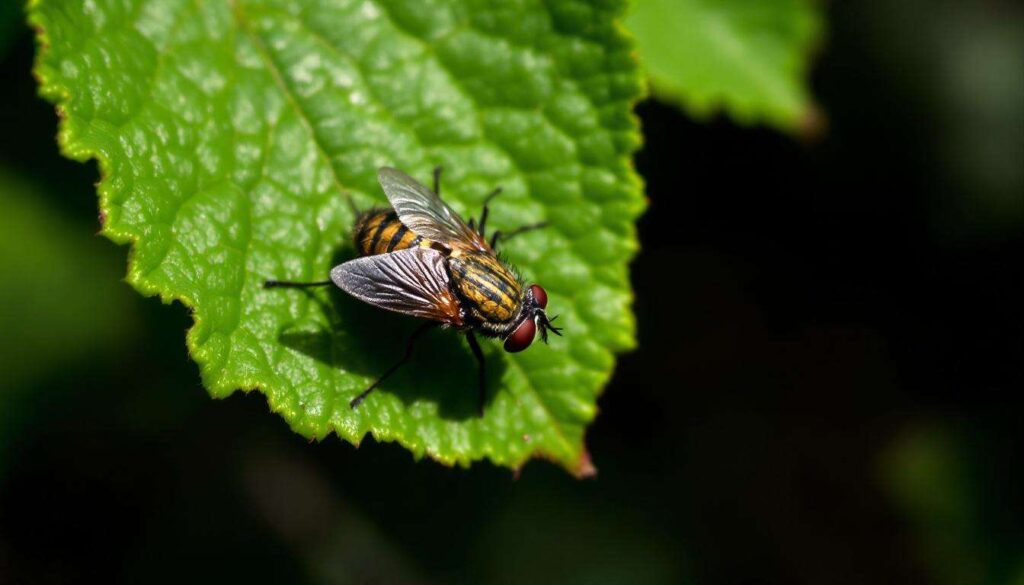
The common housefly, a ubiquitous presence in homes and gardens across the globe, often provokes curiosity about its surprisingly brief existence. Despite their seemingly endless appearances during warmer months, these insects possess a remarkably short lifespan that varies considerably depending on environmental conditions and species characteristics. Understanding the duration of a fly’s life provides fascinating insights into insect biology, ecological relationships, and the remarkable adaptability of these creatures that have thrived alongside human civilisation for millennia.
Lifespan of a fly: myth or reality ?
Common misconceptions about fly longevity
Popular belief often suggests that flies live for merely 24 hours, a notion that has persisted in cultural consciousness for generations. This widespread misconception likely stems from the ephemeral nature of mayflies, which are frequently confused with common houseflies despite belonging to entirely different insect orders. The reality proves considerably more complex and interesting than this oversimplified narrative.
The Musca domestica, or common housefly, actually survives for a substantially longer period under optimal conditions. Scientific observations have documented that adult houseflies typically live between 15 to 30 days, with some individuals reaching up to 60 days in laboratory settings where temperature, humidity, and food availability remain ideal. This duration represents a significant departure from the mythical single-day existence attributed to them.
Scientific evidence and research findings
Entomological studies conducted across various research institutions have consistently demonstrated that fly longevity depends on numerous variables. Laboratory experiments reveal that temperature plays a crucial role, with flies maintained at approximately 20°C surviving considerably longer than those exposed to higher temperatures. Research published by entomology departments has established clear correlations between environmental factors and lifespan duration.
- Adult houseflies in controlled laboratory conditions: 40 to 60 days
- Flies in typical household environments: 15 to 25 days
- Flies in outdoor summer conditions: 10 to 15 days
- Flies without access to food: 2 to 3 days maximum
These findings underscore the importance of distinguishing between potential maximum lifespan and typical survival duration in natural settings. The disparity between myth and reality highlights how scientific investigation continually challenges popular assumptions, leading naturally to an examination of the complete developmental journey these insects undertake.
The life cycle of the housefly
The four distinct developmental stages
Houseflies undergo complete metamorphosis, a biological process encompassing four distinct stages that collectively determine the total lifespan from egg to adult death. Each phase presents unique characteristics and duration, contributing to the overall life expectancy of the species.
The egg stage represents the beginning of life, lasting approximately 12 to 24 hours under favourable conditions. Female flies deposit batches of 75 to 150 eggs in decaying organic matter, providing immediate nutrition for emerging larvae. This rapid development ensures that the species can proliferate quickly when environmental conditions prove advantageous.
Larval and pupal development
Following hatching, the larval stage commences, during which the maggot feeds voraciously on decomposing material. This phase typically spans 3 to 5 days, though temperature variations can extend or shorten this period. Larvae undergo three instars, moulting twice as they increase dramatically in size and prepare for the transformative pupal stage.
The pupal stage represents a remarkable period of biological reorganisation lasting 3 to 6 days. Enclosed within a protective puparium, the larva transforms completely, developing wings, legs, compound eyes, and all anatomical features characteristic of adult flies. This metamorphosis demonstrates nature’s extraordinary capacity for structural transformation within compressed timeframes.
Adult fly emergence and reproduction
Upon emergence, adult flies require approximately 2 to 3 days before reaching sexual maturity. Females can begin laying eggs within this brief period, perpetuating the rapid reproductive cycle that characterises the species. A single female may produce up to 500 eggs during her lifetime, distributed across multiple batches deposited in suitable breeding sites.
| Life Stage | Duration | Key Characteristics |
|---|---|---|
| Egg | 12-24 hours | Laid in organic matter |
| Larva | 3-5 days | Three instars, active feeding |
| Pupa | 3-6 days | Metamorphosis occurs |
| Adult | 15-30 days | Reproduction and dispersal |
This comprehensive developmental timeline illustrates how the adult phase represents merely one component of the complete life cycle. Understanding these stages provides essential context for examining the various factors that influence how long individual flies actually survive.
Factors influencing the longevity of flies
Temperature and climatic conditions
Temperature emerges as the most significant environmental variable affecting fly lifespan. Houseflies are ectothermic organisms, meaning their metabolic rates depend entirely on ambient temperature. Warmer conditions accelerate metabolic processes, leading to shorter lifespans, whilst cooler temperatures slow metabolism and extend survival duration.
Research demonstrates that flies maintained at temperatures between 16°C and 20°C live substantially longer than those exposed to temperatures exceeding 30°C. At elevated temperatures, metabolic demands increase dramatically, exhausting energy reserves more rapidly and accelerating cellular senescence. Conversely, temperatures below 10°C induce dormancy, effectively pausing biological processes without contributing to ageing.
Nutritional availability and quality
Access to adequate nutrition profoundly impacts fly longevity. Adult houseflies require carbohydrates for energy and proteins for egg production in females. Flies with consistent access to sugar sources such as nectar, fruit juices, or household foods survive considerably longer than those deprived of nutrition.
- Flies with abundant food sources: 25 to 30 days average lifespan
- Flies with limited nutrition: 10 to 15 days average lifespan
- Flies completely deprived of food: 2 to 3 days maximum survival
- Water availability: essential for survival beyond 48 hours
Predation and environmental hazards
Natural predators significantly reduce the actual lifespan of flies in wild populations. Spiders, birds, bats, and various insectivorous species consume vast numbers of flies daily. Additionally, human intervention through swatters, insecticides, and traps dramatically curtails fly populations, ensuring that most individuals never approach their potential maximum lifespan.
These multiple influencing factors demonstrate the complexity underlying fly survival rates. Recognising this complexity naturally leads to consideration of how different fly species exhibit varying longevity patterns.
Comparison with other species of flies
Fruit flies and their abbreviated existence
The fruit fly (Drosophila melanogaster) represents one of the most extensively studied organisms in biological research. These diminutive insects possess an even shorter lifespan than houseflies, typically surviving 40 to 50 days under optimal laboratory conditions but only 10 to 14 days in natural environments. Their rapid reproduction and brief life cycle make them ideal subjects for genetic research.
Horseflies and their extended longevity
In contrast, horseflies demonstrate considerably longer lifespans. Adult horseflies may survive for 30 to 60 days, with some species documented living beyond two months. Their larger body size, different metabolic requirements, and distinct ecological niches contribute to this extended duration compared to common houseflies.
Crane flies and seasonal variations
Crane flies, often mistaken for giant mosquitoes, exhibit remarkably brief adult lifespans of merely 10 to 15 days. However, their larval stage extends considerably longer, sometimes persisting for several months in soil or aquatic environments. This pattern illustrates how different species allocate lifespan duration across various developmental stages.
| Fly Species | Average Adult Lifespan | Notable Characteristics |
|---|---|---|
| Housefly | 15-30 days | Most common domestic species |
| Fruit fly | 10-14 days (natural) | Model organism for research |
| Horsefly | 30-60 days | Larger size, blood-feeding females |
| Crane fly | 10-15 days | Extended larval development |
These comparative perspectives highlight the diversity within Diptera, demonstrating that generalising about “fly lifespan” requires species-specific consideration. This variation connects directly to how environmental contexts shape survival across different habitats and conditions.
Environmental impact on the lifespan of flies
Urban versus rural settings
Flies inhabiting urban environments encounter vastly different conditions compared to their rural counterparts. Cities provide abundant food sources through waste disposal, restaurants, and human habitation, potentially extending fly survival through consistent nutrition. However, urban areas also present increased exposure to insecticides, traps, and sanitation measures designed specifically to reduce fly populations.
Rural flies often experience more variable conditions, with seasonal fluctuations in food availability and temperature extremes that urban heat islands moderate. Agricultural settings may expose flies to pesticides whilst simultaneously providing breeding sites in animal waste and decaying plant matter.
Seasonal variations and survival strategies
Seasonal changes dramatically affect fly populations and individual longevity. During summer months, warm temperatures accelerate development and metabolism, resulting in shorter individual lifespans but rapid population turnover. Winter presents survival challenges, with most adult flies perishing whilst some enter diapause or survive in protected indoor environments.
Human activity and pest control measures
Human interventions profoundly impact fly lifespan through deliberate population control efforts. Insecticides, both chemical and biological, target flies at various life stages. Sanitation practices that eliminate breeding sites prevent reproduction, whilst physical barriers and traps reduce adult populations. These measures ensure that the theoretical maximum lifespan rarely manifests in practical reality.
Understanding these environmental influences provides crucial context for appreciating the broader ecological significance of flies despite their brief individual existences.
Vital role of flies in the ecosystem
Decomposition and nutrient cycling
Despite their reputation as mere pests, flies perform essential ecological functions that sustain environmental health. Fly larvae serve as primary decomposers, breaking down organic matter and accelerating nutrient recycling. This decomposition process returns vital nutrients to soil, supporting plant growth and maintaining ecosystem productivity.
The rapid life cycle of flies enables swift colonisation of carrion and waste materials, preventing accumulation of decaying matter that would otherwise pose health hazards and disrupt ecological balance. Their efficiency in this role makes them indispensable components of waste management in natural systems.
Food source for other organisms
Flies constitute a crucial food source for numerous species across multiple trophic levels. Birds, bats, spiders, amphibians, reptiles, and various insectivorous mammals depend on flies as dietary staples. The abundance and accessibility of fly populations support diverse predator communities, demonstrating their fundamental importance in food web dynamics.
- Insectivorous birds consume thousands of flies during breeding season
- Bats rely heavily on flying insects including flies for nocturnal feeding
- Spiders capture flies in webs, providing essential protein
- Amphibians such as frogs depend on flies as primary prey items
Pollination services
Whilst less celebrated than bees, certain fly species provide valuable pollination services for specific plant species. Hoverflies, in particular, visit flowers for nectar and inadvertently transfer pollen. Some plants have evolved specifically to attract fly pollinators, demonstrating the evolutionary significance of these relationships.
The ecological contributions of flies far exceed their brief individual lifespans, with populations collectively maintaining critical ecosystem functions that benefit countless other species, including humans.
The lifespan of a fly, whilst brief by human standards, represents a finely tuned adaptation to ecological niches requiring rapid reproduction and efficient resource utilisation. Common houseflies typically survive 15 to 30 days as adults, contrary to the persistent myth of a single-day existence. Environmental factors including temperature, nutrition, and predation significantly influence actual survival duration, whilst different fly species exhibit considerable variation in longevity. Despite their short lives, flies fulfil vital ecological roles in decomposition, nutrient cycling, and food web support. Understanding fly biology illuminates the remarkable complexity underlying even the most familiar and seemingly simple organisms sharing our environment.