



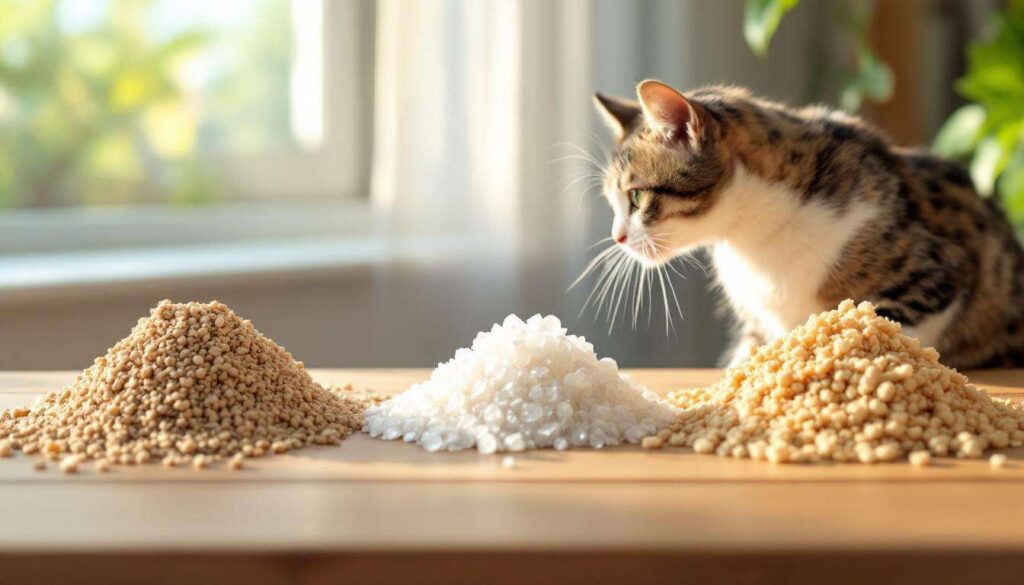
Choosing cat litter has become increasingly complex as manufacturers flood the market with bold claims about absorbency, odour control, and eco-friendliness. Behind the marketing language, however, lie three fundamentally different product categories: clumping clay litter, silica gel crystals, and plant-based alternatives. Each type operates through distinct mechanisms, offers specific practical advantages, and presents unique considerations for cat owners. Understanding these genuine differences—rather than the promotional narratives—enables informed decisions based on your household’s actual needs, your cat’s preferences, and your environmental priorities.
Understanding the different categories of cat litter
The traditional clay-based option
Clumping litter typically consists of sodium bentonite clay, a naturally occurring mineral that expands when exposed to moisture. This expansion creates solid clumps that encapsulate urine and faeces, allowing for targeted removal rather than complete tray changes. Non-clumping clay varieties, made from different mineral compositions, simply absorb liquid without forming discrete masses.
The crystalline alternative
Silica gel litter comprises synthetic silicon dioxide crystals manufactured specifically for absorption purposes. These porous beads trap moisture internally whilst allowing air circulation, which facilitates evaporation. The same basic material appears in those small packets marked “do not eat” found in shoe boxes and electronics packaging, though pet litter uses larger, dust-free granules.
The renewable category
Plant-based litters encompass various materials derived from agricultural sources:
- Wood pellets or shavings from pine, cedar, or recycled timber
- Corn kernel derivatives and whole-kernel options
- Wheat-based formulations using grain processing by-products
- Paper products manufactured from recycled newspaper or cardboard
- Grass seed litter from harvested or processed vegetation
These materials rely on natural cellulose fibres and starches for absorption, with varying degrees of clumping ability depending on formulation and processing methods.
Having established these fundamental categories, examining how clumping litter actually functions reveals why it remains the most popular choice amongst cat owners.
Key characteristics of clumping litter
The clumping mechanism explained
When cat urine contacts sodium bentonite clay, the microscopic plate-like particles rapidly absorb liquid and swell to approximately fifteen times their dry volume. This expansion causes adjacent particles to bind together, forming a cohesive mass within seconds. The resulting clump isolates waste from surrounding clean litter, theoretically extending the usable life of the entire tray contents.
Practical advantages in daily use
Clumping litter offers several tangible benefits that account for its market dominance:
- Efficient waste removal: scooping discrete clumps requires less product replacement than changing entire trays
- Immediate odour containment: encapsulated waste releases fewer volatile compounds into surrounding air
- Visual cleanliness indicators: solid clumps clearly show which areas need attention
- Cost-effectiveness over time: targeted removal means longer intervals between complete litter changes
Genuine drawbacks to consider
Despite widespread use, clumping clay presents legitimate concerns beyond marketing rhetoric. The material generates substantial dust during pouring and scooping, potentially irritating respiratory systems in both cats and humans. Its considerable weight—typically 18-20 kilograms per large bag—creates handling difficulties and increases transportation emissions. Some clumps break apart during scooping, leaving residue that gradually accumulates. Additionally, tracking remains problematic as particles adhere to paw pads and scatter beyond the litter tray area.
These practical considerations lead many cat owners to explore silica-based alternatives, which function through entirely different mechanisms.
Advantages and disadvantages of silica litter
How silica crystals actually work
Silica gel crystals contain millions of microscopic pores that create an enormous internal surface area relative to their external size. Liquid waste enters these pores through capillary action, where it remains trapped whilst moisture gradually evaporates through the porous structure. This process continues until the crystals reach saturation capacity, at which point they typically change colour to indicate replacement needs.
Documented benefits of crystal litter
| Characteristic | Silica gel performance | Comparison to clay |
|---|---|---|
| Dust production | Minimal to none | Significantly lower |
| Odour control duration | Up to 30 days | Requires daily scooping |
| Weight per equivalent volume | Approximately 50% lighter | Much easier handling |
| Tracking outside tray | Moderate | Similar or slightly better |
The extended change intervals represent a genuine convenience advantage, particularly for single-cat households or owners with mobility limitations. Reduced dust benefits cats with asthma or respiratory sensitivities, whilst lighter weight simplifies purchasing and disposal logistics.
Realistic limitations of silica products
Silica litter’s higher per-unit cost creates a significant barrier for budget-conscious households. Whilst manufacturers claim extended use offsets this expense, actual cost-effectiveness depends heavily on individual circumstances. The crystals cannot be scooped in the traditional sense—solid waste requires removal, but the entire tray needs periodic stirring to distribute moisture evenly. Some cats find the hard texture uncomfortable underfoot and refuse to use it. The crystals also produce a distinctive crunching sound when walked upon, which may disturb noise-sensitive animals or owners. Finally, the non-biodegradable nature raises disposal concerns that plant-based alternatives specifically address.
These environmental considerations increasingly influence purchasing decisions, making plant-derived options worth examining in detail.
Benefits of plant-based litter
Absorption mechanisms in natural materials
Plant-based litters utilise cellulose and natural starches inherent in their source materials. Wood fibres absorb liquid through their cellular structure, whilst corn and wheat starches form gel-like substances when hydrated. Paper-based products rely on processed fibres with high surface area, and grass seed varieties combine both mechanisms. The effectiveness varies considerably depending on processing methods—compressed pellets behave differently from loose granules of identical material.
Genuine advantages of plant-derived options
Beyond environmental marketing, plant-based litters offer measurable practical benefits:
- Natural odour neutralisation: wood phenols and grain enzymes chemically bind odour molecules rather than merely masking them
- Lightweight composition: typically 30-50% lighter than equivalent clay volumes
- Minimal dust: most formulations produce substantially less airborne particulate
- Softer texture: generally more comfortable for sensitive or declawed paws
- Flushability: certain varieties safely break down in sewage systems, eliminating disposal concerns
Honest assessment of plant-based drawbacks
Plant-based litters present specific challenges that manufacturers rarely emphasise. Clumping ability varies dramatically between products—some form firm masses comparable to clay, whilst others create loose, crumbly aggregations that disintegrate during scooping. Tracking can actually worsen with lightweight materials that adhere to fur and travel further from the tray. Certain varieties, particularly those with strong natural scents like cedar or pine, may deter cats accustomed to unscented options. Absorption capacity per volume often falls below clay equivalents, potentially requiring more frequent complete changes. Additionally, organic materials can harbour mould or attract insects if stored in humid conditions or left unchanged beyond recommended intervals.
Understanding these practical differences provides context for evaluating the broader environmental implications that increasingly concern conscientious cat owners.
Environmental impact of cat litters
Clay extraction and processing consequences
Sodium bentonite mining involves strip mining operations that remove topsoil and vegetation, creating permanent landscape alterations. The clay requires no chemical processing, but extraction, transportation, and packaging generate substantial carbon emissions. Most significantly, used clay litter contributes to landfill volume as a non-biodegradable waste that persists indefinitely. A single cat produces approximately 120 kilograms of clay litter waste annually, multiplied across millions of pet households.
Silica gel environmental considerations
Silica gel production requires high-temperature chemical processes that consume considerable energy. The resulting product is chemically stable and non-toxic but essentially inert in landfill environments. It neither biodegrades nor releases harmful leachates, simply occupying space permanently. Some manufacturers now offer recycling programmes, though availability remains limited and participation rates low.
Plant-based materials and sustainability claims
| Material type | Biodegradability | Renewable source | Processing intensity |
|---|---|---|---|
| Wood by-products | Complete within months | Yes, if sustainably harvested | Low to moderate |
| Corn/wheat | Complete within months | Yes, annual crops | Moderate |
| Recycled paper | Complete within months | Yes, waste stream | Moderate to high |
| Grass seed | Complete within months | Yes, rapid growth | Low |
Plant-based options generally present lower environmental impact across most metrics, though nuances exist. Agricultural litters may involve pesticide use, irrigation demands, and land-use competition with food production. Transportation distances matter—locally sourced wood waste carries less environmental cost than imported corn products. Compostability claims require verification, as some formulations contain additives that prevent proper decomposition.
These environmental factors combine with practical considerations to inform the selection process that best serves individual household needs.
Choosing the right litter for your feline
Assessing your cat’s preferences and needs
Cats demonstrate strong individual preferences regarding litter texture, depth, and scent. Older cats or those with arthritis may struggle with deep litter beds or high-sided trays. Declawed cats often find clay or crystal textures painful, favouring softer plant-based options. Respiratory sensitivities necessitate low-dust formulations. Observing your cat’s behaviour—hesitating before entering the tray, scratching excessively, or eliminating outside the box—provides crucial feedback about litter acceptability.
Practical household considerations
Your living situation significantly influences optimal litter choice:
- Budget constraints: calculate cost per day of use rather than per-bag price
- Physical capabilities: consider weight for carrying and disposal
- Storage space: evaluate packaging size and quantity needed
- Disposal options: verify whether flushable varieties suit your plumbing
- Household sensitivities: account for human allergies or respiratory conditions
- Multiple cats: higher traffic requires superior clumping or more frequent changes
Making an evidence-based decision
Rather than accepting marketing claims, trial periods provide the most reliable guidance. Purchase small quantities of different types, introducing changes gradually by mixing new litter with existing material over several days. Monitor both your cat’s acceptance and practical factors like odour control effectiveness, ease of maintenance, and tracking severity. Document costs over complete usage cycles rather than initial purchase prices. Consider seasonal factors—some litters perform differently in varying humidity levels.
No universal “best” litter exists; the optimal choice balances your cat’s comfort, your household’s practical requirements, and your environmental values. Prioritising genuine performance characteristics over promotional language leads to more satisfactory long-term outcomes.
The fundamental differences between clumping clay, silica crystals, and plant-based litters extend far beyond surface-level marketing distinctions. Each category operates through distinct mechanisms, offers specific advantages, and presents unique limitations. Clumping clay provides reliable performance and familiarity but carries weight and dust concerns. Silica crystals deliver extended odour control and convenience whilst demanding higher initial investment. Plant-based options offer environmental benefits and softer textures alongside variable performance characteristics. Informed selection requires evaluating these genuine attributes against your specific circumstances rather than accepting promotional narratives at face value. Your cat’s comfort, your household’s practical needs, and your environmental priorities collectively determine which option truly serves you best.