



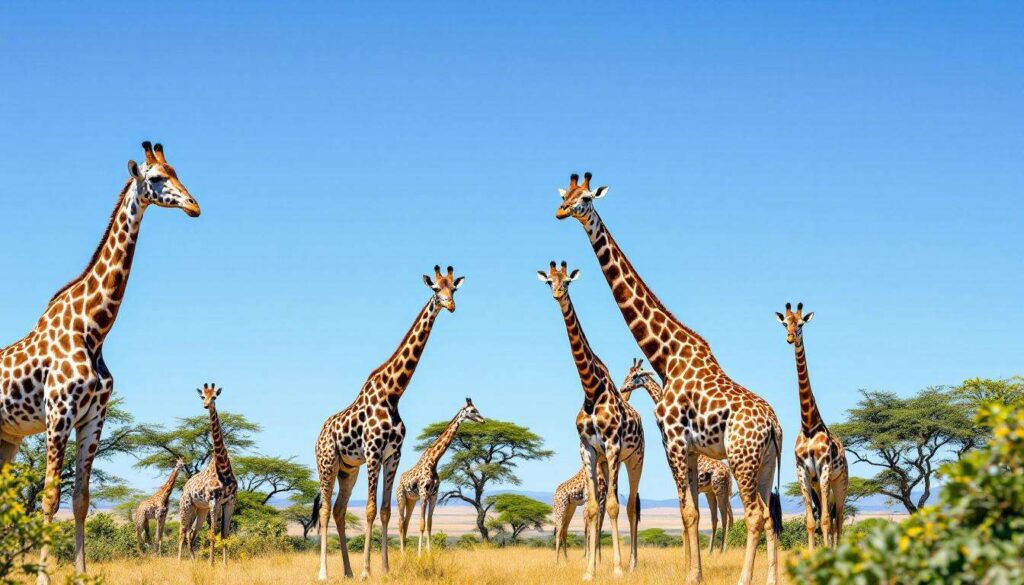
Giraffes, with their towering necks and distinctive spotted coats, represent some of the most recognisable mammals on Earth. For decades, scientists classified all giraffes as a single species with multiple subspecies. However, recent genetic research has fundamentally challenged this traditional view, revealing a far more complex taxonomic picture. Understanding how many giraffe species exist and where they live has become crucial for conservation efforts, as these magnificent creatures face mounting pressures from habitat loss and human encroachment across the African continent.
Introduction to giraffe species
The traditional view of giraffe taxonomy
Historically, zoologists recognised one species of giraffe, Giraffa camelopardalis, with up to nine subspecies distributed across Africa. This classification remained largely unchallenged throughout the twentieth century, based primarily on morphological differences such as coat patterns and geographic distribution. Museums and conservation organisations worldwide adopted this framework, treating all giraffes as variations of a single species.
The role of genetic research in reclassification
Advanced DNA analysis techniques have revolutionised our understanding of giraffe diversity. Researchers examining genetic material from populations across Africa discovered significant genetic divergence between different giraffe groups. These findings suggested that what scientists previously considered subspecies might actually represent distinct species that have been reproductively isolated for extended periods.
The genetic evidence indicated that some giraffe populations have been separated for one to two million years, a timeframe comparable to the divergence between other recognised species. This discovery prompted a fundamental reassessment of giraffe classification.
These revelations have profound implications for how conservationists approach protecting giraffes, as each species may require tailored strategies. This new understanding leads us to examine the current classification system in greater detail.
Classification of giraffes: a recent evolution
The four-species model
Current scientific consensus, based on comprehensive genetic studies, recognises four distinct giraffe species:
- Northern giraffe (Giraffa camelopardalis)
- Southern giraffe (Giraffa giraffa)
- Masai giraffe (Giraffa tippelskirchi)
- Reticulated giraffe (Giraffa reticulata)
Each species contains several subspecies, bringing the total number of recognised taxonomic groups to approximately nine. This classification represents a significant departure from the traditional single-species model and has been supported by multiple independent genetic studies.
Ongoing debates in the scientific community
Despite growing acceptance of the four-species model, some researchers maintain that further subdivision may be warranted. The debate continues as new genetic data emerges and analytical techniques improve. Conservation organisations have begun adapting their approaches to reflect this evolving taxonomy, though implementation remains inconsistent across different regions and institutions.
| Species | Estimated Population | Conservation Status |
|---|---|---|
| Northern giraffe | 5,900 | Critically endangered |
| Reticulated giraffe | 15,950 | Endangered |
| Masai giraffe | 35,000 | Endangered |
| Southern giraffe | 52,050 | Vulnerable |
Understanding these distinctions becomes particularly important when examining individual species characteristics, beginning with the northern giraffe.
The Northern Giraffe: characteristics and habitat
Physical distinguishing features
The northern giraffe displays distinctive coat patterns that vary among its three subspecies: the West African, Kordofan, and Nubian giraffes. These animals typically exhibit large, rectangular spots with well-defined edges, separated by lighter-coloured lines. The patterns serve as unique identifiers, much like human fingerprints, allowing researchers to track individual animals.
Geographic range and population distribution
Northern giraffes inhabit fragmented populations across Central and West Africa, including countries such as Chad, Sudan, Niger, and Cameroon. The West African subspecies, found primarily in Niger, represents one of the most endangered giraffe populations globally, with fewer than 600 individuals remaining in the wild.
These giraffes prefer savannah woodlands and open grasslands where acacia trees provide their primary food source. Human activities have severely restricted their historic range, confining them to protected areas and isolated pockets of suitable habitat.
Whilst the northern giraffe faces critical conservation challenges, another species has captured public imagination through its widespread recognition.
The Masai Giraffe: an iconic species
Recognition and cultural significance
The Masai giraffe, also known as the Kilimanjaro giraffe, stands as perhaps the most photographed giraffe species due to its presence in popular East African safari destinations. Its distinctive jagged, irregular spot patterns resemble vine leaves, creating a striking appearance that differs markedly from other species.
Population trends and conservation concerns
Despite its iconic status, the Masai giraffe has experienced dramatic population declines over recent decades. Numbers have dropped by approximately 50% since the 1980s, primarily due to habitat loss, poaching, and human-wildlife conflict. The species now occupies only a fraction of its historical range across Kenya and Tanzania.
Conservation programmes focusing on the Masai giraffe have implemented various strategies:
- Establishing wildlife corridors between protected areas
- Community-based conservation initiatives
- Anti-poaching patrols and enforcement
- Habitat restoration projects
- Population monitoring through photographic identification
These efforts highlight the importance of understanding not just individual species, but their distribution patterns across the continent.
Geographical distribution of giraffes in Africa
Do all giraffes live exclusively in Africa ?
Yes, all wild giraffe species are endemic to Africa. No naturally occurring giraffe populations exist on any other continent. This exclusive African distribution reflects the evolutionary history of giraffes, which developed their unique adaptations in response to the specific environmental conditions of African savannahs and woodlands.
Regional distribution patterns
Giraffe species occupy distinct geographic zones across sub-Saharan Africa, with minimal overlap between species ranges. The southern giraffe inhabits countries including South Africa, Namibia, Botswana, Zimbabwe, and Mozambique. The reticulated giraffe occurs in northern Kenya, southern Ethiopia, and Somalia, whilst the Masai giraffe ranges across Kenya and Tanzania.
This geographic separation has contributed to the genetic divergence between species, as populations remained isolated from one another for millennia. Natural barriers such as rivers, mountain ranges, and differing vegetation zones have maintained these separations.
Historical versus current range
Historically, giraffes occupied a far more extensive range across Africa, including areas of North Africa where they disappeared thousands of years ago. Today’s fragmented populations represent a significant contraction from their former distribution, with many areas of suitable habitat no longer supporting giraffe populations due to human activities.
The restricted ranges of modern giraffe populations directly influence their ability to survive in an increasingly human-dominated landscape.
Impact of habitat on giraffe survival
Essential habitat requirements
Giraffes require specific environmental conditions to thrive, including access to adequate browse vegetation, particularly acacia trees, which provide their primary nutritional source. They need open landscapes that allow them to spot predators from distance whilst maintaining access to water sources, though they can survive extended periods without drinking.
The availability of suitable habitat directly determines population density and reproductive success. Areas with diverse vegetation communities support healthier, more resilient giraffe populations compared to degraded habitats with limited food resources.
Threats to giraffe habitats
Multiple pressures threaten giraffe habitats across Africa:
- Agricultural expansion reducing available wilderness areas
- Human settlement encroachment into wildlife territories
- Deforestation and woodland clearance
- Climate change altering vegetation patterns
- Infrastructure development fragmenting populations
- Livestock competition for browse resources
These factors combine to create an increasingly challenging environment for giraffe survival, particularly for species with already small population numbers.
Conservation strategies addressing habitat protection
Effective giraffe conservation requires comprehensive habitat protection approaches. Establishing and maintaining protected areas remains fundamental, but increasingly, conservationists recognise the importance of working with local communities to create sustainable coexistence models. Corridor creation between isolated populations helps maintain genetic diversity and allows natural movement patterns.
Successful programmes integrate wildlife conservation with community development, ensuring that local populations benefit from giraffe presence through tourism revenue and employment opportunities. This approach fosters positive attitudes towards conservation and reduces human-wildlife conflict.
Recent genetic research has fundamentally transformed our understanding of giraffe diversity, revealing four distinct species rather than the single species previously recognised. All giraffes live exclusively in Africa, distributed across sub-Saharan regions in increasingly fragmented populations. The northern giraffe, Masai giraffe, reticulated giraffe, and southern giraffe each face unique conservation challenges, with habitat loss representing the primary threat to their survival. Protecting these magnificent animals requires species-specific conservation strategies that address their particular ecological needs whilst engaging local communities in sustainable coexistence models. The reclassification of giraffes emphasises the urgent need for targeted conservation efforts to prevent the loss of these irreplaceable species from African landscapes.