



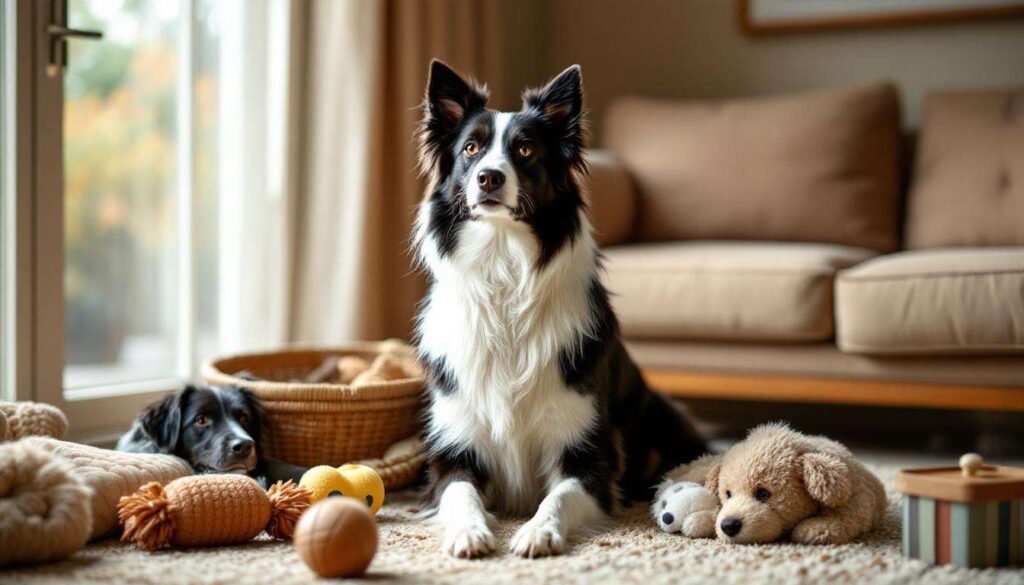
Dog owners often wonder whether their faithful companion ranks amongst the most intelligent breeds. Understanding canine intelligence involves examining various cognitive abilities, from problem-solving skills to social awareness. Recent studies have revealed fascinating insights into how different breeds process information, learn commands, and adapt to their environment. This ranking explores which breeds consistently demonstrate exceptional mental capabilities and what factors contribute to their cognitive prowess.
Criteria for canine intelligence
Understanding different types of intelligence
Canine intelligence cannot be measured by a single standard. Experts identify three primary categories that define how dogs think and learn. Instinctive intelligence refers to the innate abilities a breed was developed for, such as herding, hunting, or guarding. Adaptive intelligence measures a dog’s capacity to solve problems independently and learn from experience. Finally, working and obedience intelligence assesses how quickly a dog learns commands and responds to training.
These categories reveal that intelligence manifests differently across breeds. A Border Collie excels at following complex commands, whilst a Bloodhound demonstrates remarkable instinctive intelligence through its extraordinary tracking abilities. Understanding these distinctions helps owners appreciate their dog’s unique cognitive strengths.
Measuring cognitive abilities in dogs
Researchers employ various methods to evaluate canine intelligence:
- Response time to new commands and instructions
- Problem-solving tasks involving puzzles and obstacles
- Memory tests assessing short-term and long-term retention
- Social cognition experiments measuring emotional understanding
- Adaptability assessments in unfamiliar environments
The most widely referenced intelligence ranking comes from psychologist Stanley Coren, who surveyed obedience trial judges to evaluate breeds based on working and obedience intelligence. However, modern researchers recognise that this approach represents only one dimension of canine cognition.
These varied assessment methods provide a comprehensive picture of how different breeds process information, setting the stage for identifying which dogs consistently demonstrate exceptional abilities.
The most well-known breeds for their intelligence
Border Collies and their exceptional capabilities
The Border Collie consistently tops intelligence rankings due to its remarkable learning speed and problem-solving abilities. Originally bred for herding sheep in the challenging terrain between Scotland and England, these dogs can learn new commands in fewer than five repetitions and obey them at least 95% of the time. Their intense focus and eagerness to work make them ideal candidates for complex tasks ranging from agility competitions to search and rescue operations.
Poodles beyond their elegant appearance
Despite their reputation as glamorous show dogs, Poodles rank amongst the brightest breeds across all three size varieties. Their intelligence stems from their original purpose as water retrievers, requiring them to work independently whilst hunting. Poodles demonstrate exceptional trainability, excel at learning tricks, and possess strong adaptive intelligence that allows them to thrive in various living situations.
German Shepherds and versatility
The German Shepherd combines intelligence with loyalty and courage, making it the preferred breed for police and military work worldwide. These dogs excel at:
- Complex protection and security tasks
- Search and rescue operations
- Disability assistance work
- Detection of substances and explosives
Their ability to assess situations quickly and respond appropriately demonstrates both working intelligence and adaptive problem-solving skills.
Whilst these breeds consistently demonstrate high intelligence, their cognitive abilities don’t develop automatically, which brings us to examine how training shapes mental development.
The role of education in the development of intelligence
Early socialisation and cognitive growth
A dog’s intelligence doesn’t solely depend on genetics. Early socialisation during the critical period between three and fourteen weeks significantly impacts cognitive development. Puppies exposed to diverse experiences, people, and environments develop stronger neural connections, enhancing their problem-solving abilities and adaptability throughout life.
Research demonstrates that puppies raised in enriched environments with varied stimuli show improved learning capabilities compared to those in restricted settings. This neuroplasticity continues into adulthood, though the effects are most pronounced during early development.
Consistent training methods
The training approach significantly influences how effectively dogs develop their cognitive potential. Positive reinforcement methods that reward desired behaviours encourage dogs to think creatively and engage actively in the learning process. Conversely, punishment-based training can inhibit cognitive development by creating anxiety that interferes with learning.
| Training method | Impact on intelligence | Long-term effects |
|---|---|---|
| Positive reinforcement | Enhances problem-solving | Increased confidence and initiative |
| Clicker training | Improves communication clarity | Faster learning of complex behaviours |
| Punishment-based | May inhibit learning | Potential anxiety and reduced initiative |
Mental stimulation throughout life
Continuous mental challenges maintain and enhance cognitive abilities as dogs age. Regular training sessions, puzzle toys, and new experiences prevent cognitive decline and keep dogs mentally sharp. Even breeds not traditionally ranked as highly intelligent can develop impressive capabilities through consistent mental stimulation.
Understanding how training shapes intelligence helps dispel common misconceptions about which breeds are truly clever and which simply benefit from effective education.
Myths and misconceptions about dog intelligence
The stubborn dog fallacy
Many owners label their dogs as stubborn when they don’t respond quickly to commands. However, what appears as stubbornness often reflects independent thinking rather than lack of intelligence. Breeds like Afghan Hounds and Basenjis rank lower in obedience intelligence not because they’re less clever, but because they were bred to work independently without constant human direction.
These breeds demonstrate high adaptive intelligence, making decisions autonomously in hunting or survival situations. Their reluctance to follow commands blindly actually indicates sophisticated cognitive processing.
Size and intelligence correlation
A persistent myth suggests that larger dogs are more intelligent than smaller breeds. Research disproves this assumption, showing no consistent correlation between body size and cognitive abilities. Small breeds like Papillons and Miniature Schnauzers demonstrate intelligence comparable to much larger dogs.
Mixed breeds versus purebreds
Some people assume purebred dogs are inherently more intelligent than mixed breeds. This misconception ignores the fact that mixed-breed dogs often inherit cognitive strengths from multiple lineages. Studies indicate that hybrid vigour may actually enhance problem-solving abilities in some mixed-breed dogs.
With these myths addressed, we can now examine which breeds experts consistently recognise for their exceptional cognitive abilities.
Top 5 dog breeds according to experts
The definitive ranking
Based on comprehensive research combining obedience trials, working ability assessments, and adaptive intelligence studies, experts identify these five breeds as the most intelligent:
| Rank | Breed | Primary strength | Typical learning speed |
|---|---|---|---|
| 1 | Border Collie | Working intelligence | Fewer than 5 repetitions |
| 2 | Poodle | Adaptive intelligence | Fewer than 5 repetitions |
| 3 | German Shepherd | Versatility | Fewer than 5 repetitions |
| 4 | Golden Retriever | Social intelligence | 5 to 15 repetitions |
| 5 | Dobermann Pinscher | Alert responsiveness | 5 to 15 repetitions |
What sets these breeds apart
These top-ranking breeds share several characteristics:
- Exceptional focus and attention span during training
- Strong desire to please their handlers
- Ability to generalise learned behaviours to new situations
- Quick problem-solving when faced with obstacles
- Excellent memory for commands and routines
The Golden Retriever deserves particular mention for its outstanding emotional intelligence, enabling it to excel as therapy and assistance dogs. Meanwhile, the Dobermann Pinscher combines intelligence with natural protective instincts, making it highly effective in security roles.
Regardless of where your dog ranks, you can enhance their cognitive abilities through targeted activities and enrichment.
How to stimulate your four-legged companion’s intelligence
Interactive games and puzzle toys
Mental stimulation proves as important as physical exercise for maintaining canine cognitive health. Puzzle feeders challenge dogs to manipulate objects to access treats, engaging problem-solving skills whilst slowing eating pace. Interactive toys that dispense rewards when manipulated correctly encourage persistence and creative thinking.
Rotating toys regularly prevents boredom and maintains engagement. Dogs quickly lose interest in puzzles they’ve mastered, so introducing new challenges keeps their minds active.
Training new skills regularly
Continuously teaching new commands and tricks strengthens neural pathways and maintains cognitive flexibility. Consider these activities:
- Advanced obedience training beyond basic commands
- Scent work and nose games
- Agility training or obstacle courses
- Trick training using shaping techniques
- Hide-and-seek games with toys or family members
Environmental enrichment
Varying your dog’s environment provides cognitive stimulation through novel experiences. Regular walks on different routes expose dogs to new scents and sights, whilst visits to dog-friendly locations offer social and sensory enrichment. Sniffing activities particularly engage a dog’s primary sense, providing mental workout equivalent to physical exercise.
Social interaction and play
Interaction with other dogs develops social intelligence and communication skills. Supervised play sessions allow dogs to practice reading body language, negotiating play styles, and adapting behaviour to different personalities. These social experiences enhance emotional intelligence and adaptability.
Dog intelligence encompasses far more than simple obedience. Whether your companion ranks amongst the traditionally recognised intelligent breeds or not, their cognitive abilities can flourish through appropriate training, mental stimulation, and enrichment. The bond between owner and dog strengthens when we appreciate their unique cognitive strengths and provide opportunities for mental growth. Every breed possesses distinct talents shaped by their original purpose, and with patience and engagement, all dogs can develop impressive capabilities that enhance the quality of their lives and deepen the human-canine relationship.