



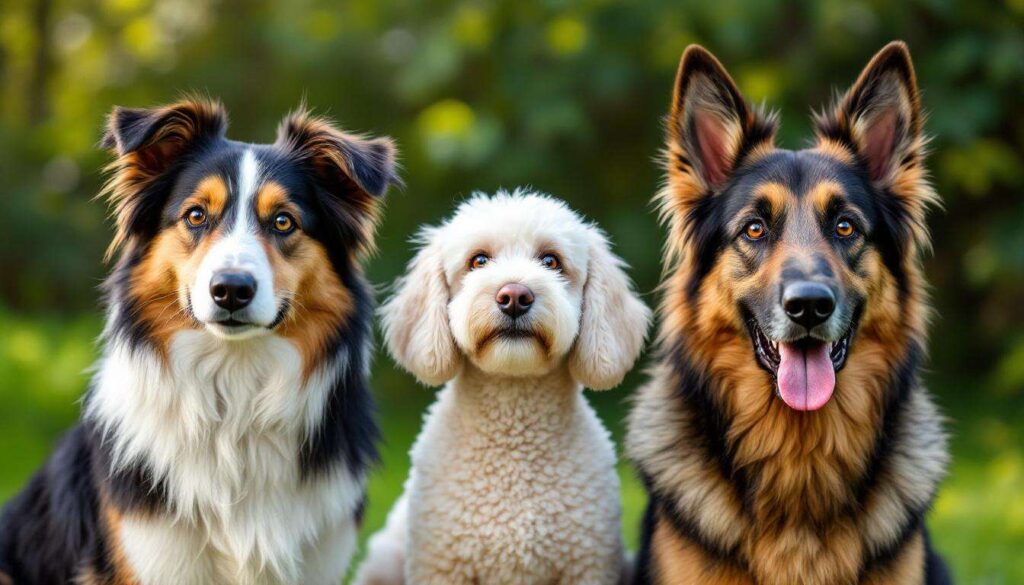
Dogs have long captivated humans with their remarkable ability to learn, adapt, and respond to commands. Among the diverse breeds that exist today, certain varieties stand out for their exceptional cognitive abilities, problem-solving skills, and trainability. Understanding which breeds demonstrate superior intelligence helps prospective owners make informed decisions whilst shedding light on the fascinating relationship between canine cognition and selective breeding. The question of which dogs rank amongst the world’s most intelligent has intrigued researchers, trainers, and enthusiasts alike, leading to comprehensive studies and rankings based on specific measurable criteria.
Introduction to canine intelligence
Defining intelligence in dogs
Canine intelligence encompasses multiple dimensions that extend beyond simple obedience. Researchers identify three primary types of intelligence in dogs: instinctive intelligence, which relates to the breed’s inherent abilities and purpose, adaptive intelligence, involving problem-solving and learning from experience, and working intelligence, which measures how quickly a dog learns commands and responds to training.
The scientific approach to measuring canine cognition
Psychologists and animal behaviourists have developed standardised methodologies to assess cognitive abilities in dogs. These methods examine factors such as memory retention, spatial awareness, social cognition, and the capacity to understand human gestures and communication. Studies conducted at universities and research institutions worldwide have contributed to a growing body of knowledge that helps rank breeds according to their mental capabilities.
Understanding these foundational concepts provides the necessary context for examining the specific characteristics that distinguish the most intelligent breeds from their counterparts.
The criteria for selecting the most intelligent breeds
Stanley Coren’s groundbreaking research
Dr Stanley Coren, a renowned canine psychologist, established the most widely recognised framework for ranking dog intelligence through his extensive research involving over 200 professional dog obedience judges. His methodology focused primarily on working and obedience intelligence, measuring two key factors: the number of repetitions required to learn a new command and the percentage of time a dog obeys a known command on the first attempt.
Key performance indicators
The assessment of canine intelligence relies on several measurable parameters:
- Speed of learning new commands (number of repetitions required)
- Consistency in following known commands
- Ability to retain learned behaviours over time
- Problem-solving capabilities in novel situations
- Capacity to generalise learned commands across different contexts
| Intelligence category | Repetitions to learn | Obedience rate |
|---|---|---|
| Brightest dogs | Fewer than 5 | 95% or better |
| Excellent working dogs | 5 to 15 | 85% or better |
| Above average | 15 to 25 | 70% or better |
These established criteria form the foundation for identifying which breeds consistently demonstrate superior cognitive abilities, leading us to examine the top performers in detail.
The border collie: undisputed leader
Origins and breeding purpose
The border collie originated in the border region between Scotland and England, specifically bred for herding sheep across challenging terrain. This demanding role required dogs with exceptional focus, independent decision-making abilities, and the capacity to respond to subtle commands from distant handlers. Centuries of selective breeding for these traits have produced a breed with unparalleled working intelligence.
Exceptional cognitive abilities
Border collies consistently rank as the most intelligent dog breed across multiple studies and assessments. These dogs typically master new commands in fewer than five repetitions and obey known commands on the first attempt at least 95% of the time. Their remarkable memory allows them to learn and retain an extraordinary vocabulary of words and commands, with some individuals demonstrating comprehension of over 1,000 words.
Real-world demonstrations of intelligence
Famous border collies like Chaser, known as “the world’s smartest dog,” have demonstrated unprecedented cognitive abilities. Chaser learned the names of 1,022 individual toys and could retrieve them by name, whilst also understanding basic grammar and sentence structure. These achievements showcase the breed’s capacity for complex learning and abstract thinking.
Whilst the border collie excels in working intelligence, another breed demonstrates exceptional versatility across multiple domains of canine cognition.
The poodle: versatility and agility
Beyond the stereotypes
Despite their association with elaborate grooming and show rings, poodles rank second in canine intelligence assessments. Originally bred as water retrievers in Germany, these dogs possess a combination of physical athleticism and mental acuity that makes them exceptionally trainable. The breed exists in three sizes—standard, miniature, and toy—all sharing the same impressive cognitive capabilities.
Multifaceted intelligence
Poodles excel across various intelligence dimensions:
- Rapid learning of complex command sequences
- Exceptional problem-solving in novel situations
- High adaptability to different roles and environments
- Strong social intelligence and emotional awareness
- Outstanding memory retention
Practical applications
The poodle’s intelligence has made them invaluable in numerous roles beyond companionship. They excel as service dogs, therapy animals, and in various canine sports including agility, obedience competitions, and tracking. Their hypoallergenic coat combined with their cognitive abilities has also made them popular choices for crossbreeding programmes aimed at creating intelligent assistance dogs.
The third breed in this elite group combines intelligence with a strong protective instinct and unwavering loyalty.
The german shepherd: intelligence and loyalty
A breed designed for versatility
German shepherds were systematically developed in the late 19th century by Captain Max von Stephanitz, who sought to create the ideal working dog. The result was a breed combining physical prowess with exceptional intelligence, trainability, and loyalty. These characteristics have made german shepherds the preferred choice for police forces, military units, and search-and-rescue operations worldwide.
Cognitive strengths
Ranking third in intelligence assessments, german shepherds demonstrate remarkable learning capabilities. They typically master new commands within five repetitions and maintain a high obedience rate. Their intelligence is particularly evident in their ability to assess complex situations, make independent decisions when necessary, and adapt their behaviour based on environmental cues.
Working applications
| Role | Key intelligence factors |
|---|---|
| Police work | Scent discrimination, suspect apprehension, evidence detection |
| Military service | Explosive detection, patrol, tactical operations |
| Search and rescue | Problem-solving, endurance, focus in chaotic environments |
| Assistance dogs | Task learning, emotional awareness, public access behaviour |
Understanding what makes these breeds intelligent naturally leads to questions about how such assessments are conducted and what they truly measure.
How intelligence is assessed in dogs ?
Standardised testing protocols
Researchers employ systematic approaches to evaluate canine intelligence objectively. These protocols typically involve presenting dogs with specific tasks, recording the number of attempts required to complete them successfully, and measuring consistency over multiple trials. Tests may include retrieving objects by name, navigating obstacle courses, solving puzzle toys, and responding to increasingly complex command sequences.
Limitations and considerations
Intelligence assessments focus primarily on working and obedience intelligence, which may not capture the full spectrum of canine cognitive abilities. Some breeds excel in areas not measured by traditional tests, such as independent thinking, which can appear as stubbornness in obedience-focused evaluations. Additionally, individual variation within breeds means that not every border collie, poodle, or german shepherd will demonstrate the exceptional abilities associated with their breed.
The role of training and environment
A dog’s cognitive development depends significantly on environmental enrichment, socialisation, and consistent training. Even the most intelligent breeds require proper stimulation and education to reach their potential. Conversely, less traditionally “intelligent” breeds can surprise owners with their capabilities when provided with appropriate training and mental challenges.
The border collie, poodle, and german shepherd represent the pinnacle of canine intelligence as measured by working and obedience capabilities. These breeds consistently demonstrate rapid learning, excellent memory, problem-solving skills, and high obedience rates. However, intelligence in dogs encompasses multiple dimensions, and the “best” breed ultimately depends on individual needs, lifestyle, and the specific qualities one values in a canine companion. Prospective owners should consider not only intelligence rankings but also temperament, energy levels, and care requirements when selecting a breed that will thrive in their particular circumstances.