



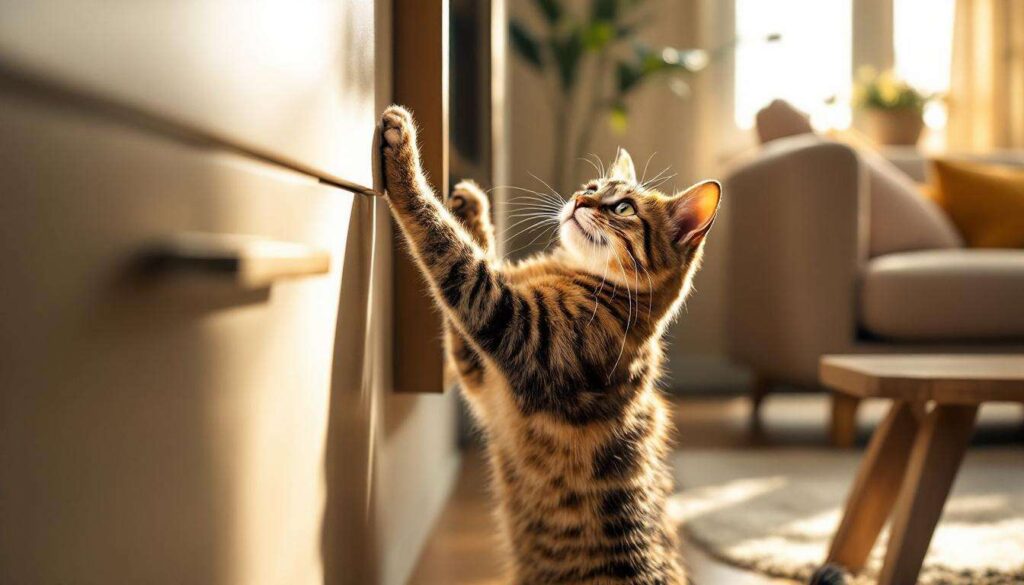
Watching your cat launch itself at walls or tear into your sofa can be both bewildering and frustrating. This behaviour, while seemingly destructive, stems from deeply rooted feline instincts that serve important biological and psychological purposes. Understanding the underlying causes and implementing targeted strategies can transform your cat’s behaviour and restore harmony to your home. Many owners discover that a single environmental adjustment makes all the difference in redirecting these natural urges towards appropriate outlets.
Understanding why your cat attacks walls and furniture
The biological imperative behind scratching
Cats possess an instinctual need to scratch that serves multiple essential functions. This behaviour allows them to shed the dead outer layers of their claws, maintaining sharp and healthy nails crucial for climbing, hunting, and self-defence. The physical act of scratching also provides cats with a full-body stretch that exercises muscles in their legs, back, and shoulders, promoting flexibility and physical wellbeing.
Territorial communication through scratching
Beyond physical maintenance, scratching serves as a sophisticated territorial marking system. Cats have scent glands located between their paw pads that deposit pheromones onto scratched surfaces. This chemical signature communicates ownership and establishes boundaries within their environment. When your cat scratches walls or furniture, they are essentially claiming these areas as part of their territory, creating a sense of security and control over their space.
Environmental triggers for destructive scratching
Several factors can intensify scratching behaviour beyond normal levels:
- Introduction of new pets or household members disrupting established territories
- Lack of appropriate scratching surfaces leading to furniture targeting
- Insufficient mental and physical stimulation causing boredom
- Changes in household routine creating anxiety
- Limited vertical space for climbing and exploring
Recognising these triggers helps identify whether your cat’s behaviour stems from normal instinct or underlying emotional distress that requires attention.
Signs of stress in your cat
Behavioural indicators of feline anxiety
Stressed cats often exhibit escalated scratching patterns alongside other behavioural changes. Observing your cat’s overall demeanour provides crucial insight into their emotional state. Excessive scratching concentrated in specific areas, particularly near windows or doors, may indicate territorial insecurity or frustration with outdoor stimuli.
Physical manifestations of stress
Beyond scratching, stressed cats display various physical symptoms:
- Excessive grooming leading to bald patches or skin irritation
- Changes in appetite, either increased or decreased consumption
- Altered litter box habits including avoidance or inappropriate elimination
- Increased vocalisation, particularly at unusual times
- Hiding behaviour or withdrawal from social interaction
Distinguishing normal from problematic scratching
Normal scratching occurs periodically throughout the day, typically after waking or during play sessions. Problematic scratching becomes obsessive, occurring with unusual frequency or intensity. Cats may scratch the same spot repeatedly, sometimes accompanied by agitated body language such as flattened ears, dilated pupils, or a thrashing tail. Understanding these distinctions helps determine whether environmental enrichment alone will suffice or if professional intervention becomes necessary.
How an enriched environment can reduce attacks
Creating vertical territory
Cats are three-dimensional creatures that naturally seek elevated vantage points. Providing vertical spaces through shelving, window perches, or dedicated climbing structures satisfies this instinct whilst reducing ground-level furniture targeting. Vertical territory also expands your cat’s perceived living space without requiring additional floor area, particularly beneficial in smaller homes.
Strategic placement of scratching surfaces
Position scratching posts and pads in high-traffic areas and near furniture your cat currently targets. Cats often scratch upon waking, so placing appropriate surfaces near sleeping spots encourages correct behaviour. Materials matter significantly: sisal rope, corrugated cardboard, and natural wood appeal to different preferences. Offering variety allows your cat to choose their preferred texture.
| Material | Durability | Appeal Factor | Maintenance |
|---|---|---|---|
| Sisal rope | High | Excellent texture | Low |
| Cardboard | Medium | Natural feel | Requires replacement |
| Carpet | Medium | Soft grip | Medium |
| Natural wood | Very high | Authentic experience | Low |
Interactive enrichment activities
Mental stimulation reduces boredom-driven destructive behaviour. Puzzle feeders challenge your cat’s problem-solving abilities whilst slowing eating pace. Rotating toy selection maintains novelty and interest. Regular interactive play sessions using wand toys or laser pointers provide physical exercise and strengthen the human-animal bond, reducing stress-related scratching.
Techniques to calm a stressed cat
Positive reinforcement training
Rewarding desired behaviour proves far more effective than punishment. When your cat uses appropriate scratching surfaces, immediately offer treats or verbal praise. This positive association encourages repetition of correct behaviour. Never punish scratching itself, as this natural behaviour requires an outlet rather than suppression. Instead, redirect attention towards acceptable alternatives.
Environmental pheromone therapy
Synthetic feline facial pheromones, available as plug-in diffusers or sprays, create a calming atmosphere that reduces anxiety-driven behaviours. These products mimic the natural pheromones cats deposit when rubbing their faces against objects, signalling safety and familiarity. Placing diffusers in rooms where scratching occurs frequently can significantly diminish stress-related attacks on walls and furniture.
Establishing consistent routines
Cats thrive on predictability. Maintaining regular feeding times, play sessions, and interaction periods creates security and reduces anxiety. Gradual introduction of changes, whether new furniture, household members, or routine adjustments, allows cats to adapt without overwhelming stress. Dedicating specific times for focused attention ensures your cat receives adequate social interaction, preventing attention-seeking destructive behaviour.
Introducing a cat tree: an effective solution
Selecting the appropriate cat tree
A well-designed cat tree addresses multiple behavioural needs simultaneously. Choose structures with varying heights and platforms that accommodate climbing, perching, and scratching. Stability is paramount: wobbly structures discourage use and may cause injury. Consider your cat’s size, age, and physical capabilities when selecting height and platform spacing. Multi-cat households benefit from trees with multiple perches to prevent territorial disputes.
Strategic positioning for maximum appeal
Place cat trees near windows to provide environmental enrichment through outdoor observation. Cats enjoy watching birds, passing pedestrians, and weather changes, which provides mental stimulation. Positioning trees in social areas allows cats to remain part of family activities whilst maintaining elevated safety. Avoid isolated locations that defeat the purpose of providing engaging vertical territory.
Encouraging cat tree usage
Some cats immediately embrace new structures whilst others require encouragement:
- Sprinkle catnip on platforms and scratching posts to attract interest
- Place favourite toys or treats on various levels to encourage exploration
- Use interactive play to guide your cat onto the tree, rewarding climbing behaviour
- Allow time for scent familiarisation before expecting regular use
- Never force your cat onto the tree, as this creates negative associations
Patience proves essential, as some cats require several weeks to fully embrace new furniture. Once established, cat trees typically become preferred scratching and lounging locations, significantly reducing attacks on walls and household furniture.
When to consult a vet about your cat’s behaviour
Medical conditions affecting behaviour
Certain health issues manifest through behavioural changes including increased scratching. Hyperthyroidism, pain conditions, and neurological disorders can cause agitation and compulsive behaviours. If environmental modifications and enrichment strategies fail to reduce destructive scratching, veterinary examination rules out underlying medical causes. Sudden behavioural changes warrant particular attention, as they often indicate discomfort or illness.
Persistent anxiety and compulsive disorders
Some cats develop obsessive-compulsive behaviours that require professional intervention. If your cat scratches to the point of self-injury, demonstrates extreme anxiety despite environmental improvements, or exhibits other compulsive behaviours such as excessive grooming or pacing, veterinary consultation becomes necessary. Veterinarians may recommend behavioural specialists or prescribe anti-anxiety medications to address severe cases.
Professional behavioural assessment
Certified feline behaviourists provide specialised expertise when standard interventions prove insufficient. These professionals conduct thorough environmental assessments, observe cat-owner interactions, and develop customised behaviour modification plans. Early professional intervention prevents behaviour problems from becoming entrenched habits, improving outcomes for both cats and their owners.
Addressing your cat’s wall and furniture attacks requires understanding the natural instincts driving this behaviour whilst implementing practical environmental modifications. Providing appropriate scratching surfaces, enriching your cat’s environment with vertical territory and mental stimulation, and recognising signs of stress enable effective behaviour management. Cat trees offer comprehensive solutions by satisfying scratching needs, providing elevated territory, and offering observation points. When standard approaches prove insufficient, veterinary consultation ensures no underlying medical conditions contribute to problematic behaviour. With patience and consistent application of these strategies, most cats redirect their natural scratching instincts towards appropriate outlets, preserving both your furniture and your relationship with your feline companion.