


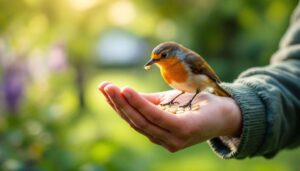
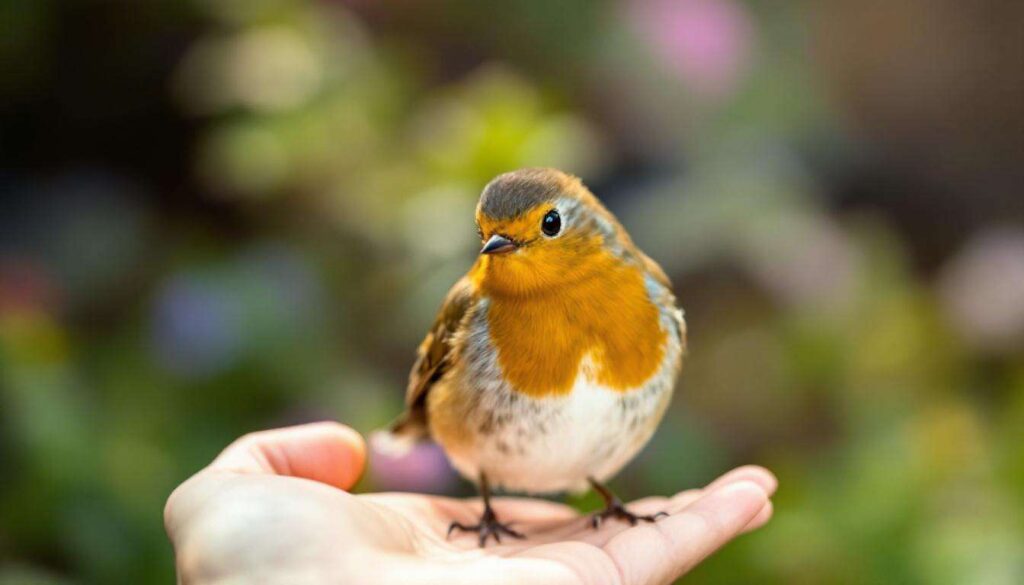
Few experiences in wildlife observation match the quiet thrill of a robin landing on your outstretched palm, its tiny feet gripping your fingers as it plucks a mealworm from your hand. This intimate interaction with one of Britain’s most beloved garden birds is not merely the stuff of folklore; with patience, consistency and an understanding of avian psychology, it is an achievable goal for many garden enthusiasts. Robins possess a naturally inquisitive temperament that, when combined with their historical association with human activity, makes them particularly amenable to gentle taming efforts.
Understanding robin behaviour
The robin’s territorial instincts
Robins are fiercely territorial birds, defending their patches throughout the year with remarkable vigour. Both males and females maintain individual territories during winter months, a behaviour unusual amongst British songbirds. This territorial nature means that the robin visiting your garden is likely the same individual repeatedly, which proves advantageous when attempting to build trust. Understanding this consistency allows you to develop a relationship with a specific bird rather than encountering different individuals each day.
Natural feeding patterns and preferences
In their natural habitat, robins employ a distinctive foraging strategy. They typically hunt from low perches, dropping to the ground to seize invertebrates disturbed by larger animals or gardening activity. Their diet consists primarily of:
- Earthworms and larvae
- Beetles and other ground-dwelling insects
- Spiders and small invertebrates
- Berries and fruit during autumn and winter
- Seeds when other food sources are scarce
This opportunistic feeding behaviour explains why robins have historically followed gardeners and farmers, associating human ground disturbance with accessible prey. Their bold approach to potential food sources stems from evolutionary advantage rather than fearlessness.
Why robins tolerate human proximity
The robin’s apparent tameness results from centuries of mutually beneficial interaction with humans. Unlike many species that flee from human presence, robins learned that people turning soil exposed otherwise inaccessible food. This learned behaviour has been passed through generations, creating a species predisposed to approach humans more readily than most wild birds. Their curiosity and food-driven motivation override typical avian wariness, providing the foundation upon which trust can be built.
Recognising these behavioural traits provides the essential groundwork for attracting these charming birds to your outdoor space.
Attracting robins to your garden
Creating an inviting habitat
Before attempting hand-feeding, you must first establish your garden as a robin-friendly environment. Dense shrubbery and hedgerows provide essential cover for nesting and roosting, whilst also offering protection from predators such as sparrowhawks and domestic cats. Native plantings including holly, ivy and hawthorn serve dual purposes, providing both shelter and natural food sources in the form of berries and the insects they attract.
Providing appropriate food sources
Whilst robins will eventually accept hand-feeding, initial attraction requires consistent food availability. The following table outlines effective food options:
| Food Type | Effectiveness | Best Season |
|---|---|---|
| Live mealworms | Excellent | Year-round, especially spring |
| Dried mealworms | Very good | All seasons |
| Suet pellets | Good | Autumn and winter |
| Grated cheese | Moderate | Winter months |
| Sunflower hearts | Fair | Winter |
Mealworms represent the gold standard for robin attraction, mimicking their natural prey and proving irresistible to most individuals.
Establishing feeding stations
Position feeding areas in locations offering nearby cover but with clear sightlines, allowing robins to assess potential threats whilst feeding. Ground-level feeding trays or low bird tables suit their natural foraging preferences better than elevated feeders. Consistency in feeding location and timing helps robins incorporate your garden into their daily territory patrol, increasing encounter frequency and familiarity with your presence.
Once robins regularly visit your garden, the next phase involves developing a personal connection with these frequent visitors.
Building a trusting relationship with the robin
The importance of routine and predictability
Robins thrive on routine, and establishing predictable patterns forms the cornerstone of trust-building. Feed at consistent times daily, ideally during their most active foraging periods in early morning and late afternoon. This regularity teaches the robin to anticipate your presence and associate you with positive outcomes rather than perceiving you as a random threat.
Gradual proximity reduction
Begin by placing food at a comfortable distance whilst you remain visible but relatively still. Over subsequent days, incrementally reduce this distance, allowing the robin to dictate the pace of approach. Patience proves crucial during this phase; rushing the process may undo weeks of careful trust-building. Some robins progress rapidly, whilst others require extended periods before tolerating close proximity.
Body language and movement control
Your physical demeanour significantly influences the robin’s comfort level. Consider these essential practices:
- Avoid sudden movements or gestures
- Maintain a low profile by crouching or sitting
- Refrain from direct eye contact, which birds interpret as predatory attention
- Keep noise to a minimum, speaking softly if at all
- Wear similar clothing during feeding sessions to maintain visual consistency
These measures help you become a predictable and non-threatening presence within the robin’s territory.
Recognising signs of increasing trust
As trust develops, robins exhibit telltale behaviours including approaching more quickly when you appear, feeding whilst you stand nearby, and vocalising in your presence. Some individuals begin following gardeners, anticipating the insects revealed by digging. These positive indicators suggest readiness for the next stage of interaction.
With trust established, you can begin implementing specific techniques designed to encourage hand-feeding behaviour.
Techniques for hand-feeding robins
The transition from ground to hand
Once a robin feeds comfortably within arm’s reach, begin the hand-feeding transition. Place mealworms on a flat surface near your hand, gradually moving them onto your palm over several sessions. Your hand should remain completely motionless, positioned as an extension of the feeding surface rather than a separate entity. This incremental approach prevents startling the bird whilst building association between your hand and food reward.
Optimal hand positioning
Present your hand palm-up with fingers slightly curved to create a shallow dish, preventing mealworms from rolling off. Position your hand at a height and angle that requires minimal deviation from the robin’s normal feeding posture. Avoid extending your arm fully; instead, rest your elbow against your body or a stable surface to eliminate involuntary trembling that might alarm the bird.
Managing expectations and timelines
The duration required to achieve hand-feeding varies considerably between individual robins. Factors influencing this timeline include:
- The bird’s previous exposure to humans
- Frequency of feeding interactions
- Availability of alternative food sources
- Time of year and breeding pressures
- Individual personality variations
Some particularly bold robins may accept hand-feeding within days, whilst others require weeks or months. During breeding season, when adults frantically gather food for nestlings, robins often become more daring, potentially accelerating the taming process.
Responding to initial contact
When a robin first lands on your hand, resist any impulse to react. Maintain absolute stillness until the bird retrieves its food and departs. Premature movement during this critical moment may create negative associations, potentially reversing weeks of progress. Success in these initial encounters establishes confidence for future interactions.
Whilst hand-feeding represents a remarkable achievement, certain precautions ensure the experience remains safe for both parties.
Safety considerations during hand-feeding
Hygiene practices for bird and handler
Wild birds carry various bacteria and parasites, making proper hygiene essential. Wash hands thoroughly before and after feeding sessions, using soap and warm water for at least twenty seconds. Avoid touching your face during interactions, and consider keeping hand sanitiser nearby for immediate use. These practices protect both you from potential zoonotic diseases and the robin from contaminants you might carry.
Preventing dependency
Perhaps the most significant concern involves creating unhealthy dependency. Robins must maintain their natural foraging skills and wariness of genuine threats. To prevent dependency:
- Limit hand-feeding to occasional treats rather than primary food source
- Maintain natural food availability through habitat management
- Vary feeding times to prevent rigid expectation
- Encourage natural foraging by leaving some areas of garden undisturbed
Hand-feeding should complement, not replace, the robin’s natural dietary acquisition.
Weather-related precautions
During severe weather, robins face increased mortality risk, making supplementary feeding genuinely beneficial. However, avoid conditioning birds to expect hand-feeding during harsh conditions, as your absence during a cold snap could prove problematic. Instead, ensure reliable ground-feeding stations remain stocked, with hand-feeding reserved for calm weather interactions.
Protecting robins from domestic threats
Tame robins face heightened vulnerability to domestic cats and other predators due to reduced wariness. If you keep cats, ensure they wear bells and restrict outdoor access during peak robin activity periods. Position feeding areas with clear sightlines and escape routes, allowing robins to detect approaching threats. Your responsibility extends beyond the feeding interaction to encompass the bird’s overall safety within its territory.
Beyond hand-feeding, numerous other approaches support robin populations and enhance their wellbeing throughout the year.
Other ways to help robins in their natural habitat
Habitat enhancement strategies
Creating optimal robin habitat involves thoughtful garden management. Maintain areas of bare soil or leaf litter where robins can forage for invertebrates. Avoid excessive tidiness; leaving some areas wild provides essential cover and hunting grounds. Plant berry-producing shrubs for winter sustenance, and consider installing a shallow water feature for drinking and bathing, which robins require year-round.
Nest site provision
Robins nest in diverse locations, from traditional sites in hedgerows to unconventional spots in sheds and old boots. Provide open-fronted nest boxes positioned one to two metres high in sheltered locations covered by vegetation. Unlike enclosed boxes suited to tits and sparrows, robins prefer boxes with wide openings. Installing multiple boxes increases the likelihood of occupancy, as robins raise two or three broods annually.
Chemical-free gardening practices
Pesticides and herbicides devastate invertebrate populations upon which robins depend. Embrace organic gardening methods, tolerating some pest damage in exchange for abundant natural prey. This approach benefits not only robins but entire garden ecosystems. Encourage natural pest control through diverse plantings that attract beneficial insects and other insectivorous birds.
Year-round support measures
Robin requirements vary seasonally, demanding adaptive support strategies. The following practices address changing needs:
- Spring and summer: provide nesting materials like moss, grass and small twigs
- Autumn: allow seed heads and berries to remain on plants
- Winter: increase high-energy food availability during cold snaps
- Year-round: maintain fresh water sources, breaking ice during freezing weather
These measures create a genuinely supportive environment extending far beyond the novelty of hand-feeding.
The journey from initial robin sighting to successful hand-feeding represents a remarkable progression built upon patience, consistency and genuine respect for wild bird welfare. Understanding robin behaviour, creating attractive habitat, gradually building trust, and employing careful hand-feeding techniques can transform a garden visitor into a confiding companion. Yet the true measure of success lies not in the moment a robin lands on your palm, but in creating an environment where these charismatic birds thrive naturally. Hand-feeding serves as a privilege and a reminder of our connection to the natural world, whilst broader habitat support ensures robin populations flourish for future generations to enjoy. By balancing the desire for close interaction with responsible wildlife stewardship, you contribute meaningfully to robin conservation whilst experiencing one of nature’s most enchanting encounters.